
PODERE IL CHIESINO HAS BEEN SUBJECTED TO A CHECK-UP BY A TECHNICAL RESPONSIBLE BEFORE THE BEGINNING OF THE SEASON, TO ENSURE CONSISTENCY OF THE DESCRIPTION, ACCESSORIES LISTED ON THIS PAGE AND THEIR PRESENT STATE OF OPERATION/MAINTENANCE, TO GUARANTEE QUALITY, CLEANLINESS AND COMFORTS TO ALL CLIENTS WHO WILL STAY HERE.
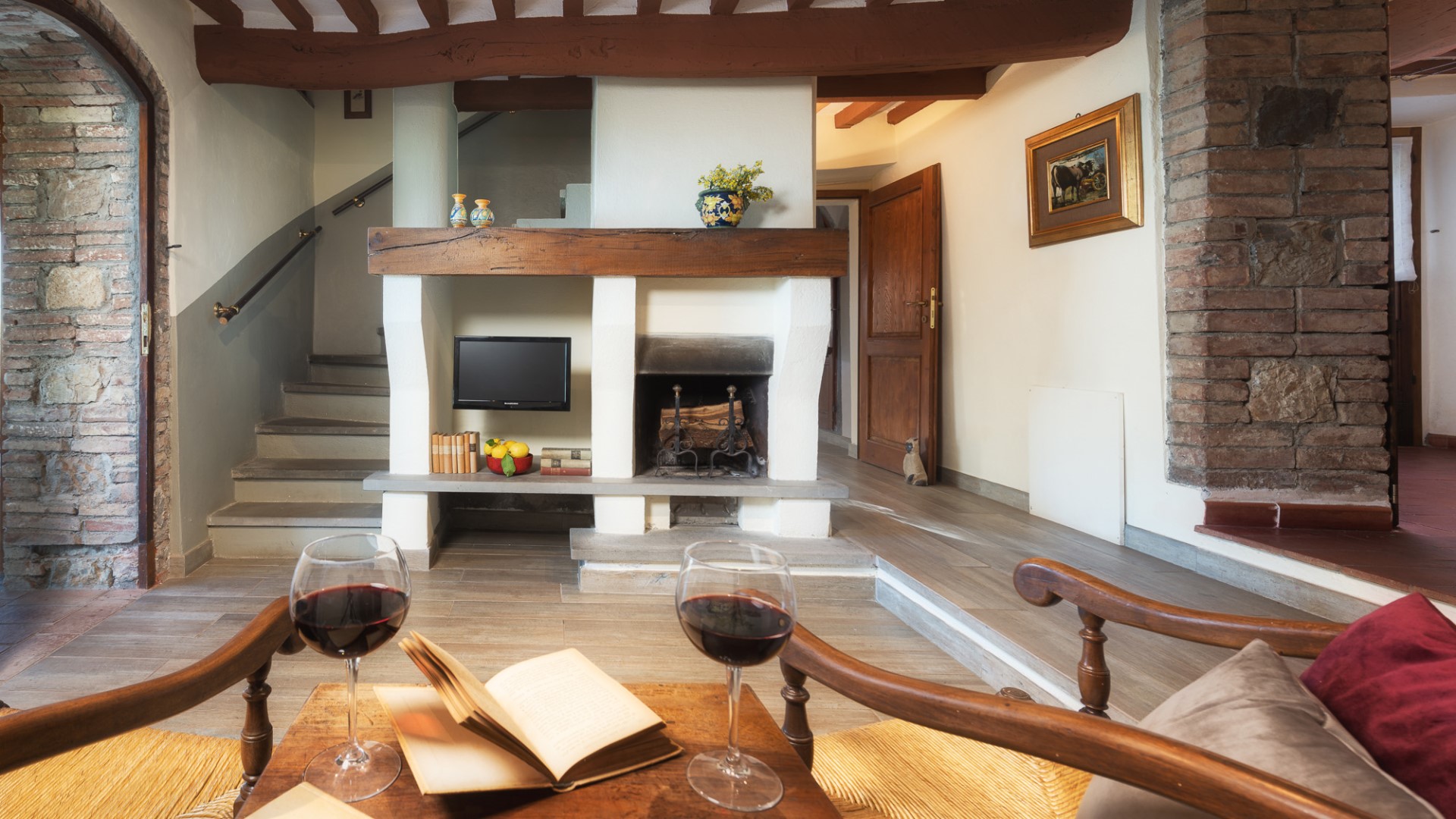
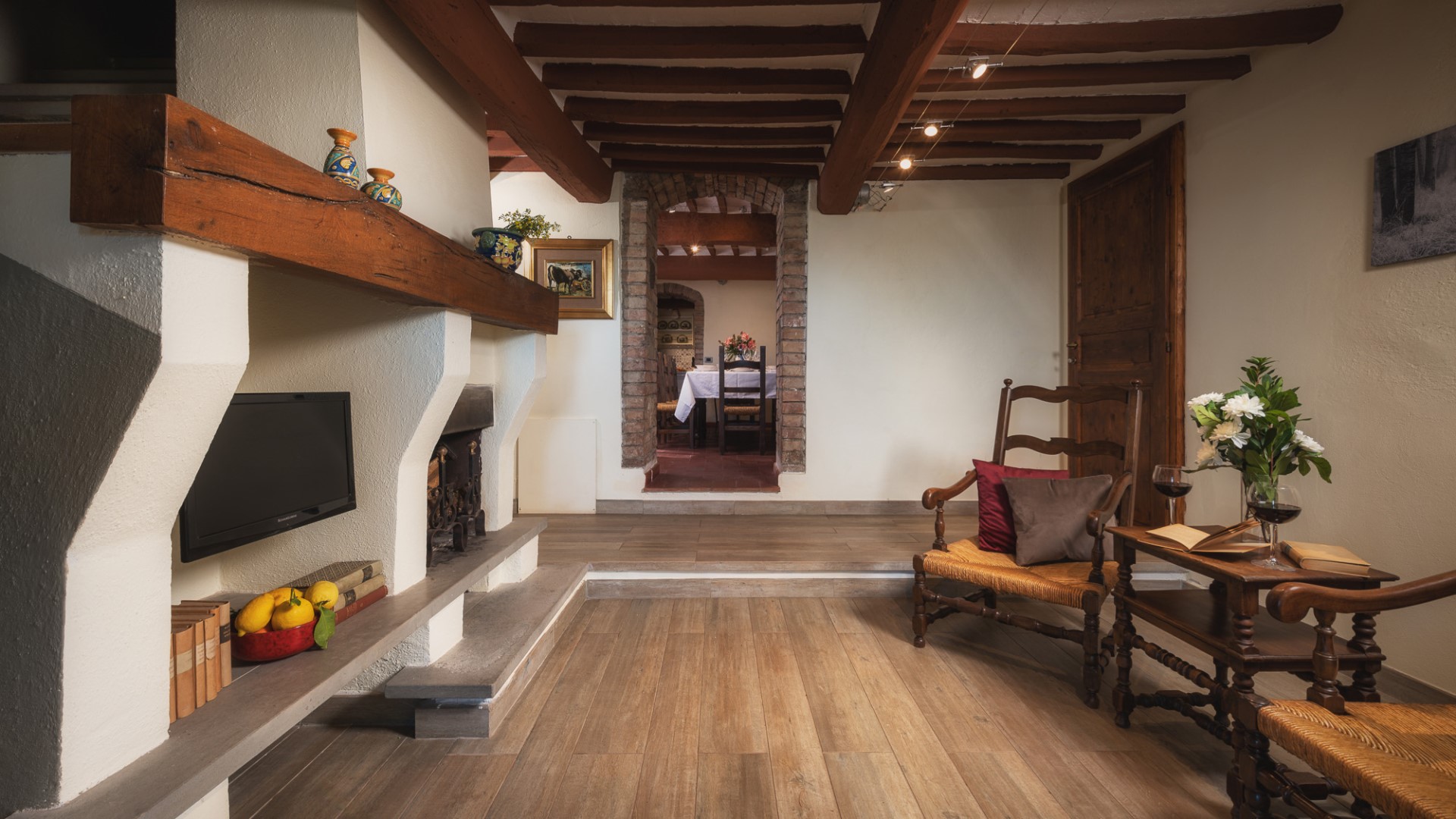
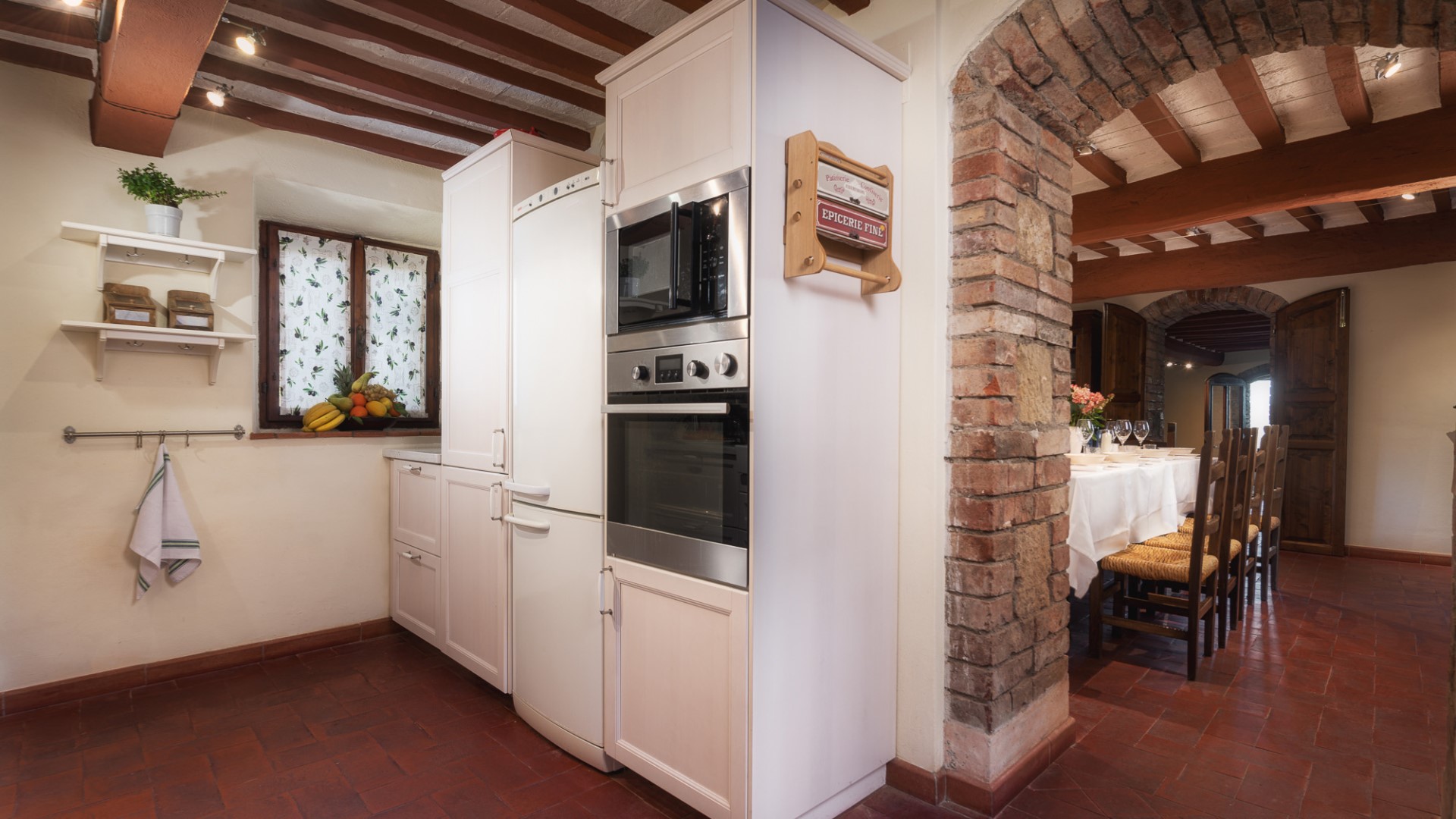
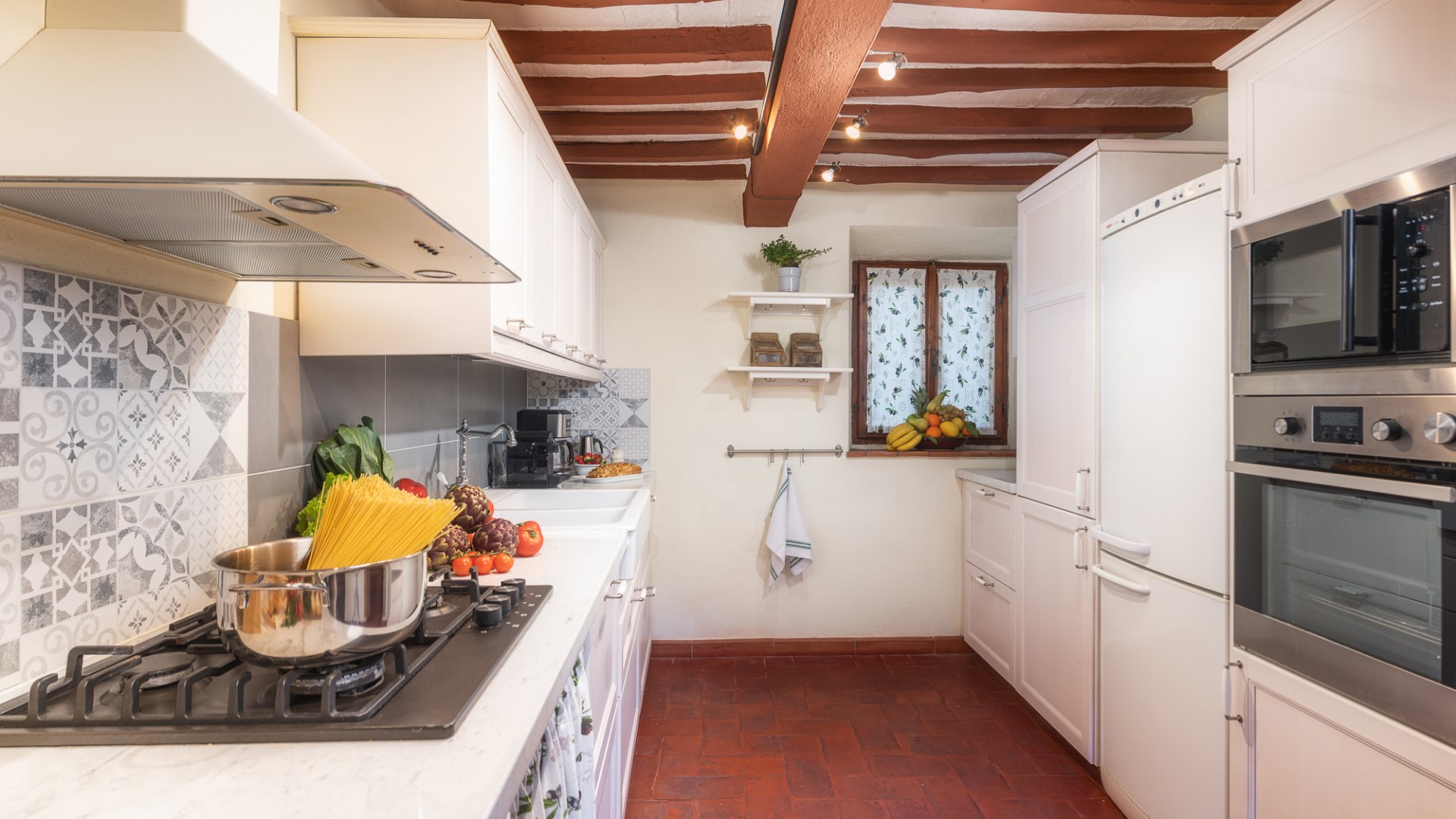
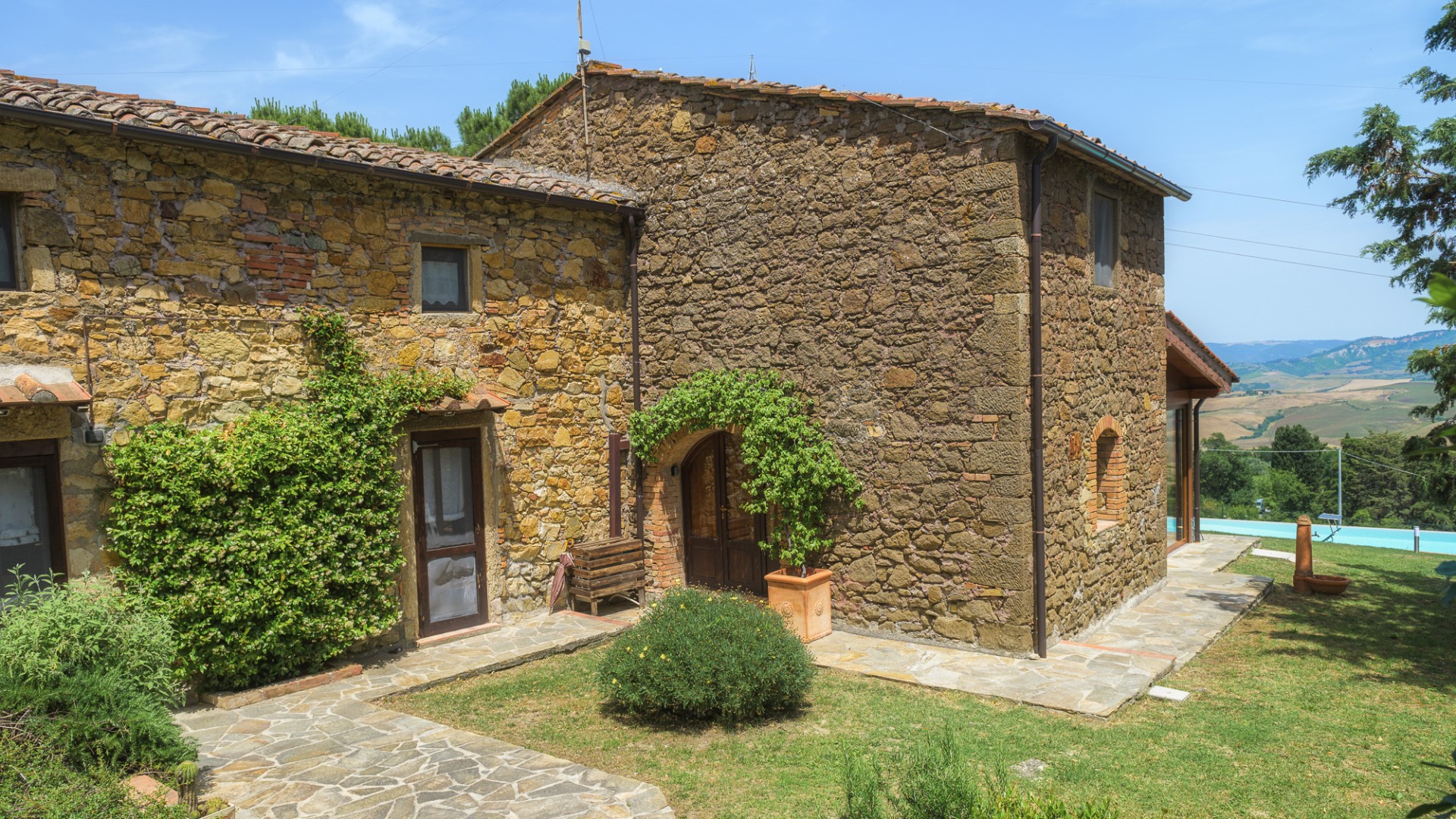
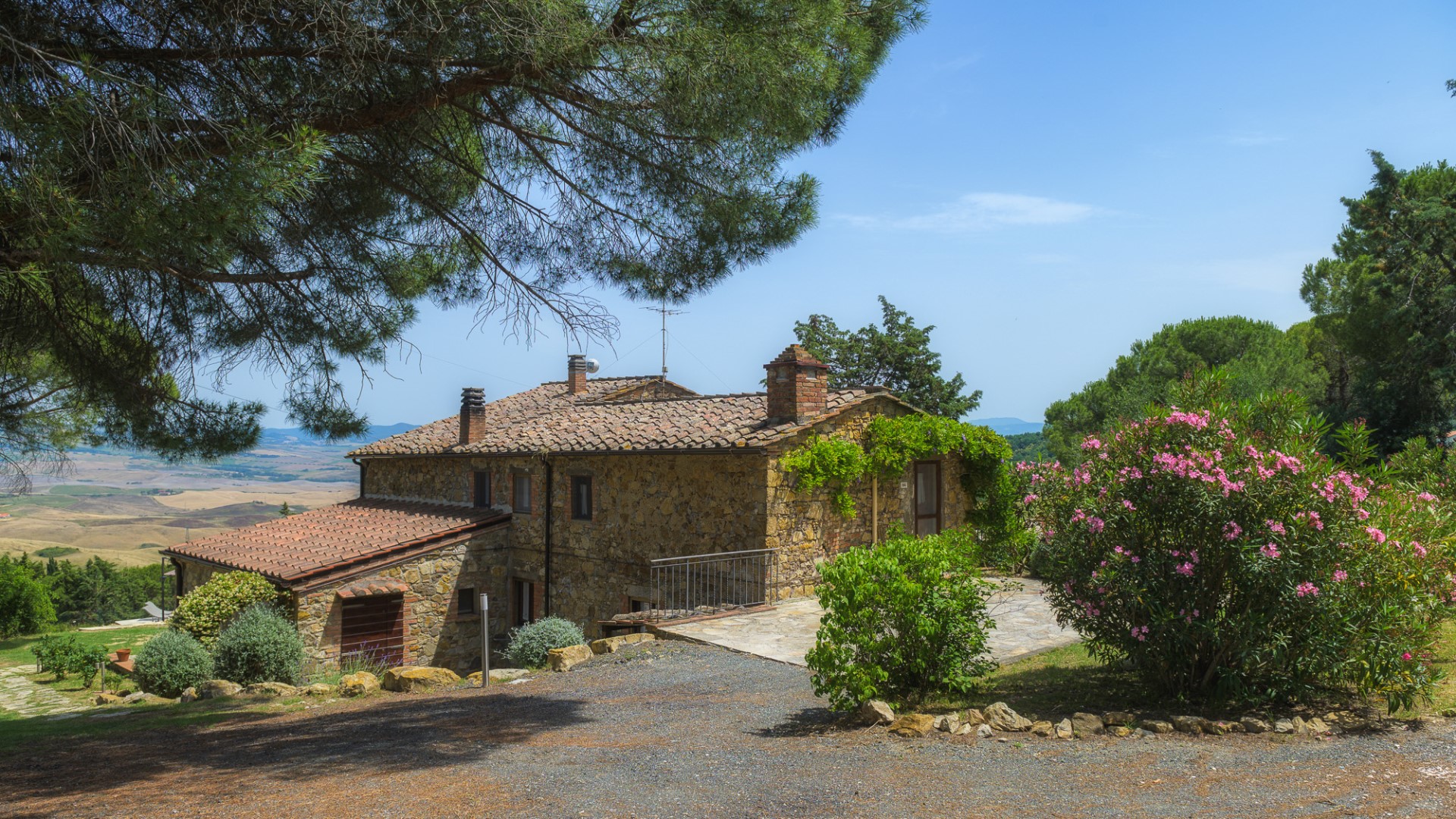
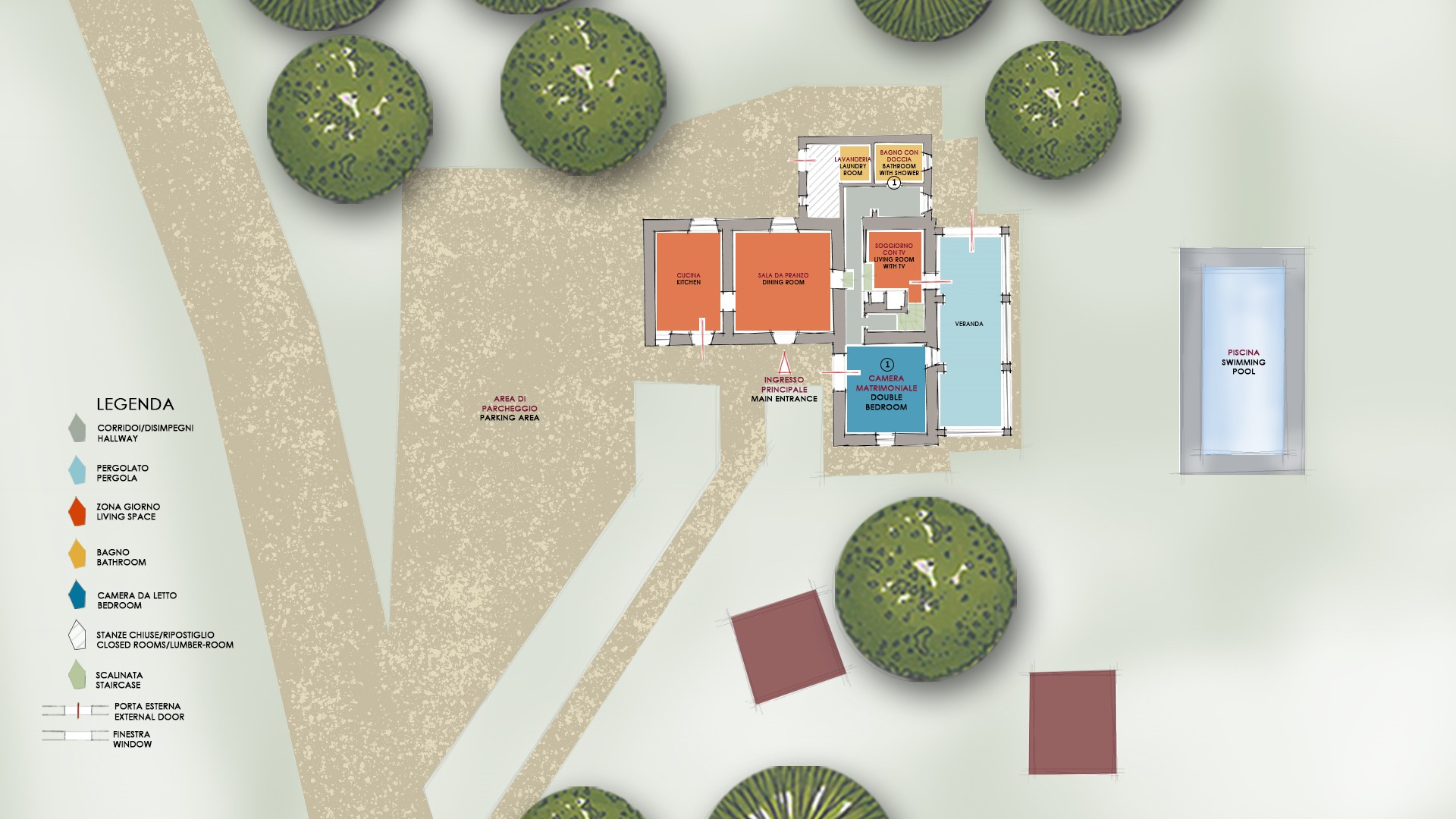
Podere Il Chiesino has two floors. The main entrance on the ground floor leads into a large dining room. To the left is the large, modern and well-equipped kitchen with outside access. To the right of the entrance is a small sitting room with fireplace
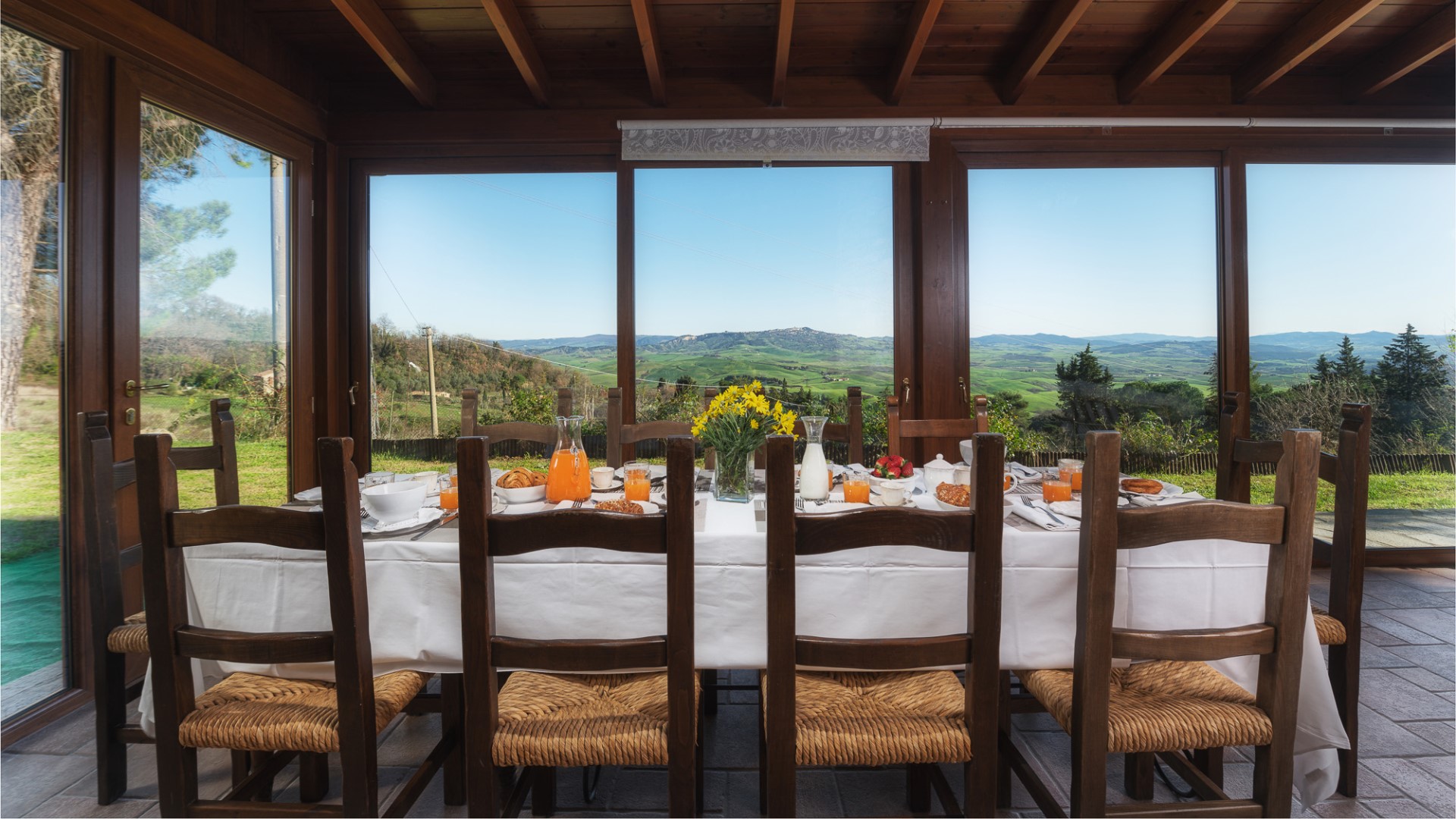
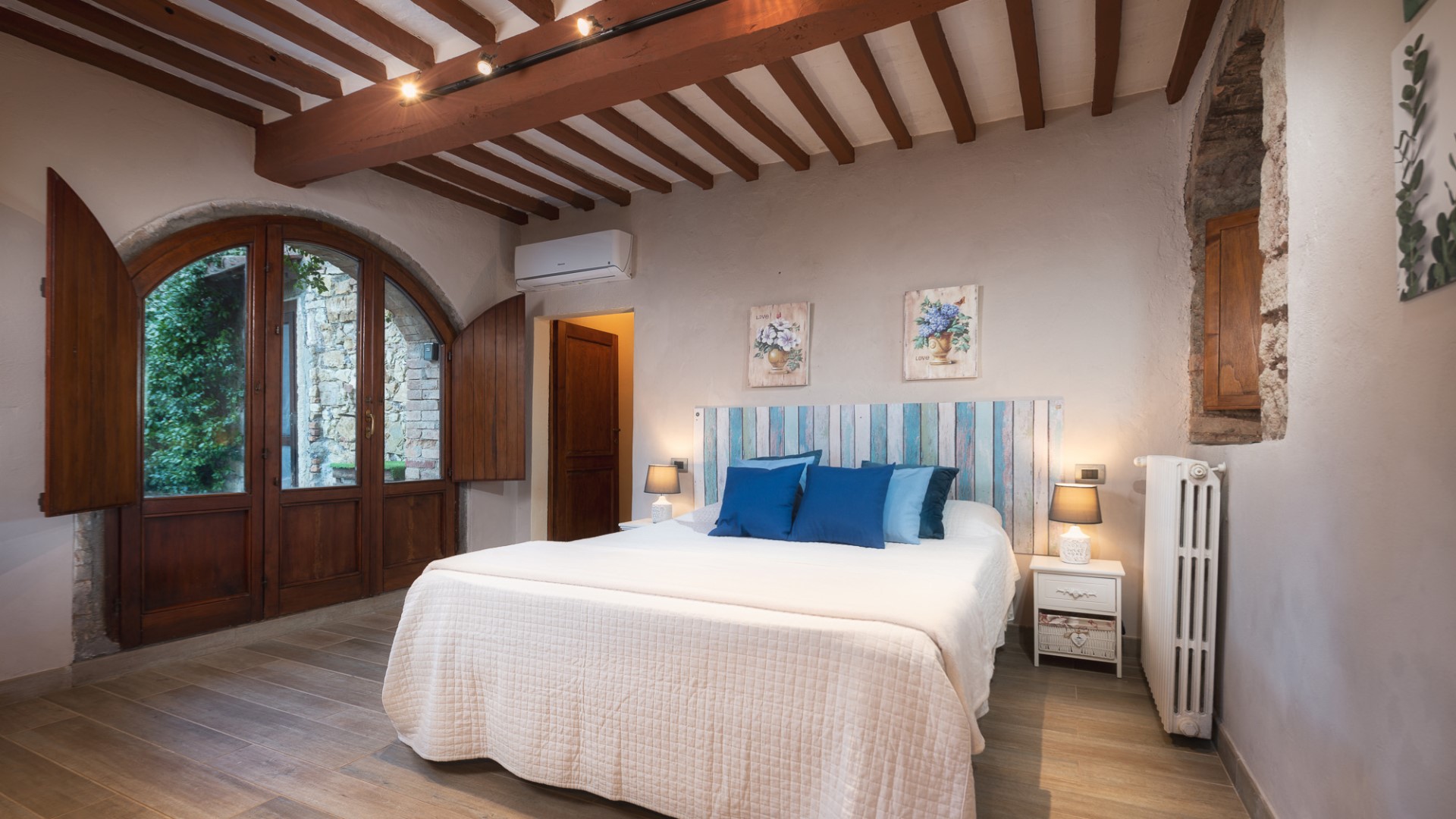
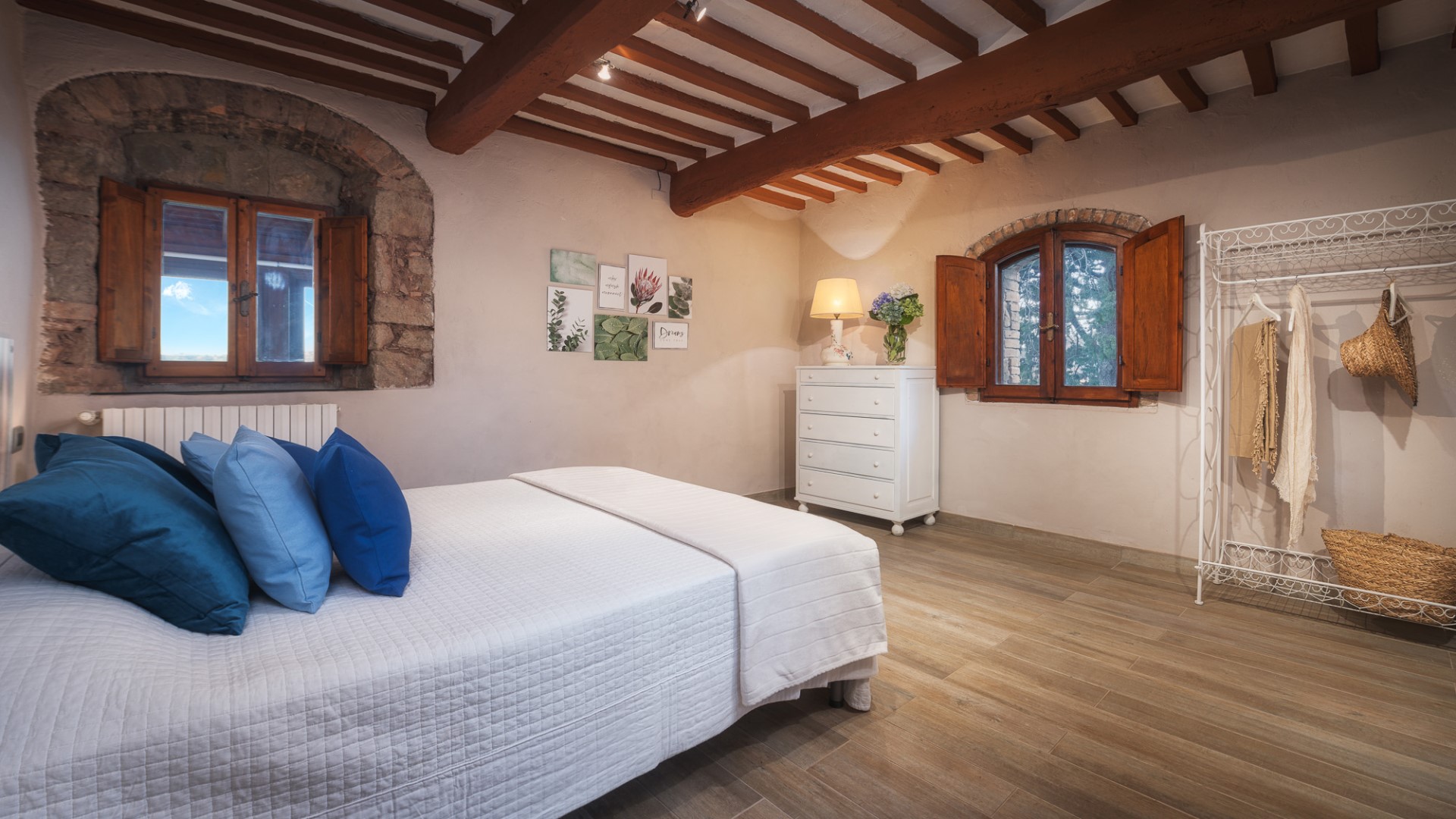
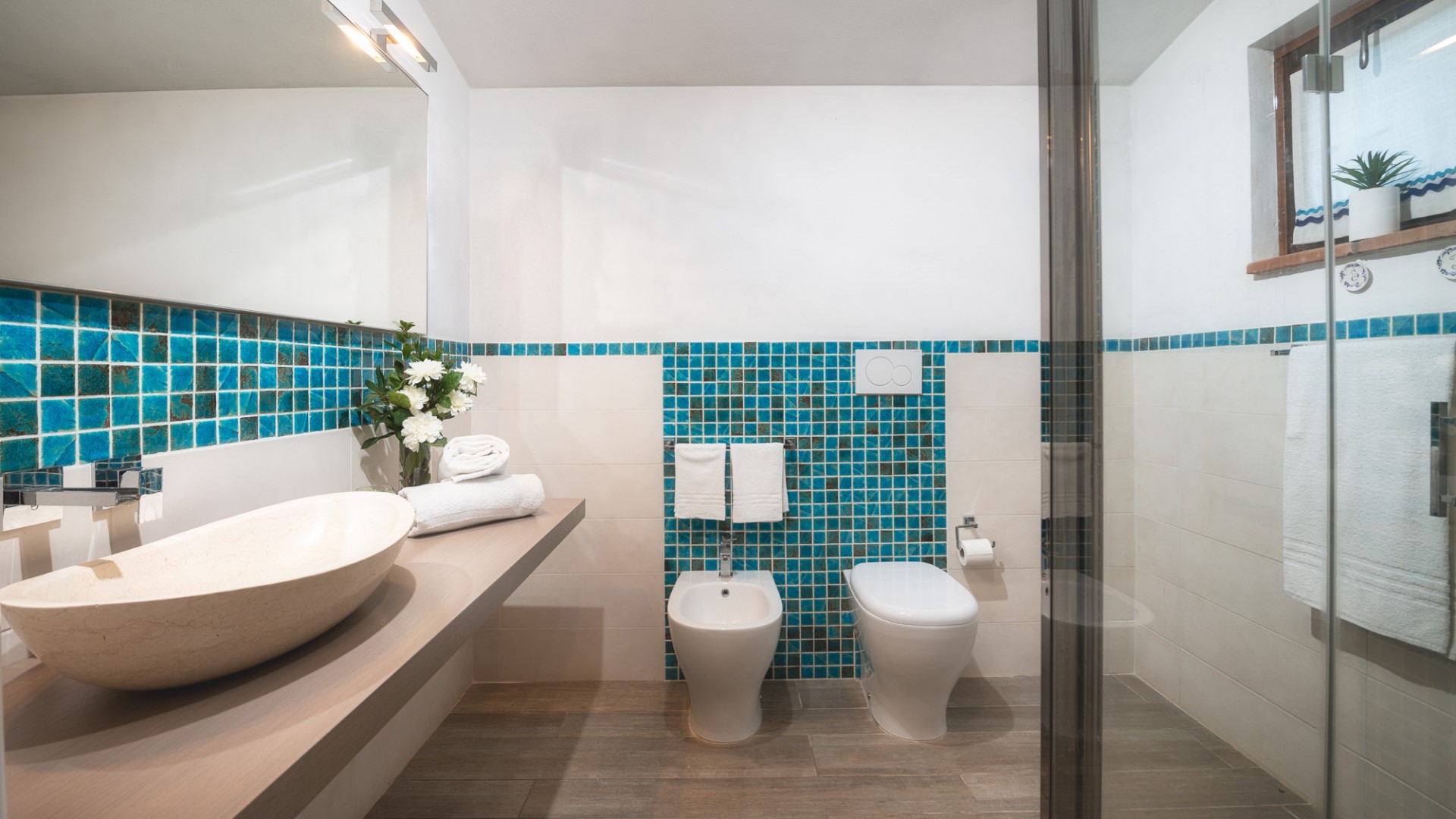
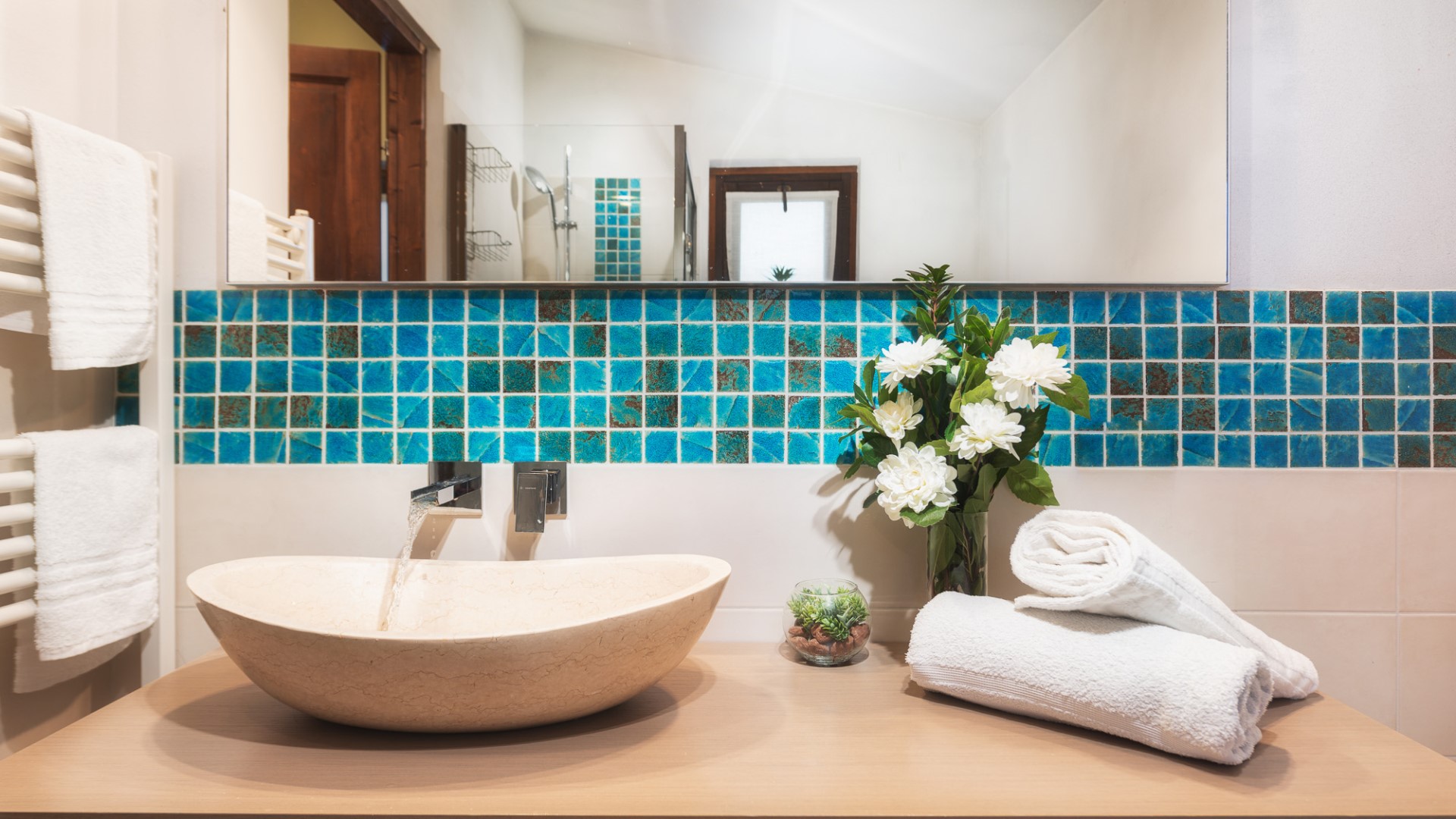
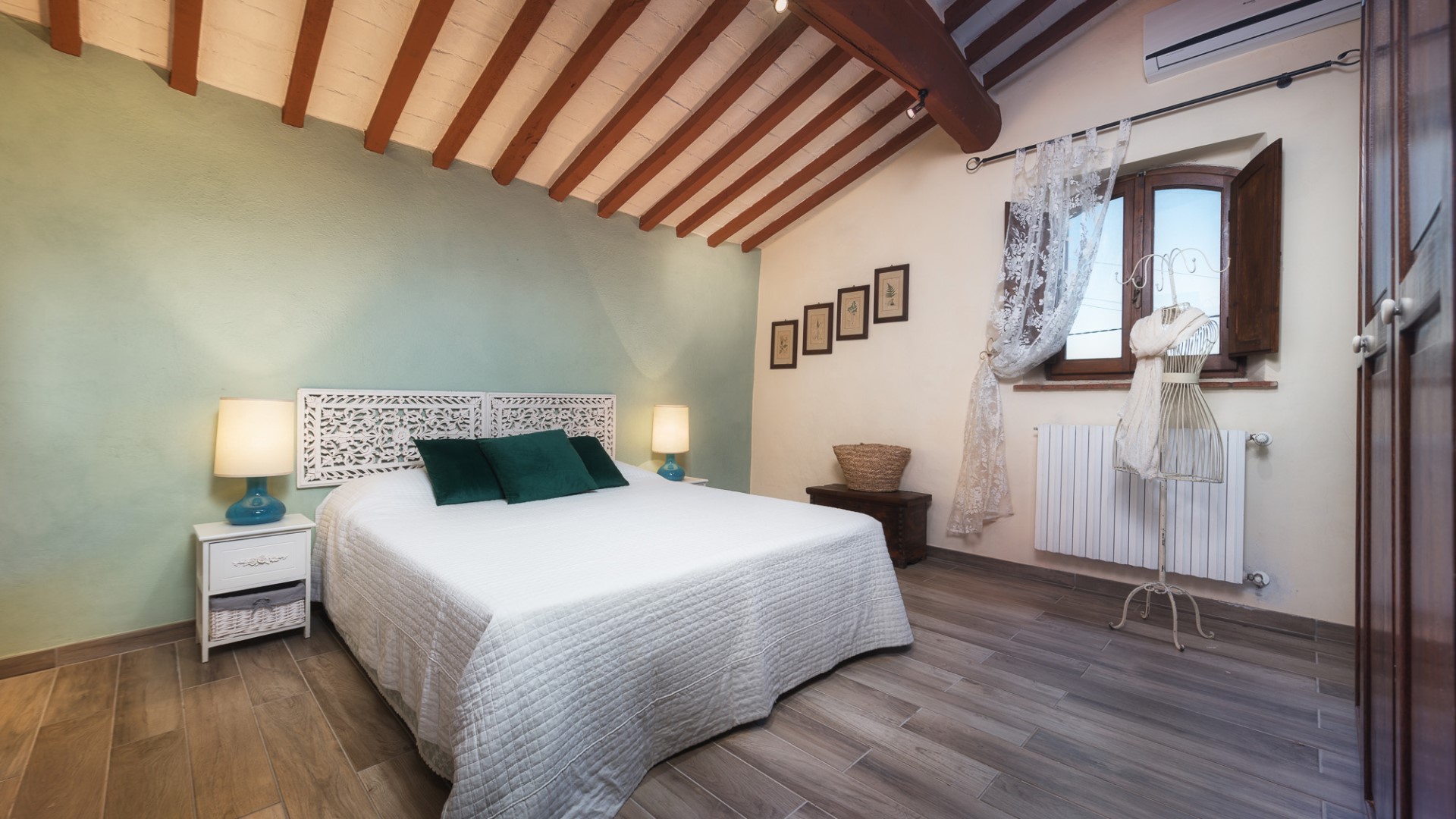
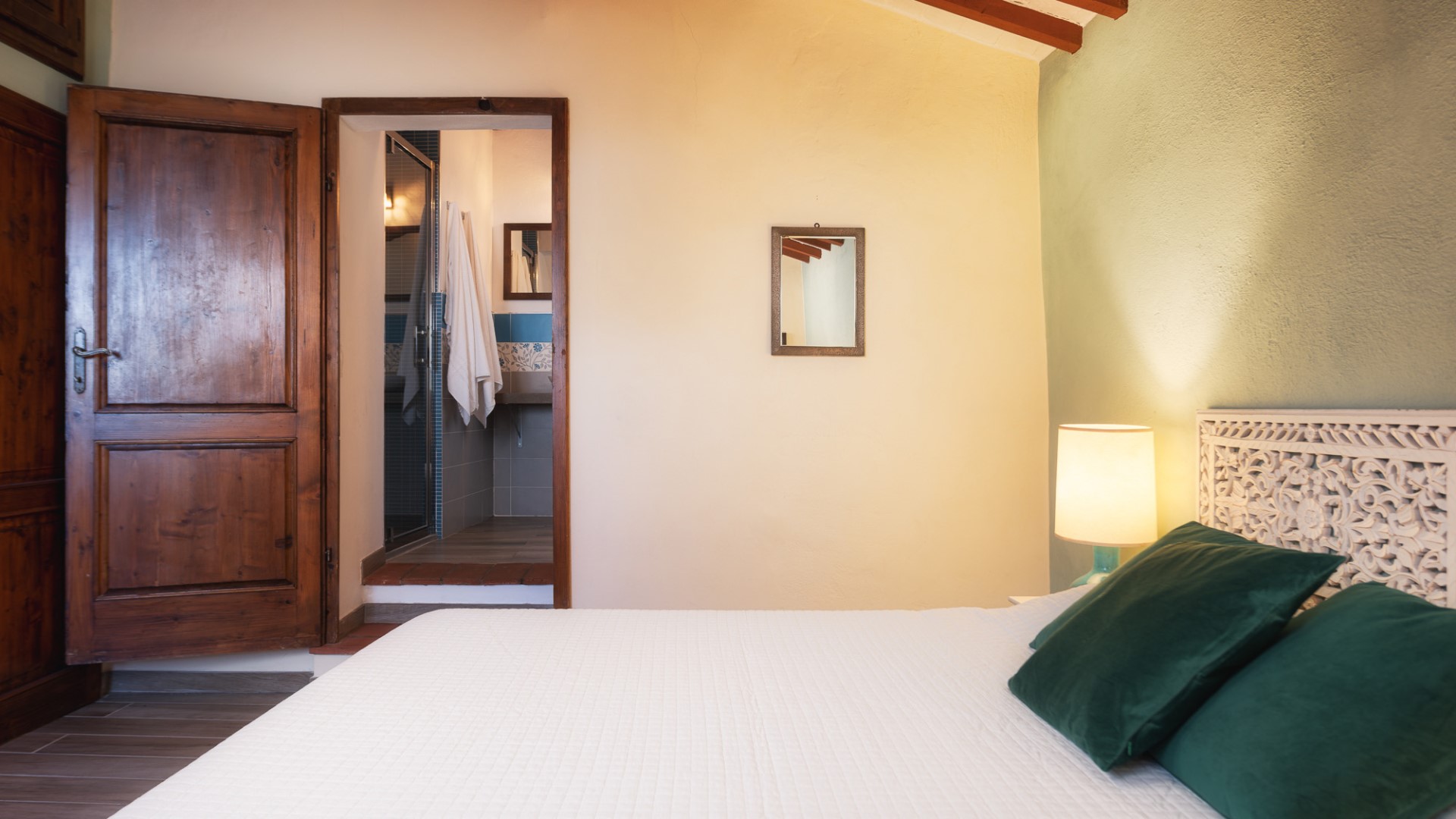
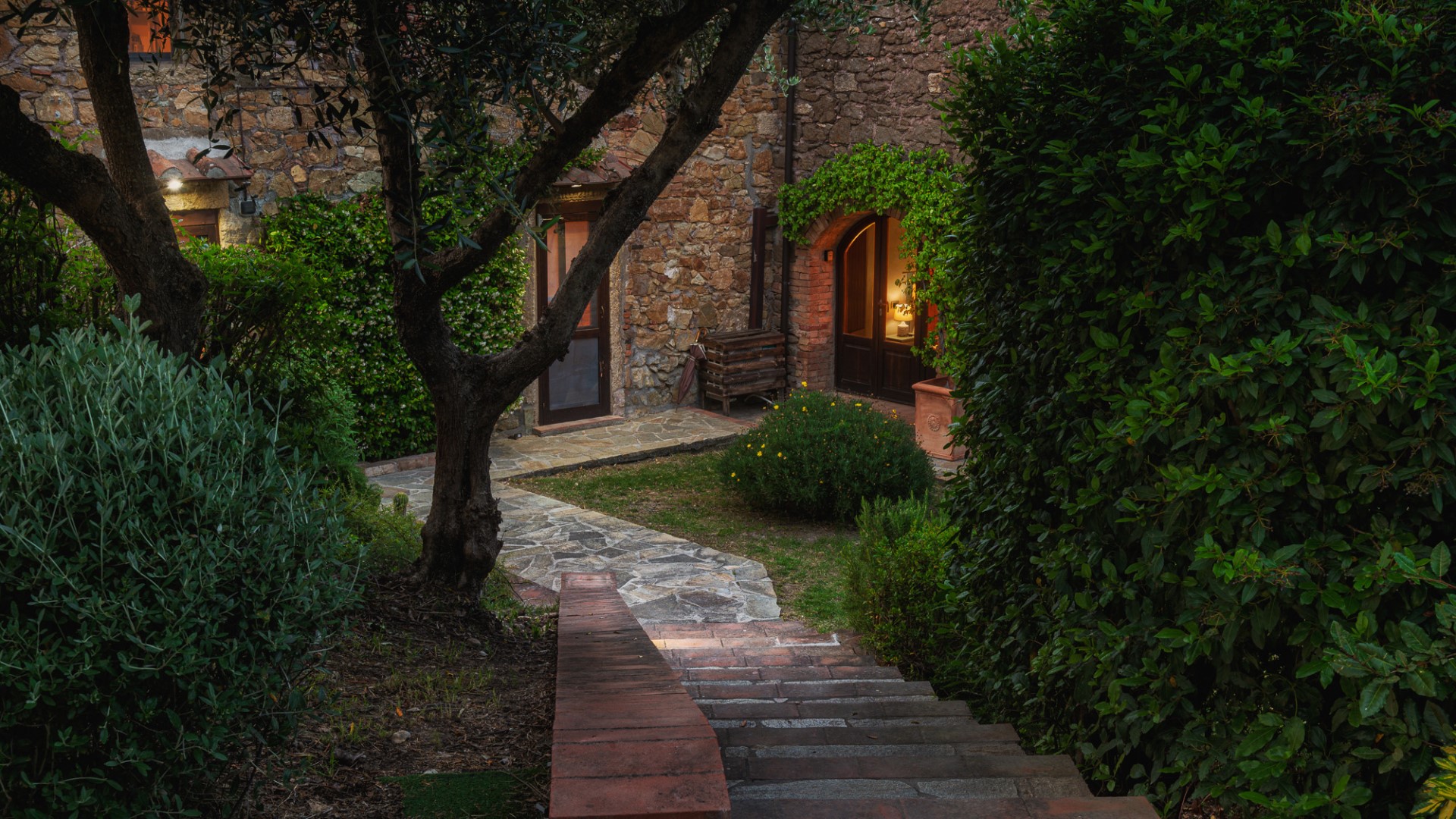
(ornamental) and TV. From here you then continue to a double bedroom, with direct access to the garden, and, on the opposite side, to a hallway with a handy wardrobe and a bathroom with shower serving the ground-floor bedroom. Next to the bathroom is a technical room with laundry area. Returning to the sitting room, you come to the beautiful, glass-enclosed veranda, facing the pool, with a nice dining table and sitting area. An internal staircase from the sitting room leads up to the first floor with two double bedrooms with ensuite bathroom with shower, and a family suite with a double bedroom, a separate room with two bunk beds, a bathroom with shower, a kitchenette with fridge and TV and access to the raised floor of the external garden.
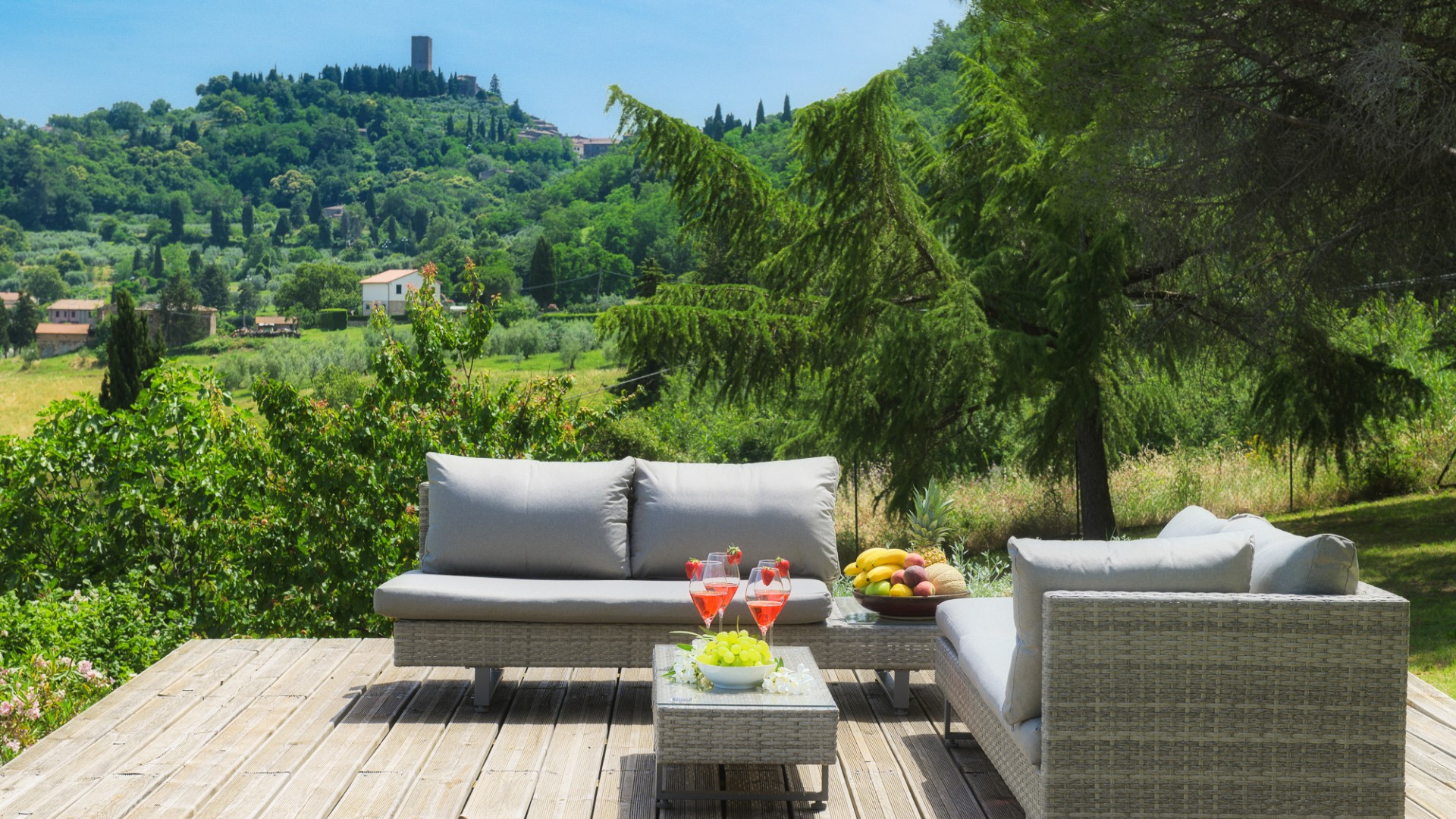
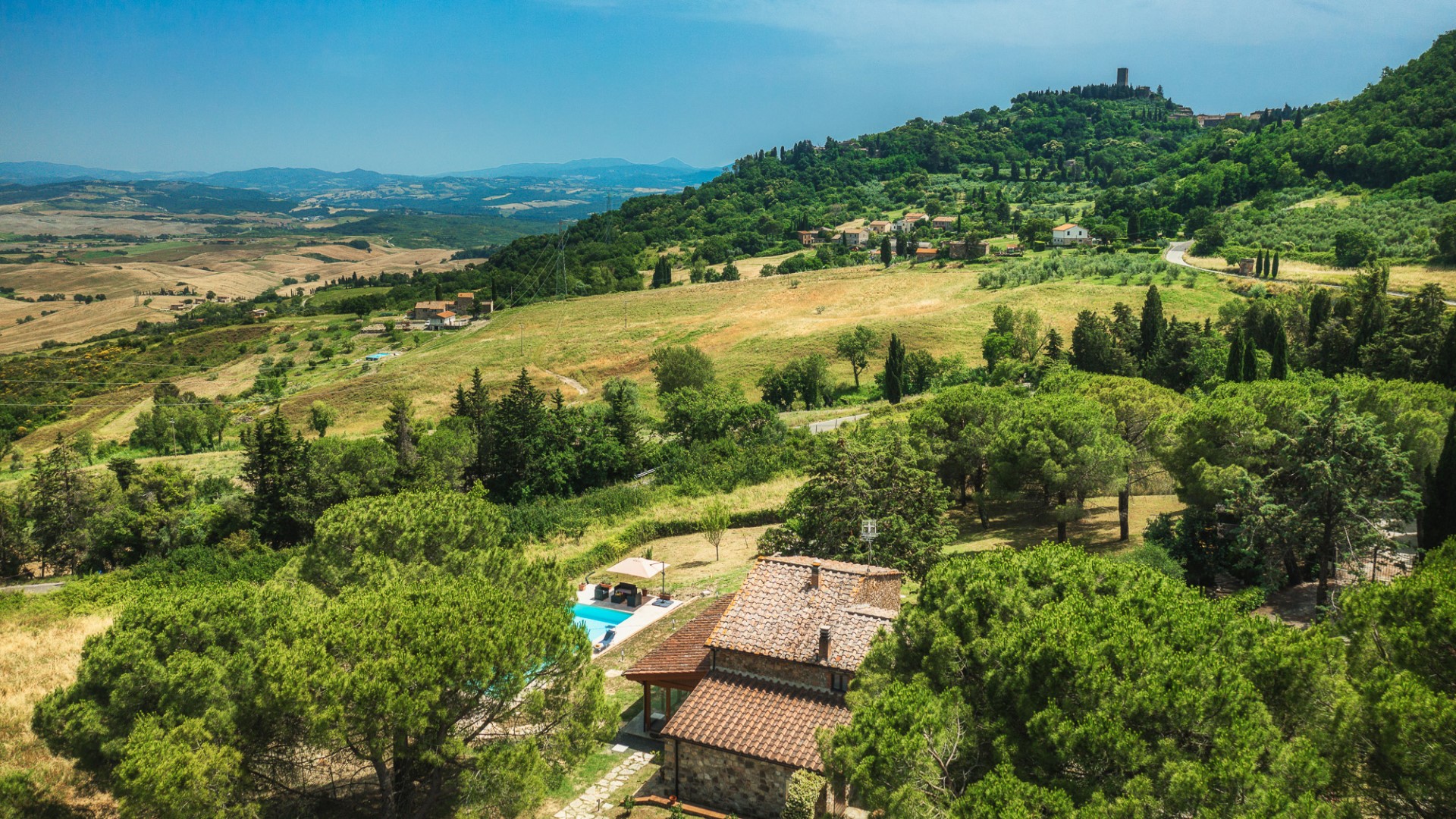
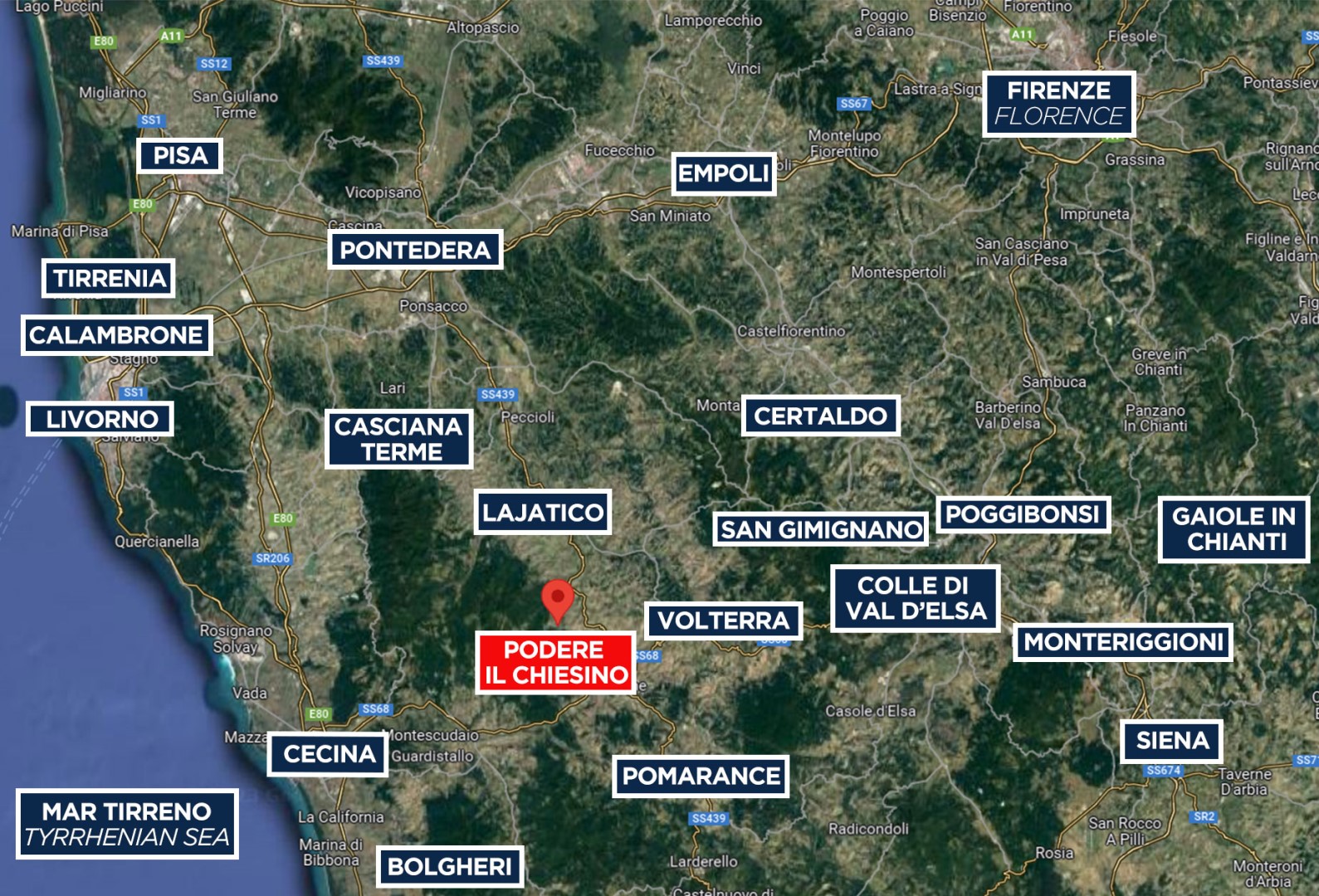
The Val di Cecina is located in the extreme south of the province of Pisa and takes its name from the river of the same name which crosses this hilly area between the province of Siena and the Livorno coast. Montecatini Val di Cecina is an old borgo located on top of a hill and which, still today, retains a compact medieval nucleus, with many traces of the past. Among these is the enchanting Torre Belforti, currently privately owned. Other traces can be found in the 14th century Palazzo Pretorio and in the parish church of San Biagio, an asymmetrical church with three naves and no façade. The history of this borgo is concentrated in the centuries of the struggles between Pisa, Volterra and Florence to take possession of these places rich in minerals, which have influenced, since the Etruscan era, the copper mining activity. An activity that reached its peak in the 19th century, when the Montecatini mine became the largest in Europe. The mine, which is located just outside the town, is now a museum. In Montecatini Val di Cecina are shops and services of every kind, as well as bars and restaurants. In the area around Montecatini Val di Cecina are many pretty borghi to be visited, such as La Sassa and Querceto which, still today, retain intact their medieval structure and from where you can admire the splendid panorama stretching from the Val di Cecina to the coast. Not far away is the so-called Valle del Diavolo (Devil's Valley) in Larderello, so called due to the boraciferous geysers and the natural geothermal manifestations from which geothermal energy is extracted. The puffs, whose emissions can reach a temperature of 130-160°C, seem threatening but in reality they only represent a geothermal activity that has been going on for millions of years and will continue for a very long time to come. It seems that Dante was already aware of the geothermal phenomena of this area which inspired the landscapes described in his Inferno. About 10 km away is Volterra, the heart of the Val di Cecina, and which dominates it from the top of its balze (crags), a phenomenon of soil erosion. The town of Volterra has very ancient origins and preserves, unaltered, its three historical faces: Etruscan, with Porta dell'Arco and Porta Diana, Roman, as clearly evidenced by the theatre, and medieval as seen in Piazza dei Priori and the palace of the same name, in the numerous tower houses and the Duomo. The name of Volterra is also linked to the subsoil with its famous alabaster, a white stone which, due to its particular softness, is more suitable than marble for reproducing motifs or ornamental details on a smaller scale. There is also an Alabaster Museum which presents the centuries-old history of its production, from the Etruscans to the present day. There is no shortage of shops and workshops where you can see the craftsmen at work. Not to be neglected, the food and wine wealth of the area, from the Pecorino delle Balze Volterrane, an excellent DOP sheep's cheese, both fresh and aged, treated with olive tree ash, to the Salt of Volterra, an Italian excellence, produced in the former state saltpan, to the truffle, including the prized white truffle, to the extra virgin olive oil and the wine produced along the Wine Road of the Pisan Hills.
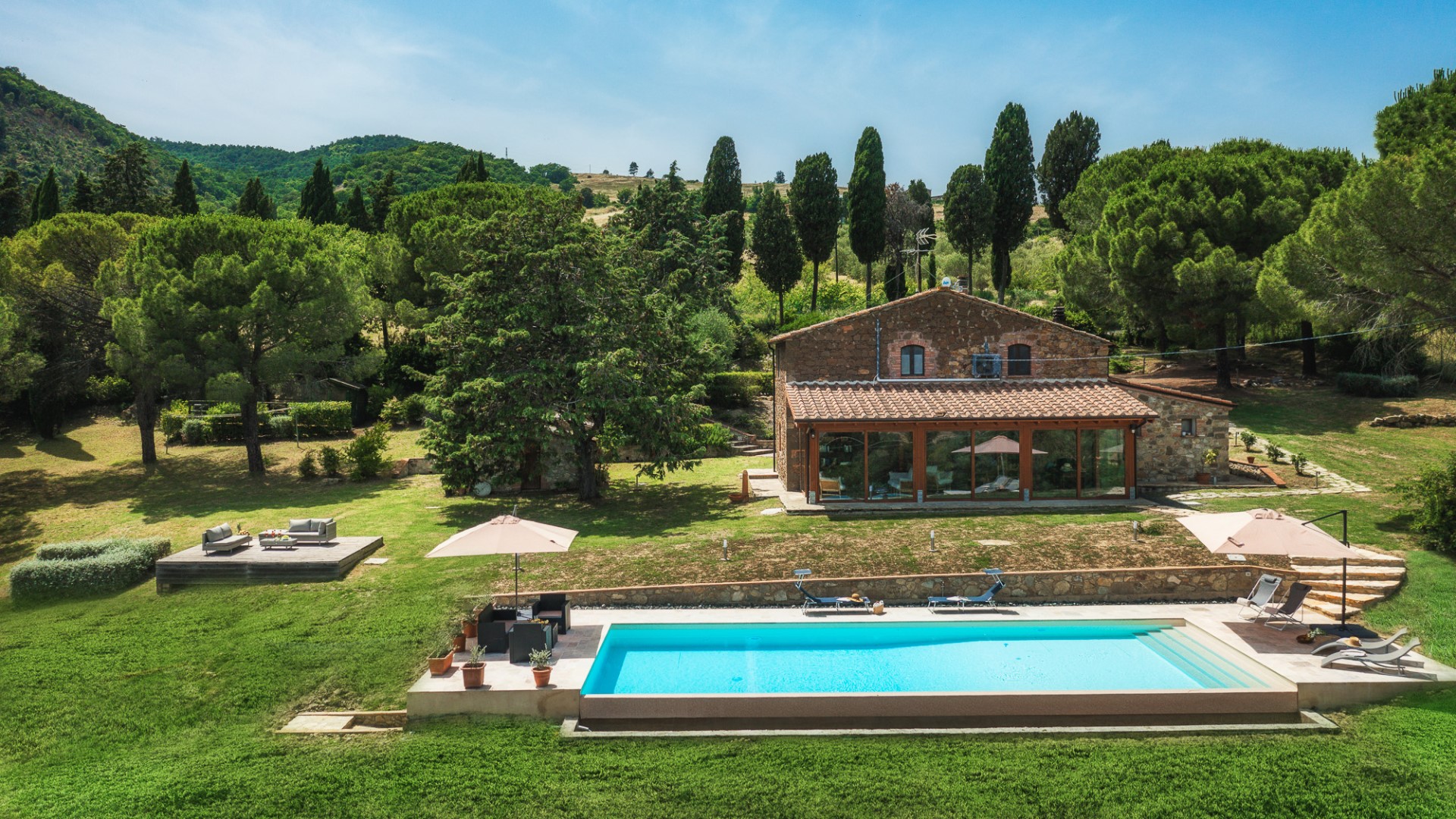
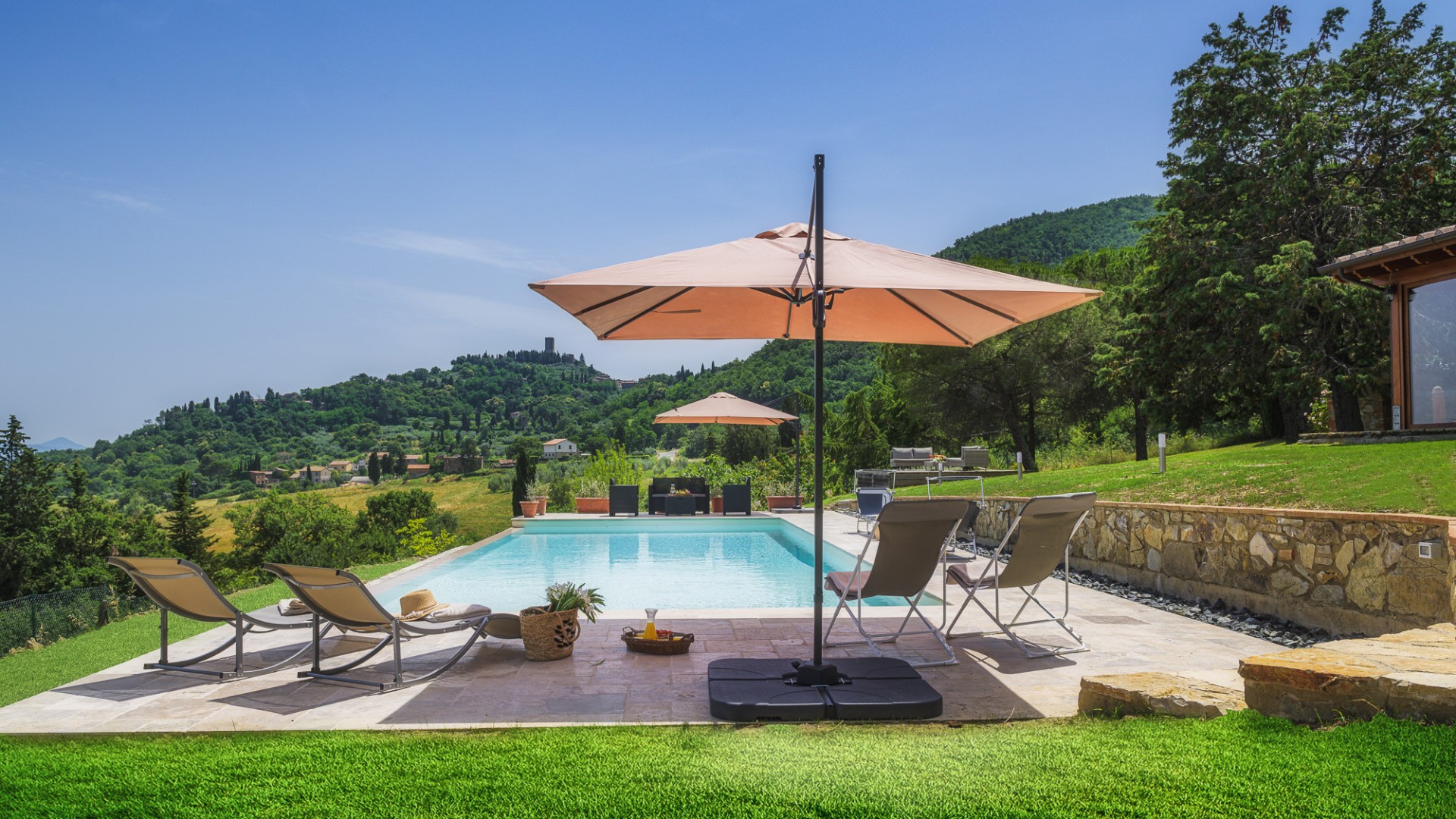
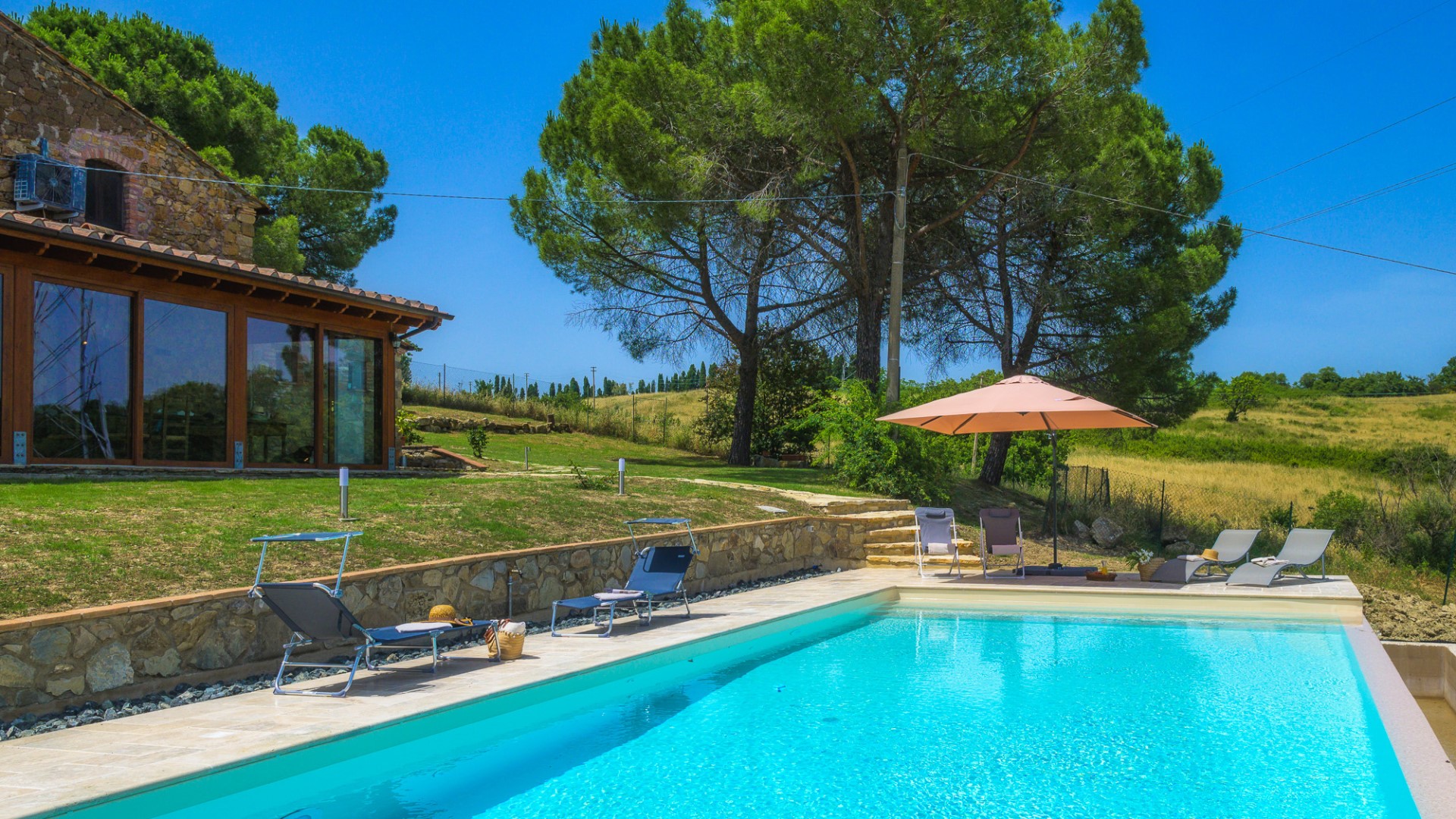
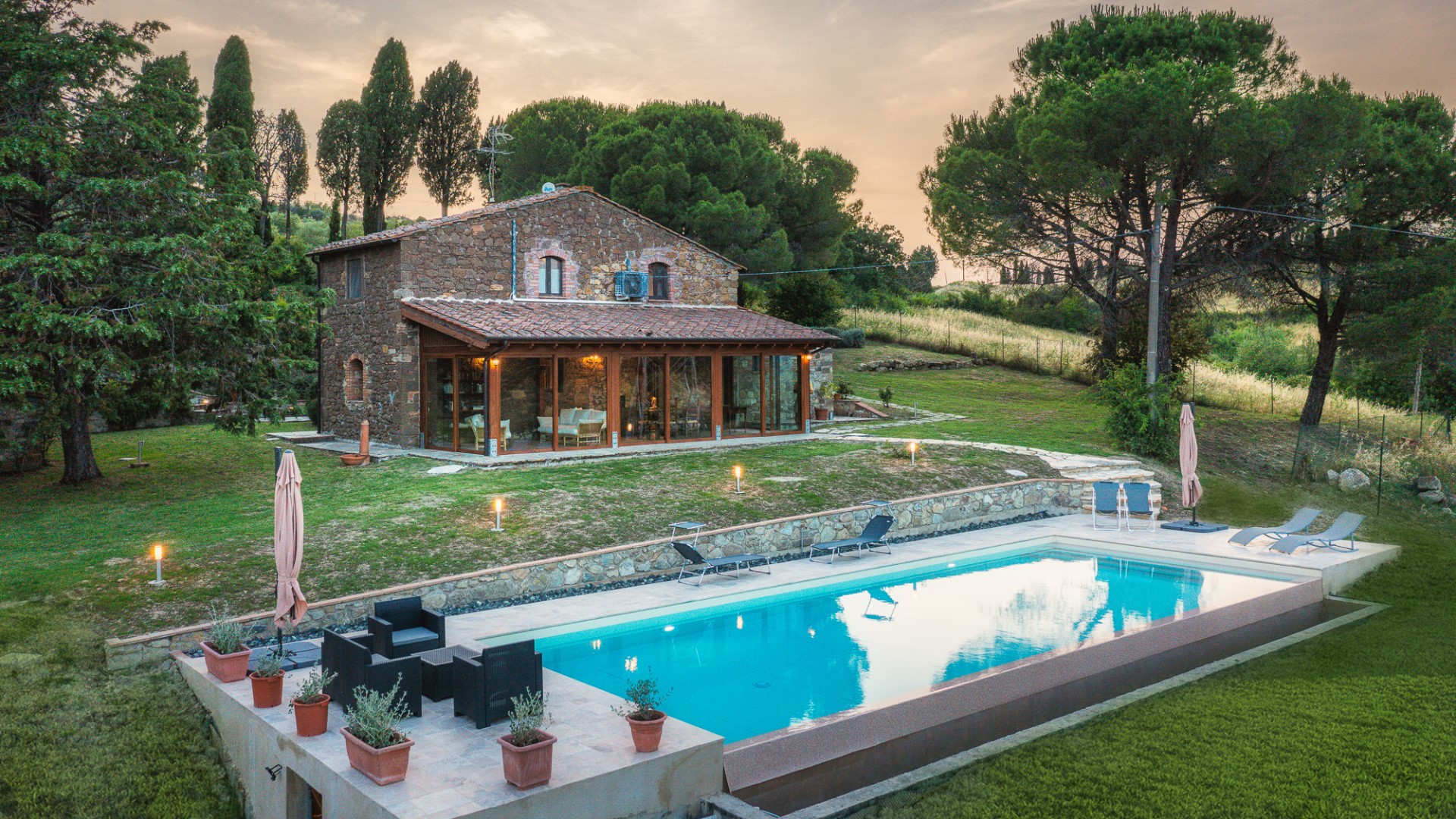
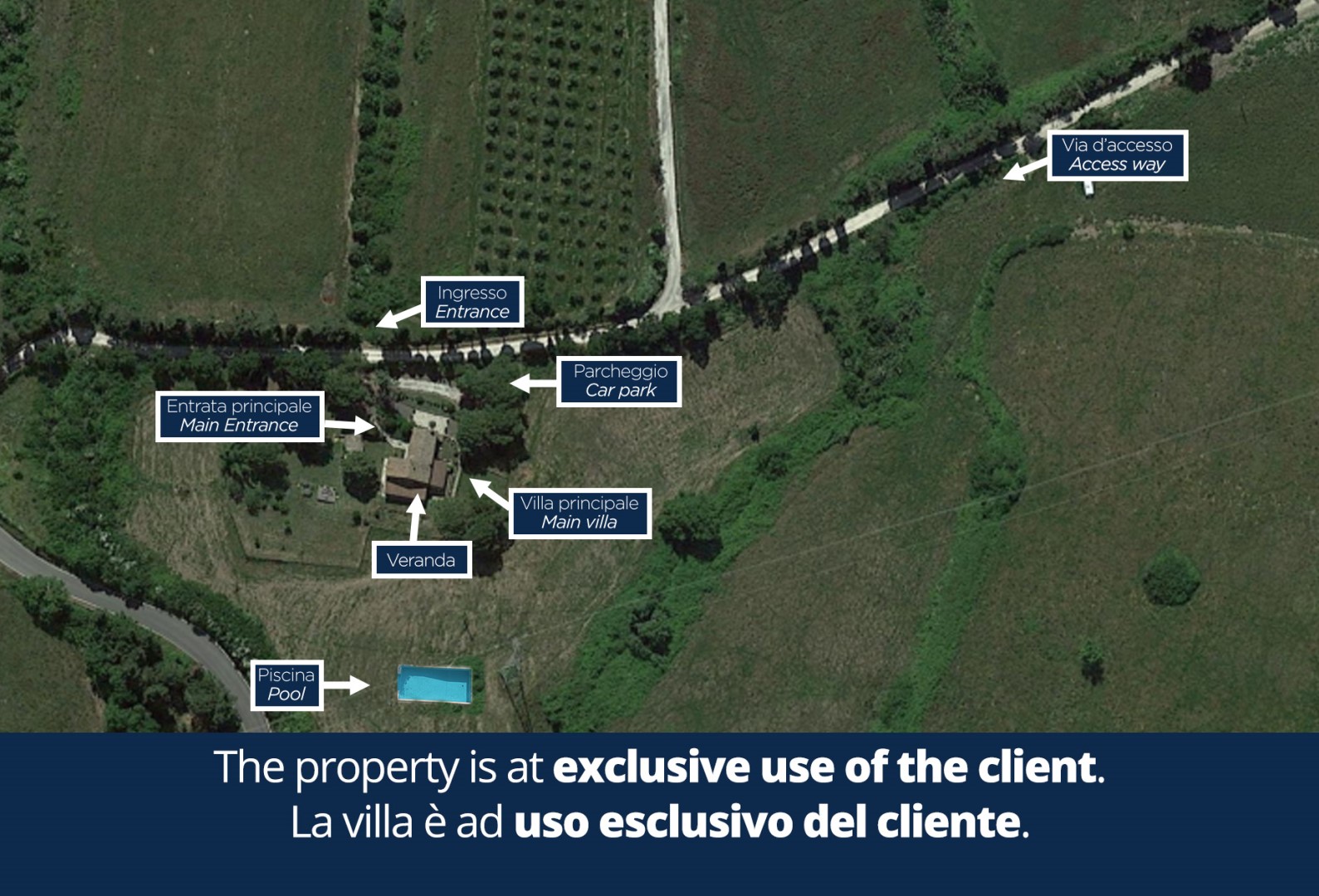
The swimming pool is located behind the property, in front of the veranda, on terracing below the level of the house and can be reached via a path and then a few stone steps. The rectangular infinity pool, with submerged steps for access to the water; measures
13 x 5 m with a depth varying from 1 to 1,50 m; it is lined in sand-coloured granite and has internal lighting and chlorine purification. The surrounding sunbathing area is arranged with little sofa, umbrellas and sunbeds. There is also a cold-water shower. The pool is open from the last Saturday in April until the first Saturday in October.
PODERE IL CHIESINO HAS BEEN SUBJECTED TO A CHECK-UP BY A TECHNICAL RESPONSIBLE BEFORE THE BEGINNING OF THE SEASON, TO ENSURE CONSISTENCY OF THE DESCRIPTION, ACCESSORIES LISTED ON THIS PAGE AND THEIR PRESENT STATE OF OPERATION/MAINTENANCE, TO GUARANTEE QUALITY, CLEANLINESS AND COMFORTS TO ALL CLIENTS WHO WILL STAY HERE.
Podere Il Chiesino has two floors. The main entrance on the ground floor leads into a large dining room. To the left is the large, modern and well-equipped kitchen with outside access. To the right of the entrance is a small sitting room with fireplace
(ornamental) and TV. From here you then continue to a double bedroom, with direct access to the garden, and, on the opposite side, to a hallway with a handy wardrobe and a bathroom with shower serving the ground-floor bedroom. Next to the bathroom is a technical room with laundry area. Returning to the sitting room, you come to the beautiful, glass-enclosed veranda, facing the pool, with a nice dining table and sitting area. An internal staircase from the sitting room leads up to the first floor with two double bedrooms with ensuite bathroom with shower, and a family suite with a double bedroom, a separate room with two bunk beds, a bathroom with shower, a kitchenette with fridge and TV and access to the raised floor of the external garden.
The Val di Cecina is located in the extreme south of the province of Pisa and takes its name from the river of the same name which crosses this hilly area between the province of Siena and the Livorno coast. Montecatini Val di Cecina is an old borgo located on top of a hill and which, still today, retains a compact medieval nucleus, with many traces of the past. Among these is the enchanting Torre Belforti, currently privately owned. Other traces can be found in the 14th century Palazzo Pretorio and in the parish church of San Biagio, an asymmetrical church with three naves and no façade. The history of this borgo is concentrated in the centuries of the struggles between Pisa, Volterra and Florence to take possession of these places rich in minerals, which have influenced, since the Etruscan era, the copper mining activity. An activity that reached its peak in the 19th century, when the Montecatini mine became the largest in Europe. The mine, which is located just outside the town, is now a museum. In Montecatini Val di Cecina are shops and services of every kind, as well as bars and restaurants. In the area around Montecatini Val di Cecina are many pretty borghi to be visited, such as La Sassa and Querceto which, still today, retain intact their medieval structure and from where you can admire the splendid panorama stretching from the Val di Cecina to the coast. Not far away is the so-called Valle del Diavolo (Devil's Valley) in Larderello, so called due to the boraciferous geysers and the natural geothermal manifestations from which geothermal energy is extracted. The puffs, whose emissions can reach a temperature of 130-160°C, seem threatening but in reality they only represent a geothermal activity that has been going on for millions of years and will continue for a very long time to come. It seems that Dante was already aware of the geothermal phenomena of this area which inspired the landscapes described in his Inferno. About 10 km away is Volterra, the heart of the Val di Cecina, and which dominates it from the top of its balze (crags), a phenomenon of soil erosion. The town of Volterra has very ancient origins and preserves, unaltered, its three historical faces: Etruscan, with Porta dell'Arco and Porta Diana, Roman, as clearly evidenced by the theatre, and medieval as seen in Piazza dei Priori and the palace of the same name, in the numerous tower houses and the Duomo. The name of Volterra is also linked to the subsoil with its famous alabaster, a white stone which, due to its particular softness, is more suitable than marble for reproducing motifs or ornamental details on a smaller scale. There is also an Alabaster Museum which presents the centuries-old history of its production, from the Etruscans to the present day. There is no shortage of shops and workshops where you can see the craftsmen at work. Not to be neglected, the food and wine wealth of the area, from the Pecorino delle Balze Volterrane, an excellent DOP sheep's cheese, both fresh and aged, treated with olive tree ash, to the Salt of Volterra, an Italian excellence, produced in the former state saltpan, to the truffle, including the prized white truffle, to the extra virgin olive oil and the wine produced along the Wine Road of the Pisan Hills.
The swimming pool is located behind the property, in front of the veranda, on terracing below the level of the house and can be reached via a path and then a few stone steps. The rectangular infinity pool, with submerged steps for access to the water; measures
13 x 5 m with a depth varying from 1 to 1,50 m; it is lined in sand-coloured granite and has internal lighting and chlorine purification. The surrounding sunbathing area is arranged with little sofa, umbrellas and sunbeds. There is also a cold-water shower. The pool is open from the last Saturday in April until the first Saturday in October.
| August 22nd - August 28th, 2026 | 9,190 € |
| August 29th - September 25th, 2026 | 8,110 € |
| September 26th - December 18th, 2026 | 7,060 € |
| December 19th - January 08th, 2026/2027 | 8,110 € |
| January 09th - March 26th, 2027 | 7,060 € |
| March 27th - April 02nd, 2027 | 9,455 € |
| April 03rd - April 30th, 2027 | 7,060 € |
| May 01st - May 28th, 2027 | 7,370 € |
| May 29th - June 25th, 2027 | 8,110 € |
| June 26th - July 16th, 2027 | 9,190 € |
| July 17th - August 20th, 2027 | 9,455 € |
mandatory extra cleaning in case of animals (€ 50.00 per animal per week or part of week).
Tourism tax (€ 1,50 per person per night for the first 7 nights. Please note that children under 12 years old will not pay).
extra cleaning (€ 22,00/hour per cleaner), extra linen (€ 12,00 per person), heating (on consumption up to date market prices).THE ABOVE-MENTIONED SERVICES CAN BE REQUESTED DIRECTLY AT EMMA VILLAS AND HAVE TO BE PAID ON SITE AS THEY ARE MANAGED BY THIRD PERSONS OR EXTERNAL SUPPLIERS AND NOT WITH THE OWNER OR EMMA VILLAS
Select your arrival and departure dates on the calendar
Booked dates are clickable — tap one to see the next free dates for this villa.
fully cleaned property equipped with linens, utilities (water - gas for kitchen use and hot water), wireless internet connection, electricity and air conditioning/heating
mandatory extra cleaning in case of animals (€ 50.00 per animal per week or part of week).
Tourism tax (€ 1,50 per person per night for the first 7 nights. Please note that children under 12 years old will not pay).
extra cleaning (€ 22,00/hour per cleaner), extra linen (€ 12,00 per person), heating (on consumption up to date market prices).THE ABOVE-MENTIONED SERVICES CAN BE REQUESTED DIRECTLY AT EMMA VILLAS AND HAVE TO BE PAID ON SITE AS THEY ARE MANAGED BY THIRD PERSONS OR EXTERNAL SUPPLIERS AND NOT WITH THE OWNER OR EMMA VILLAS

PODERE IL CHIESINO HAS BEEN SUBJECTED TO A CHECK-UP BY A TECHNICAL RESPONSIBLE BEFORE THE BEGINNING OF THE SEASON, TO ENSURE CONSISTENCY OF THE DESCRIPTION, ACCESSORIES LISTED ON THIS PAGE AND THEIR PRESENT STATE OF OPERATION/MAINTENANCE, TO GUARANTEE QUALITY, CLEANLINESS AND COMFORTS TO ALL CLIENTS WHO WILL STAY HERE.
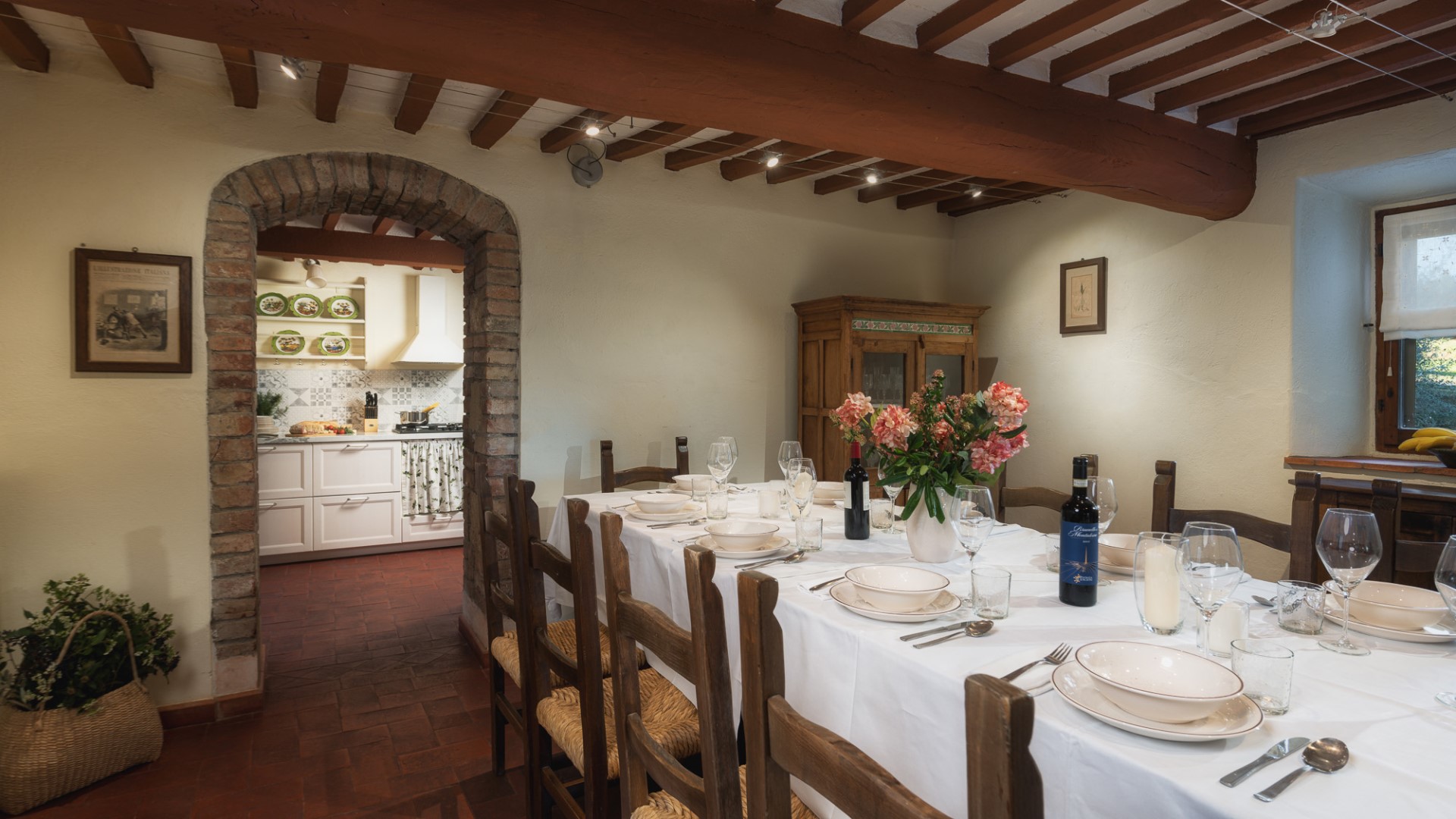
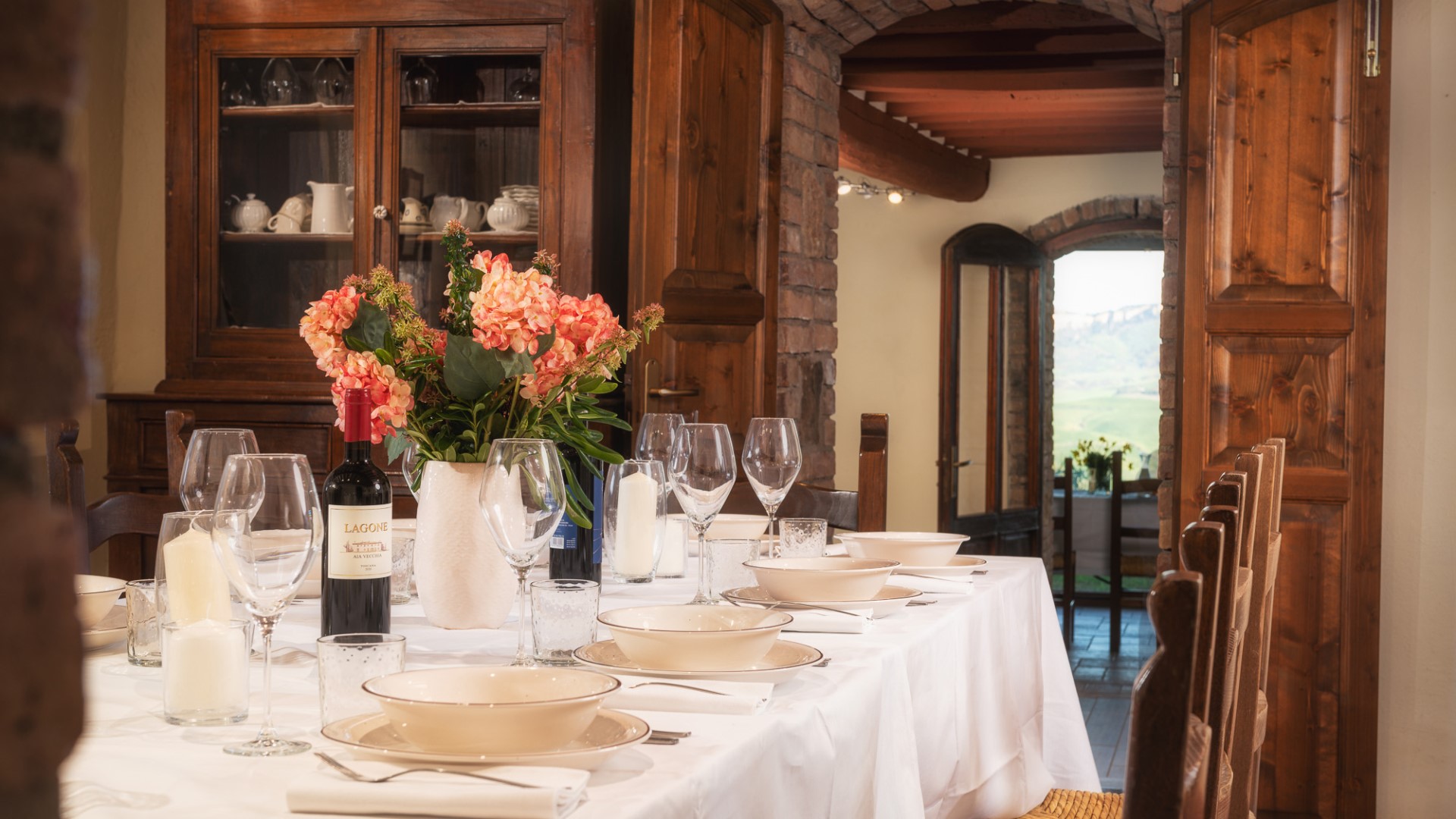
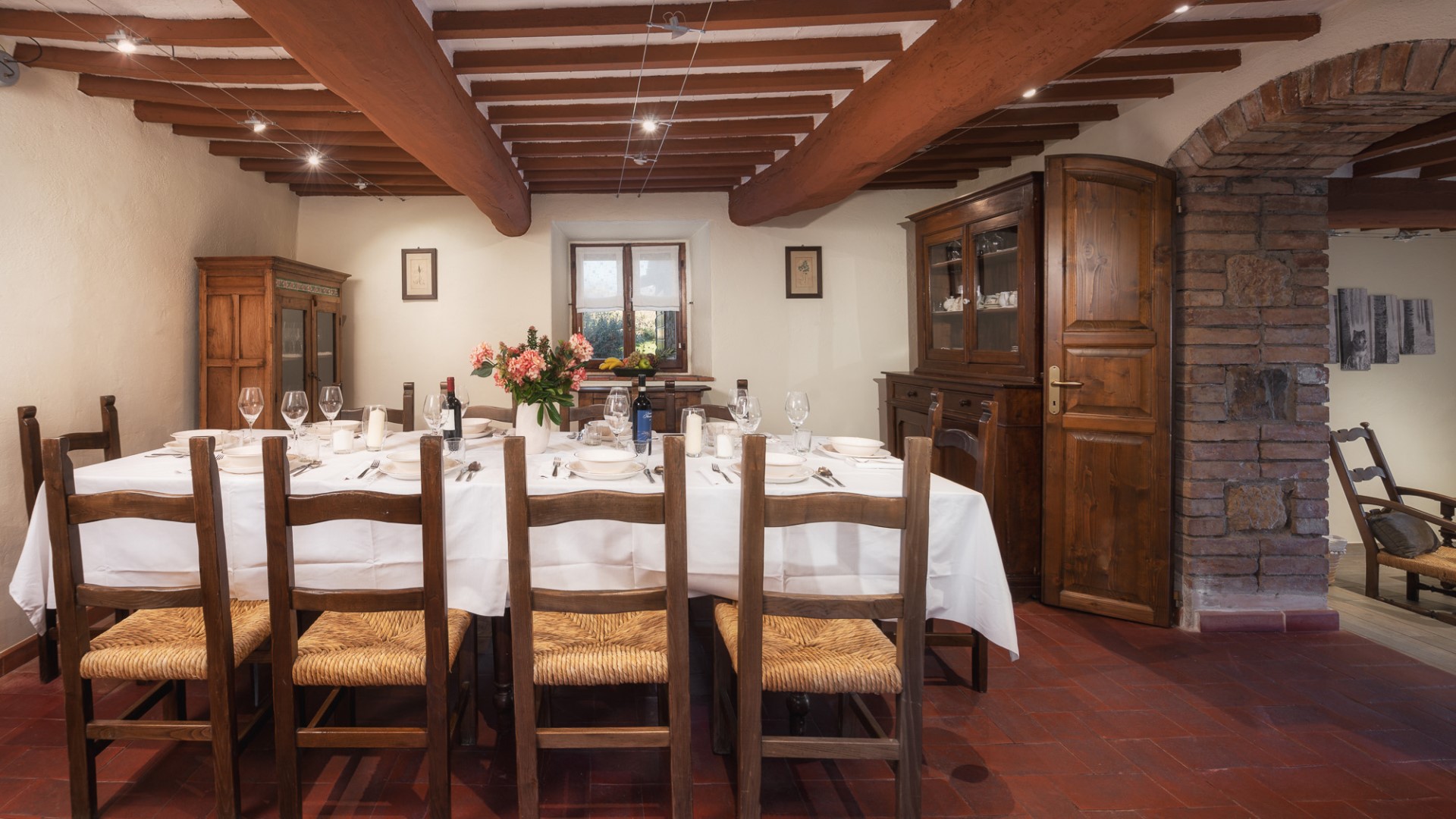
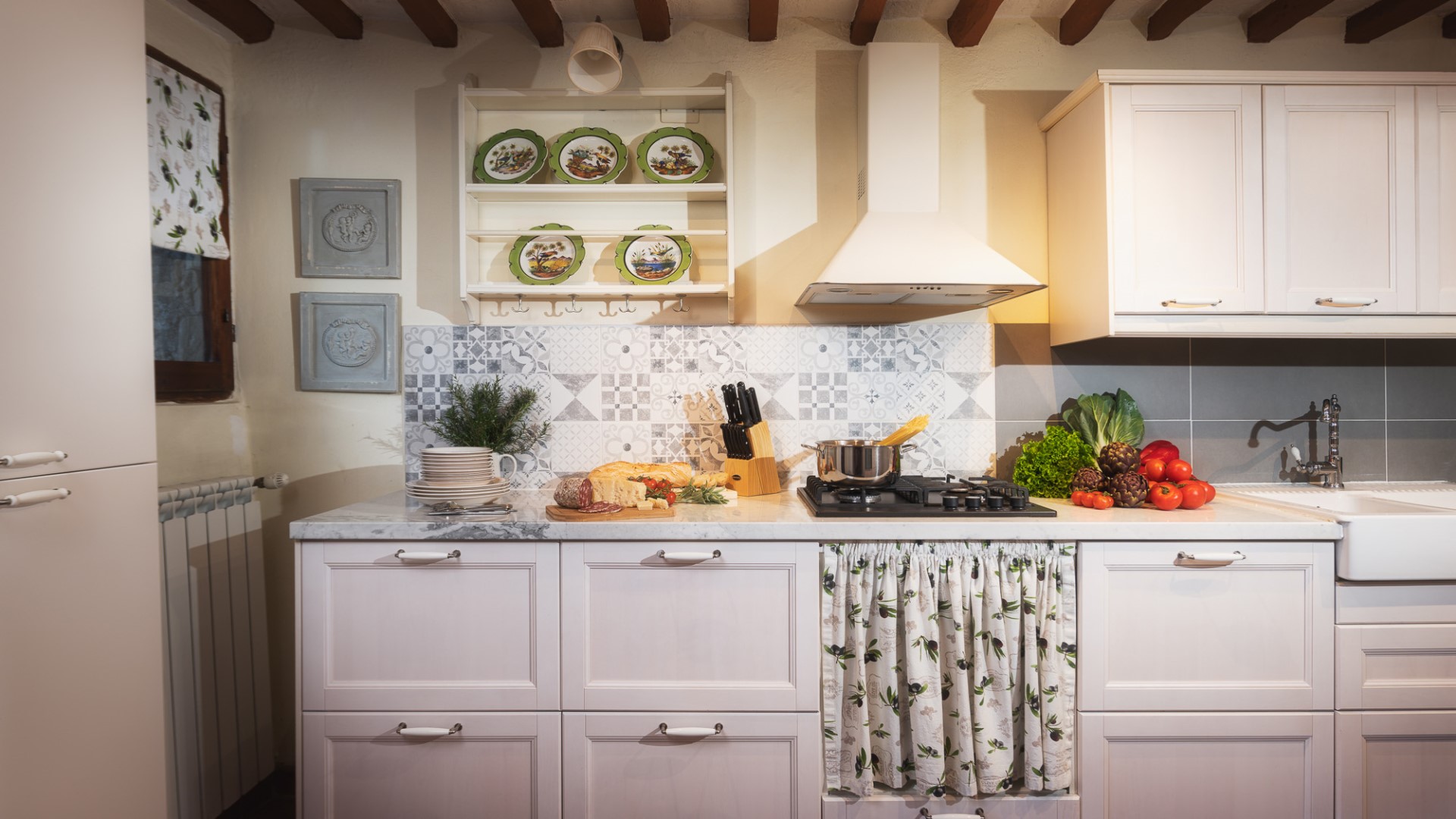
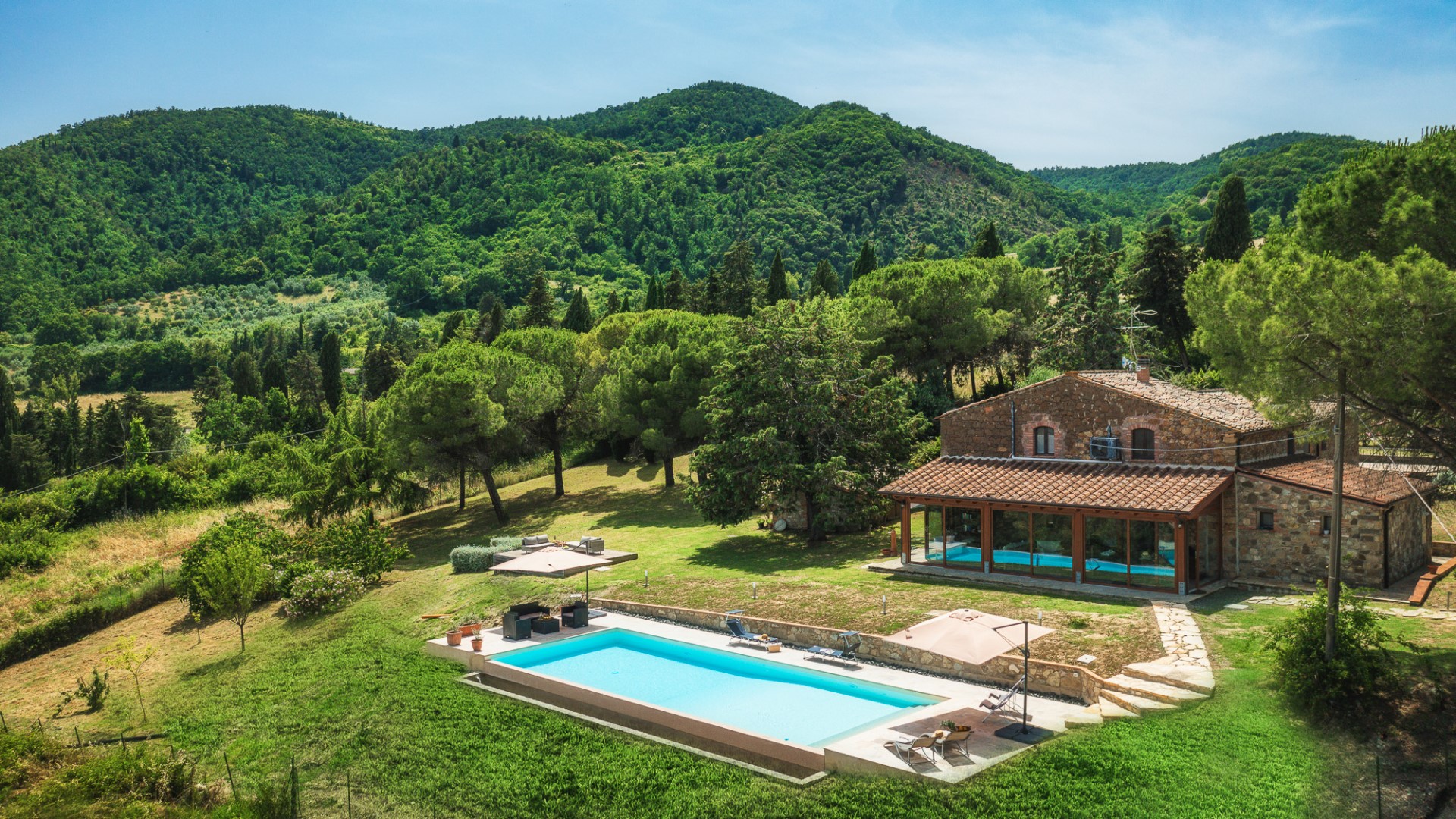
Podere Il Chiesino has two floors. The main entrance on the ground floor leads into a large dining room. To the left is the large, modern and well-equipped kitchen with outside access. To the right of the entrance is a small sitting room with fireplace
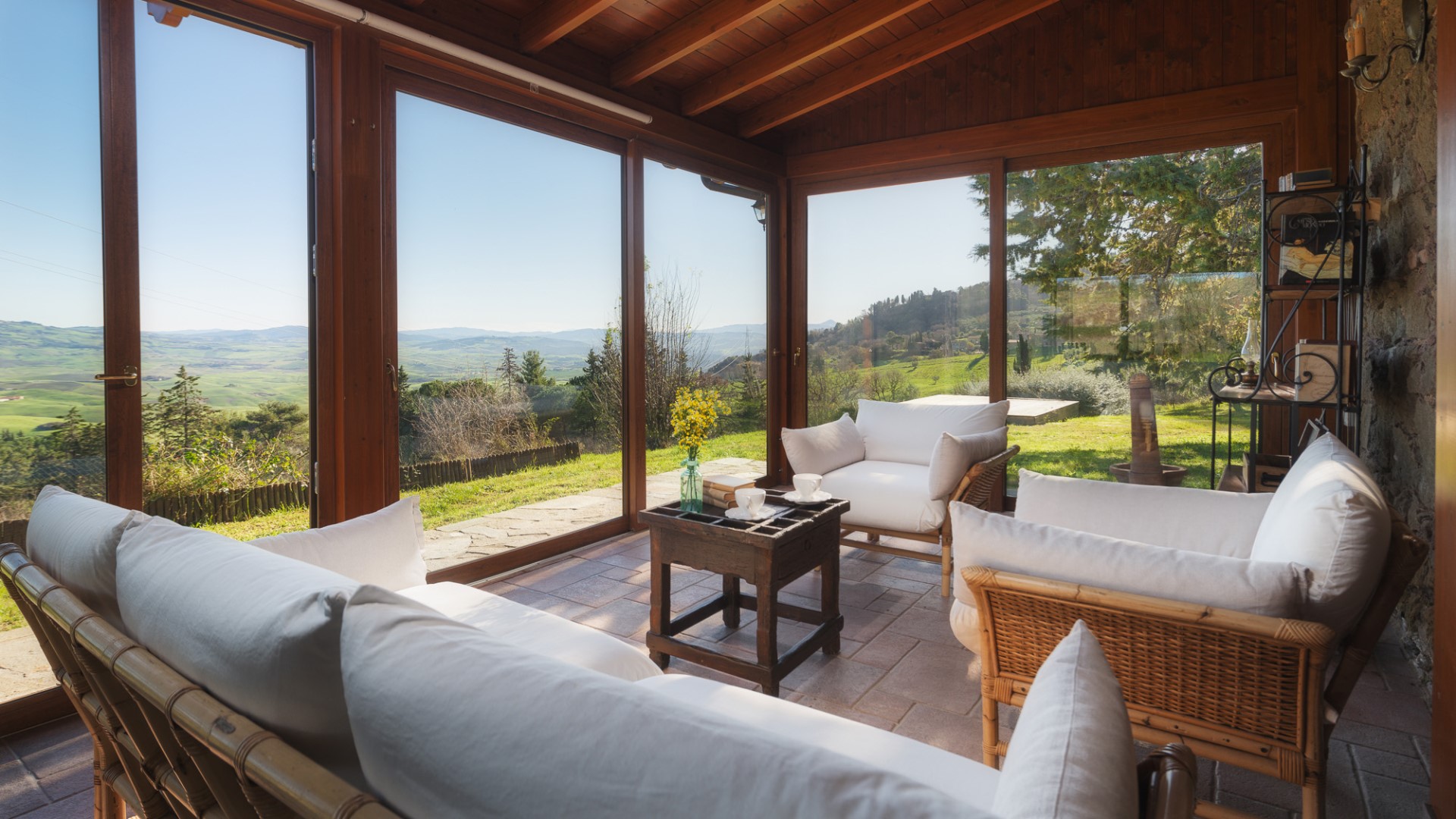
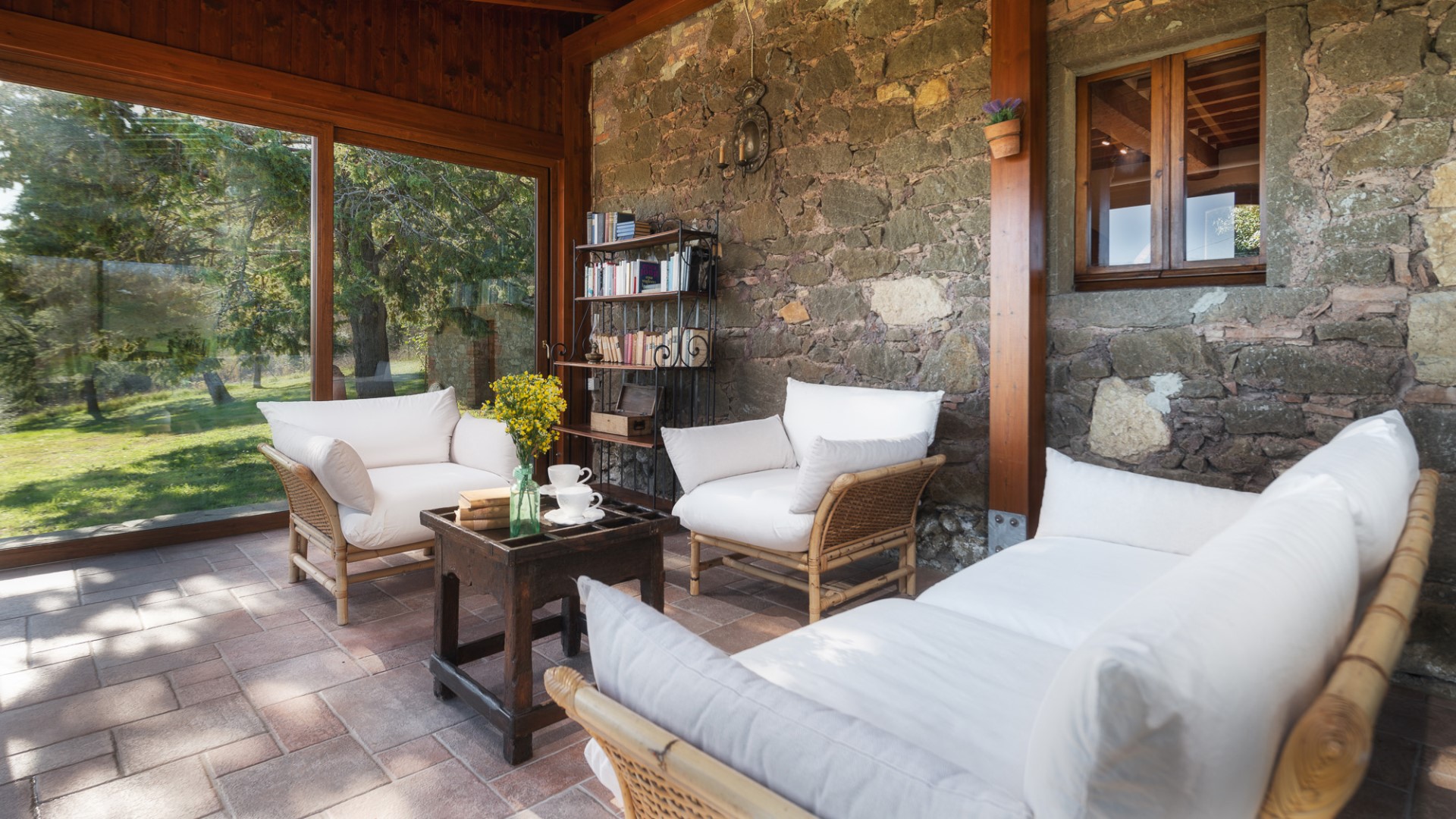
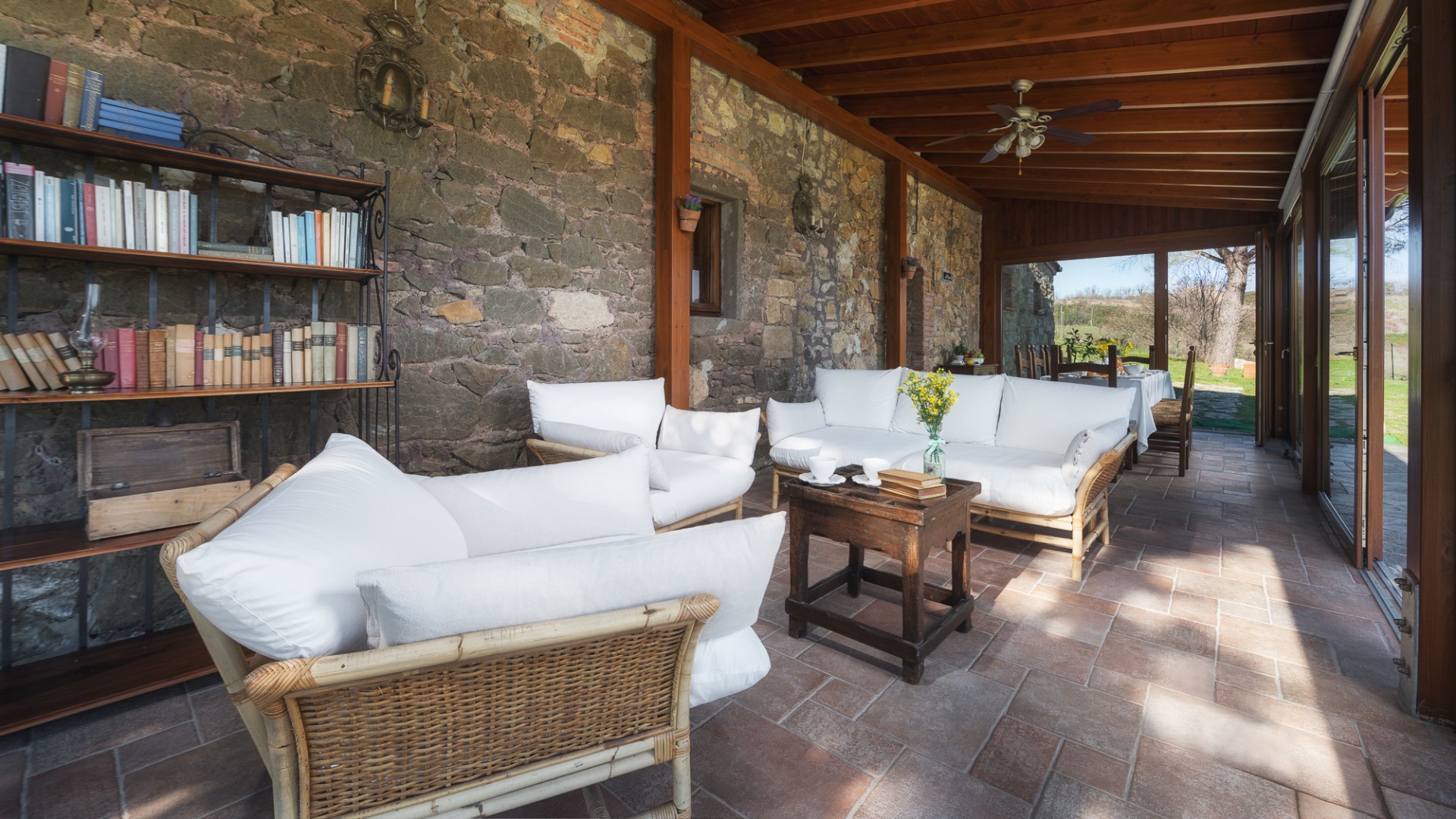
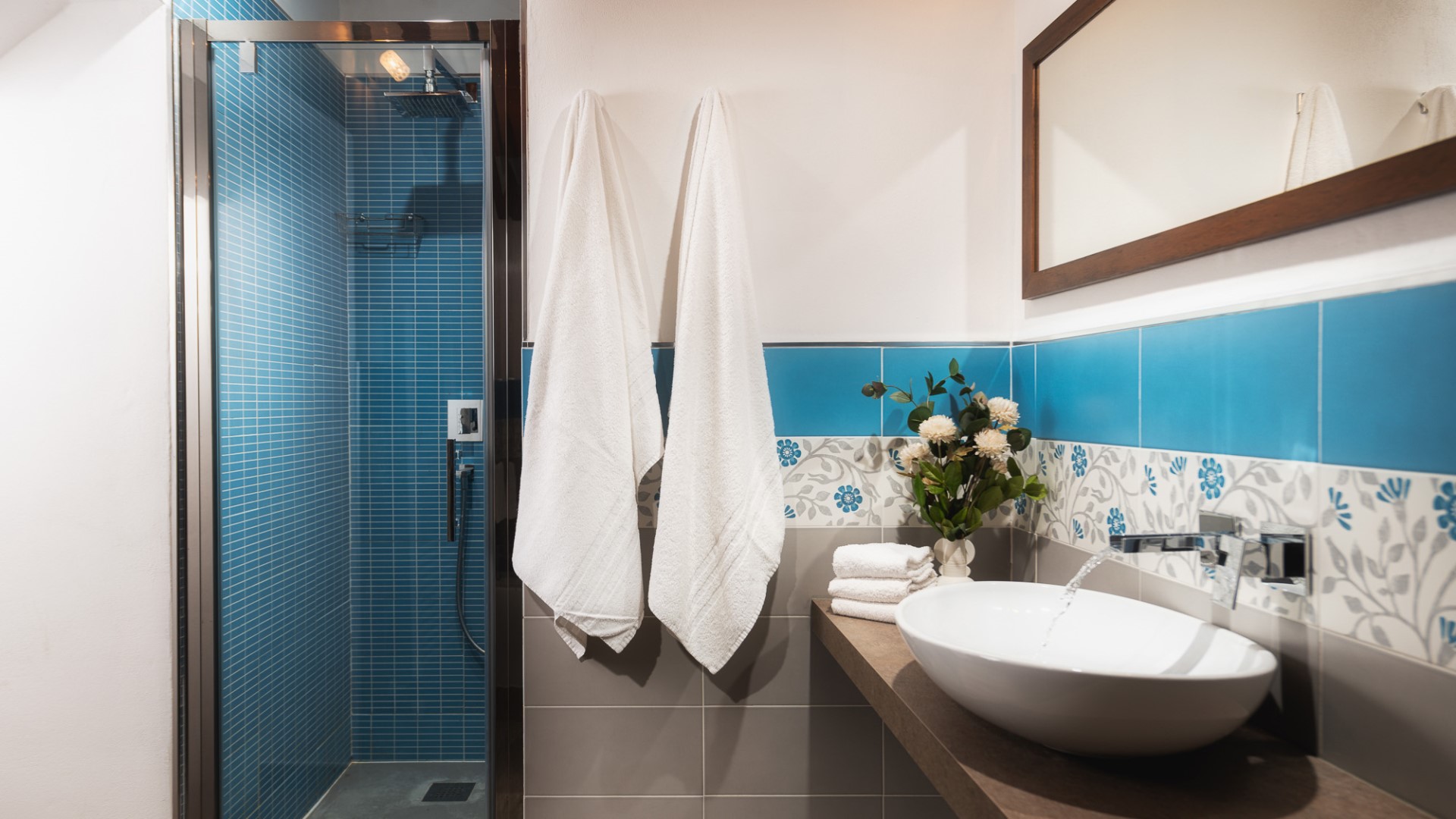
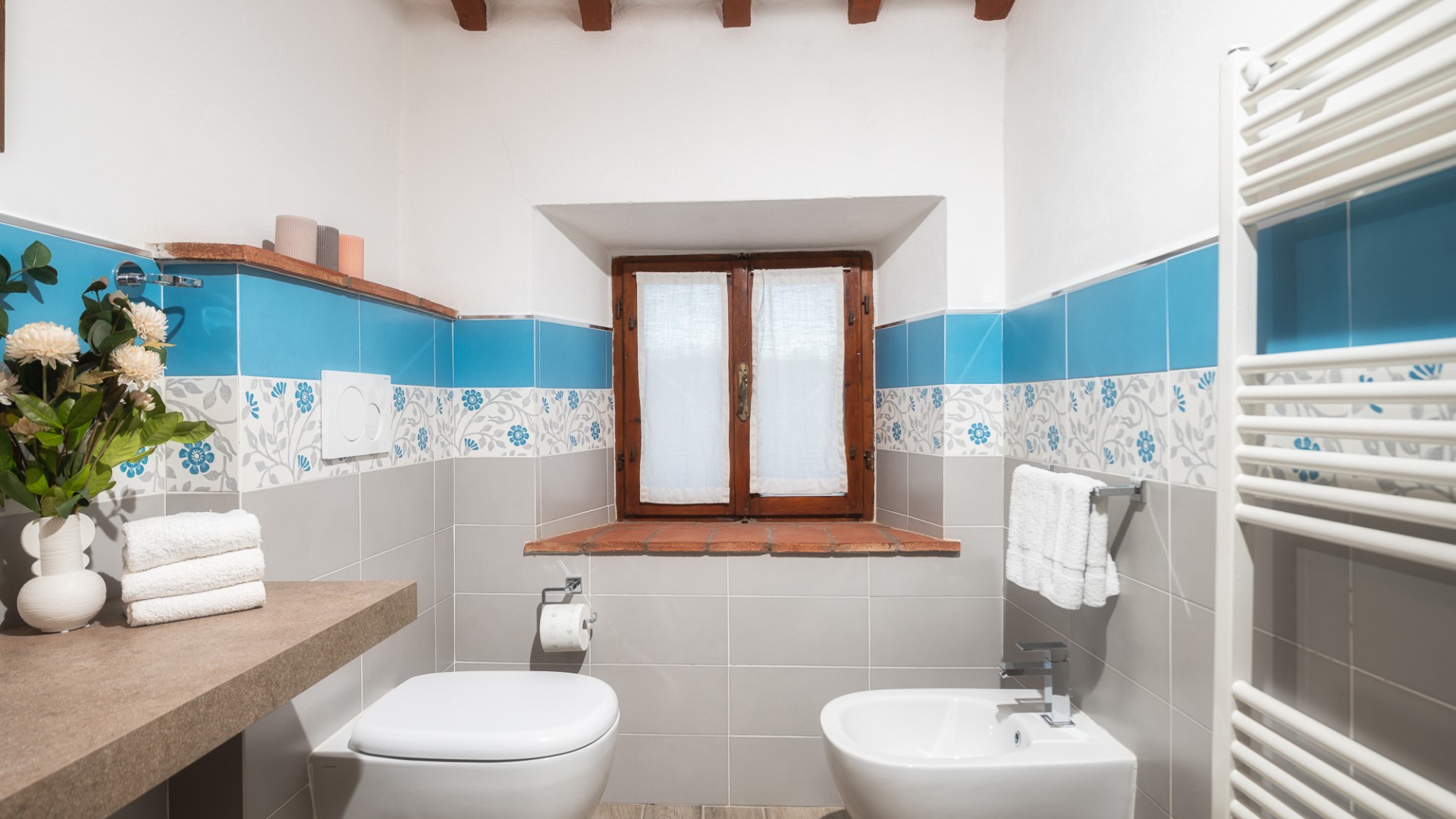
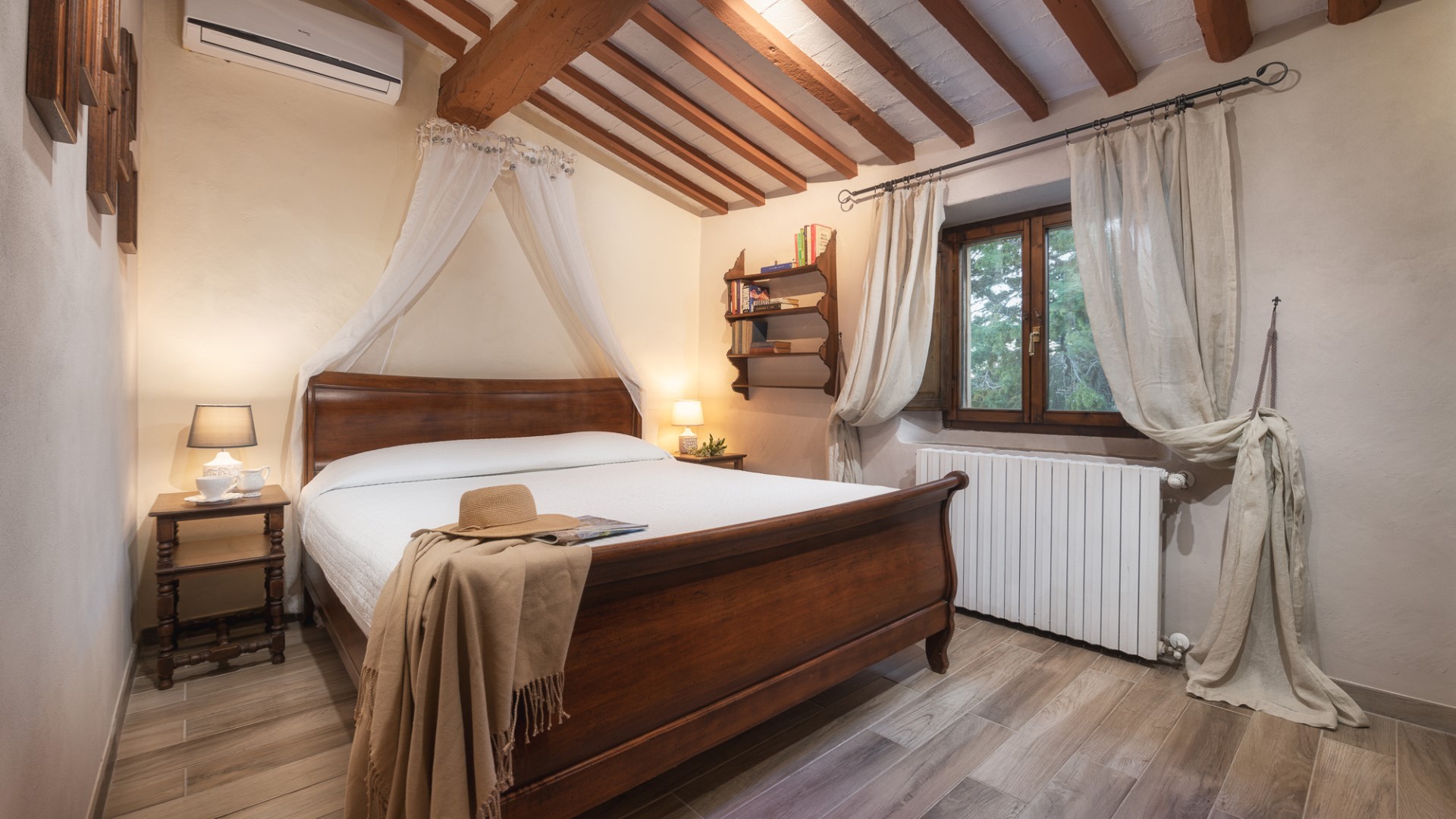
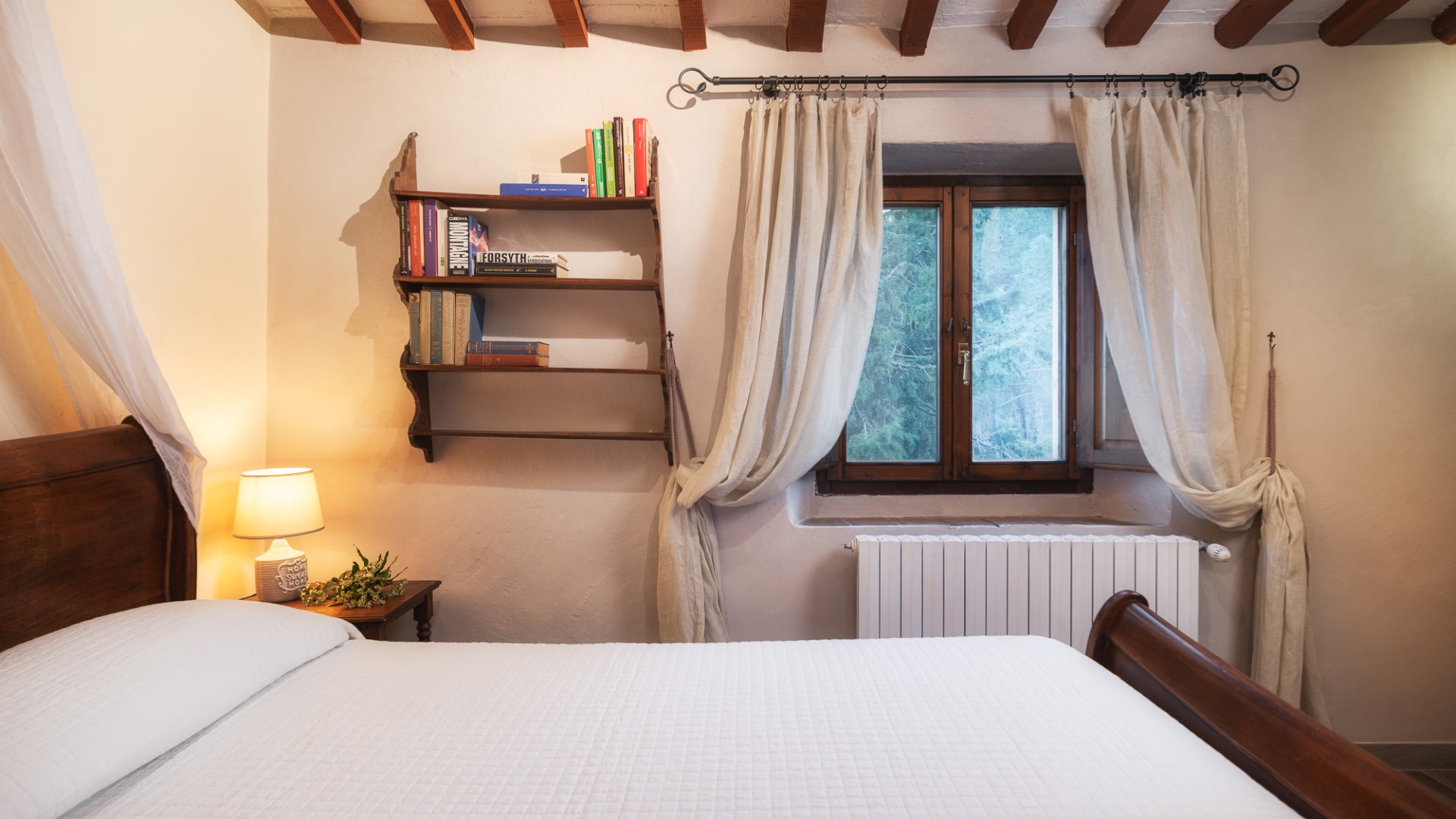
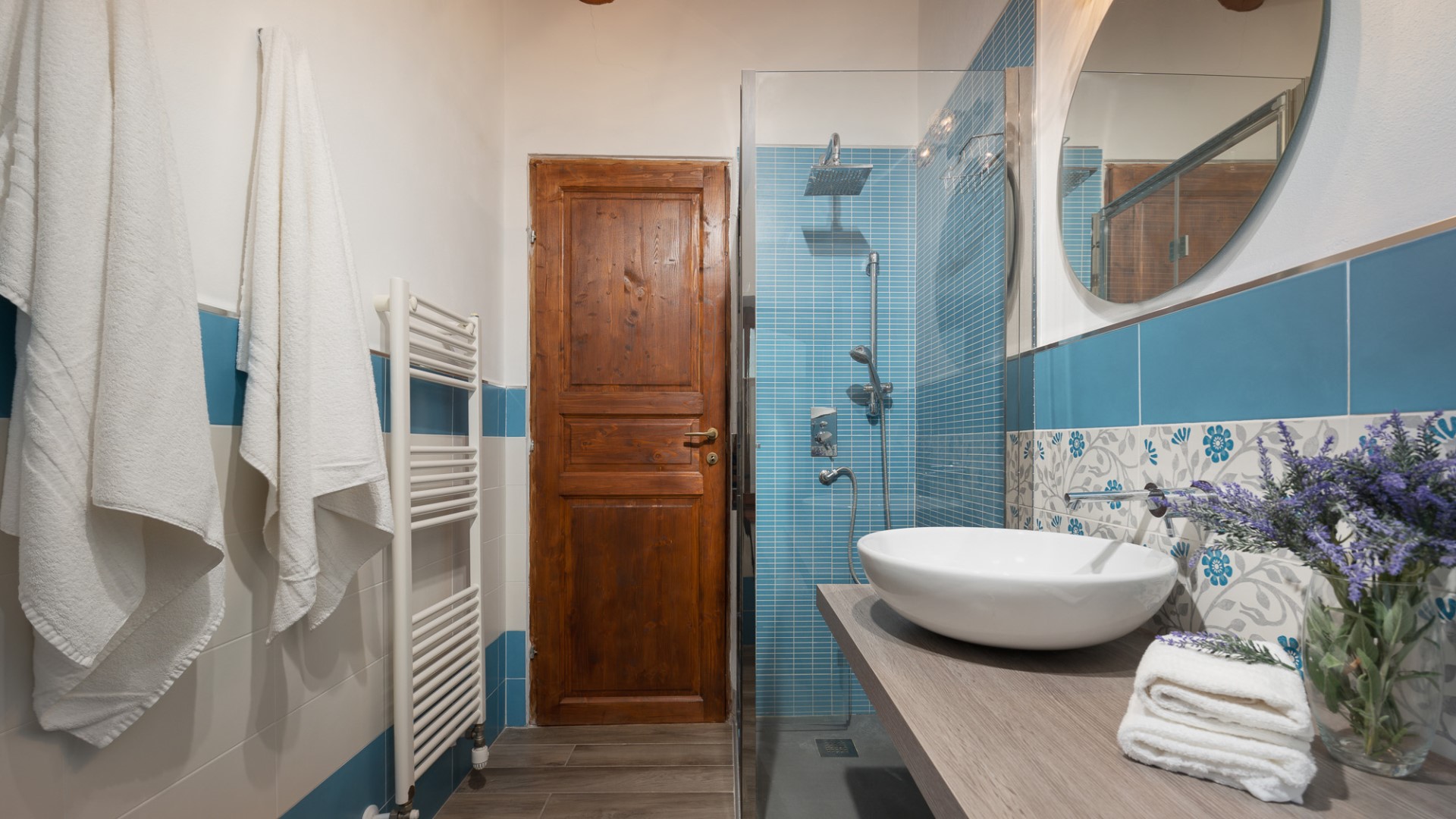
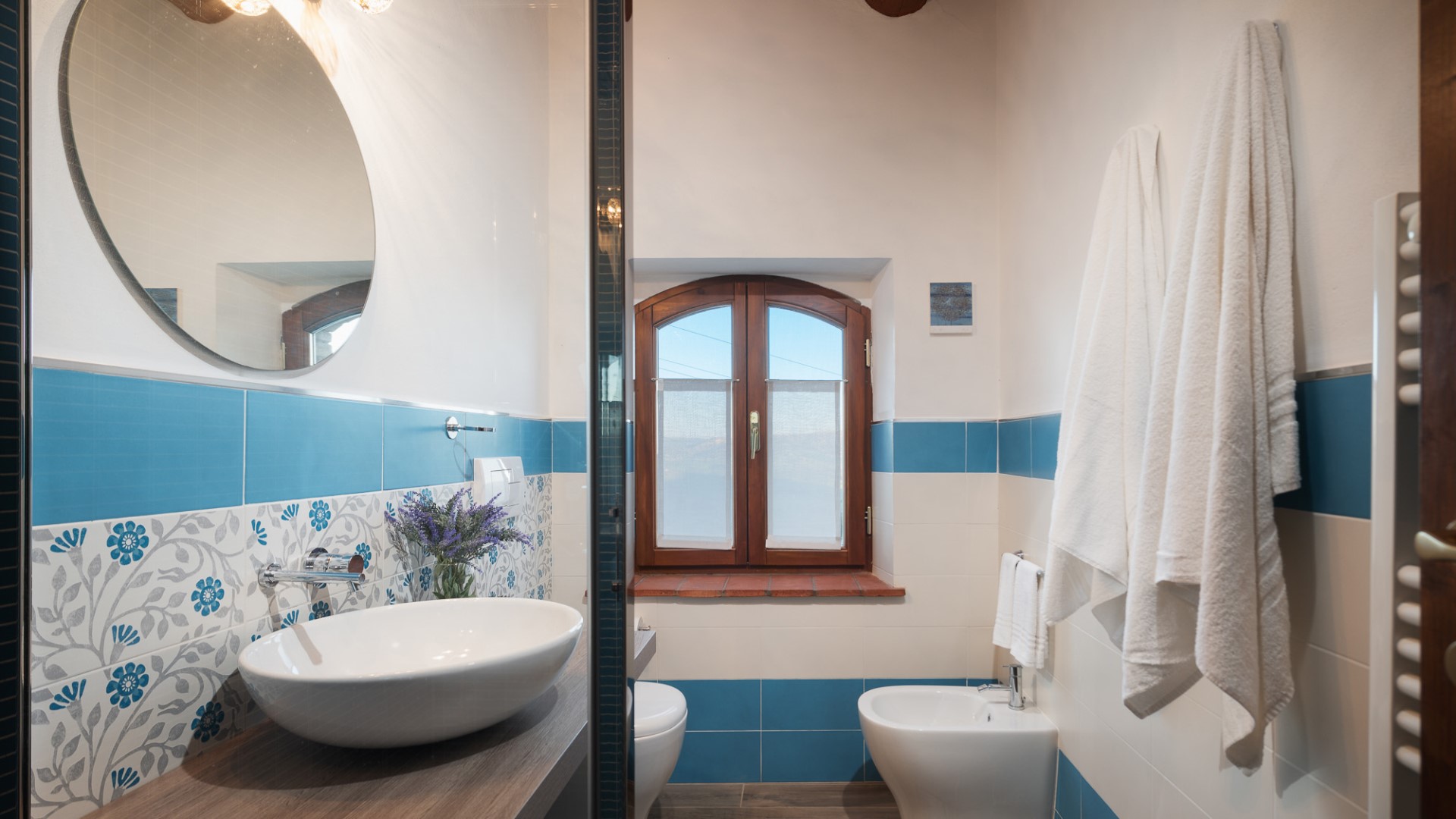
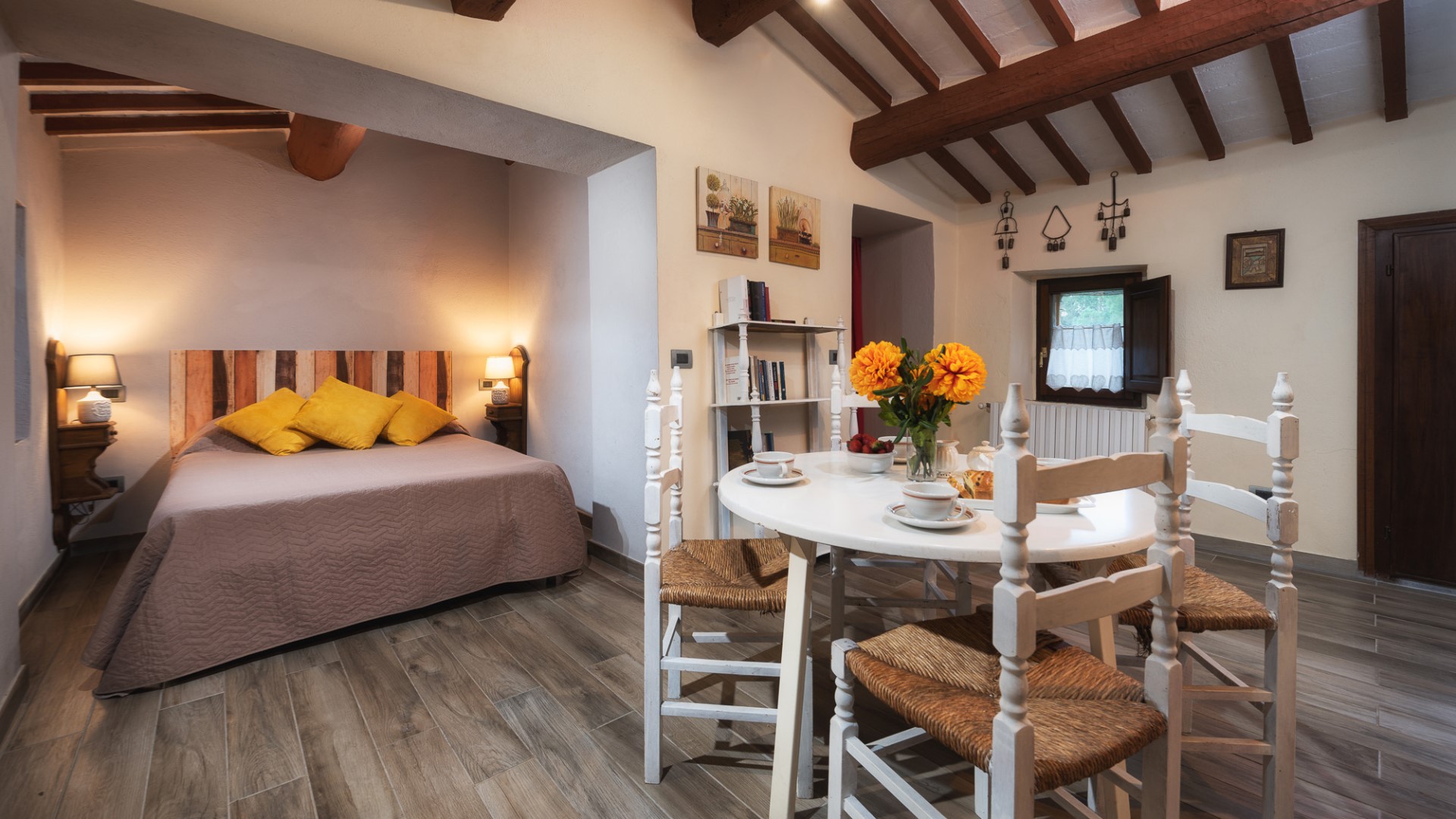
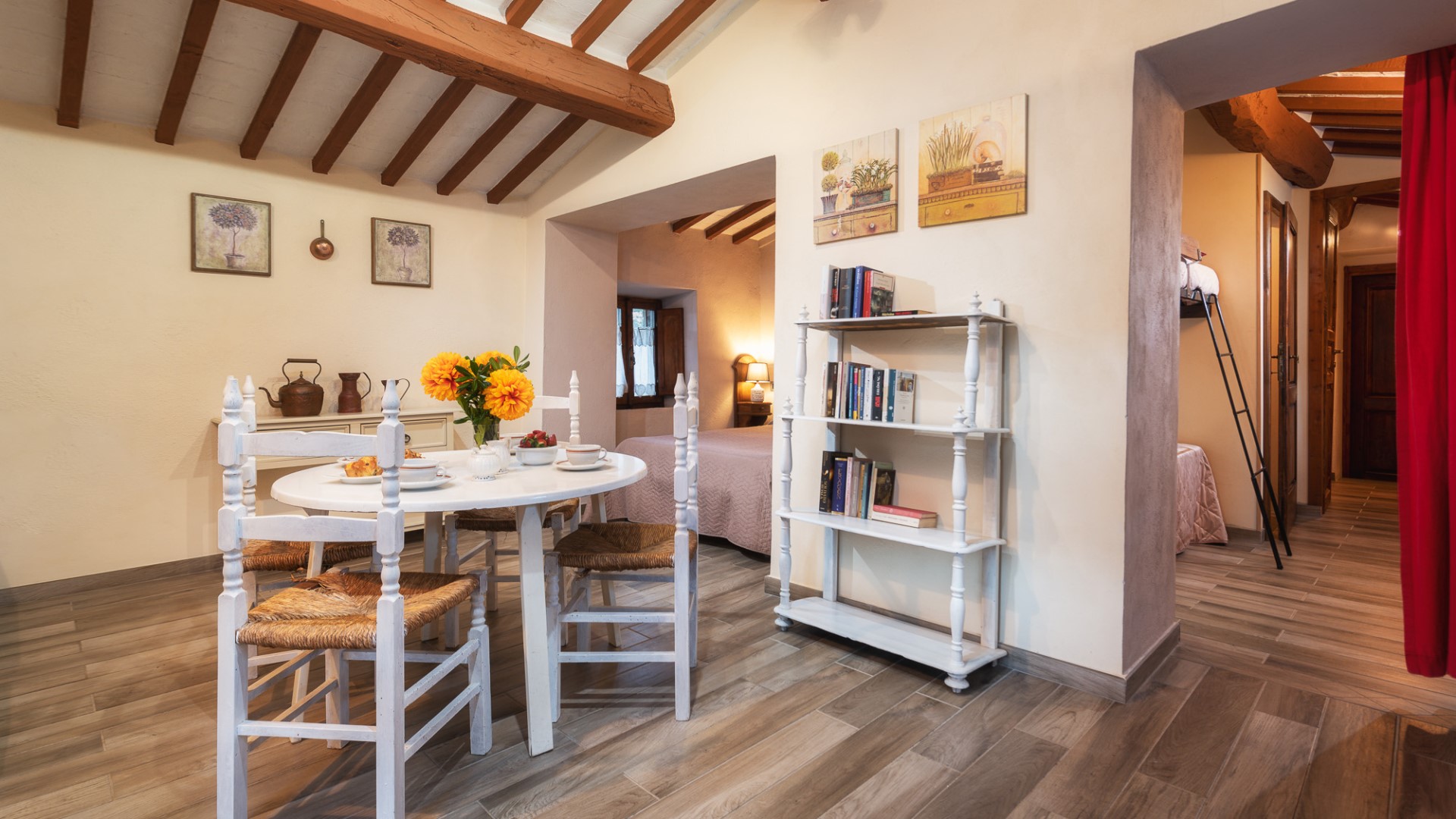
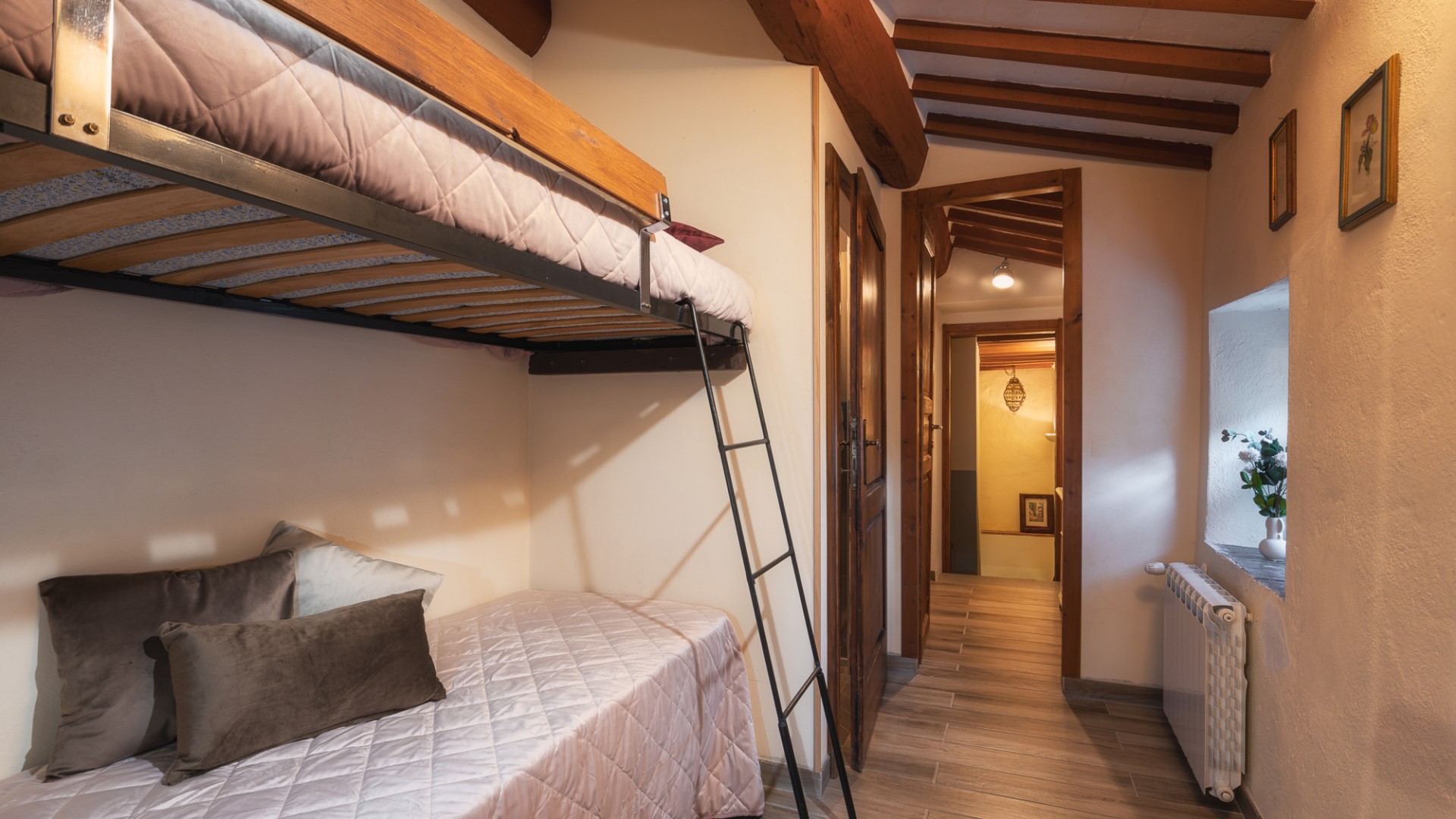
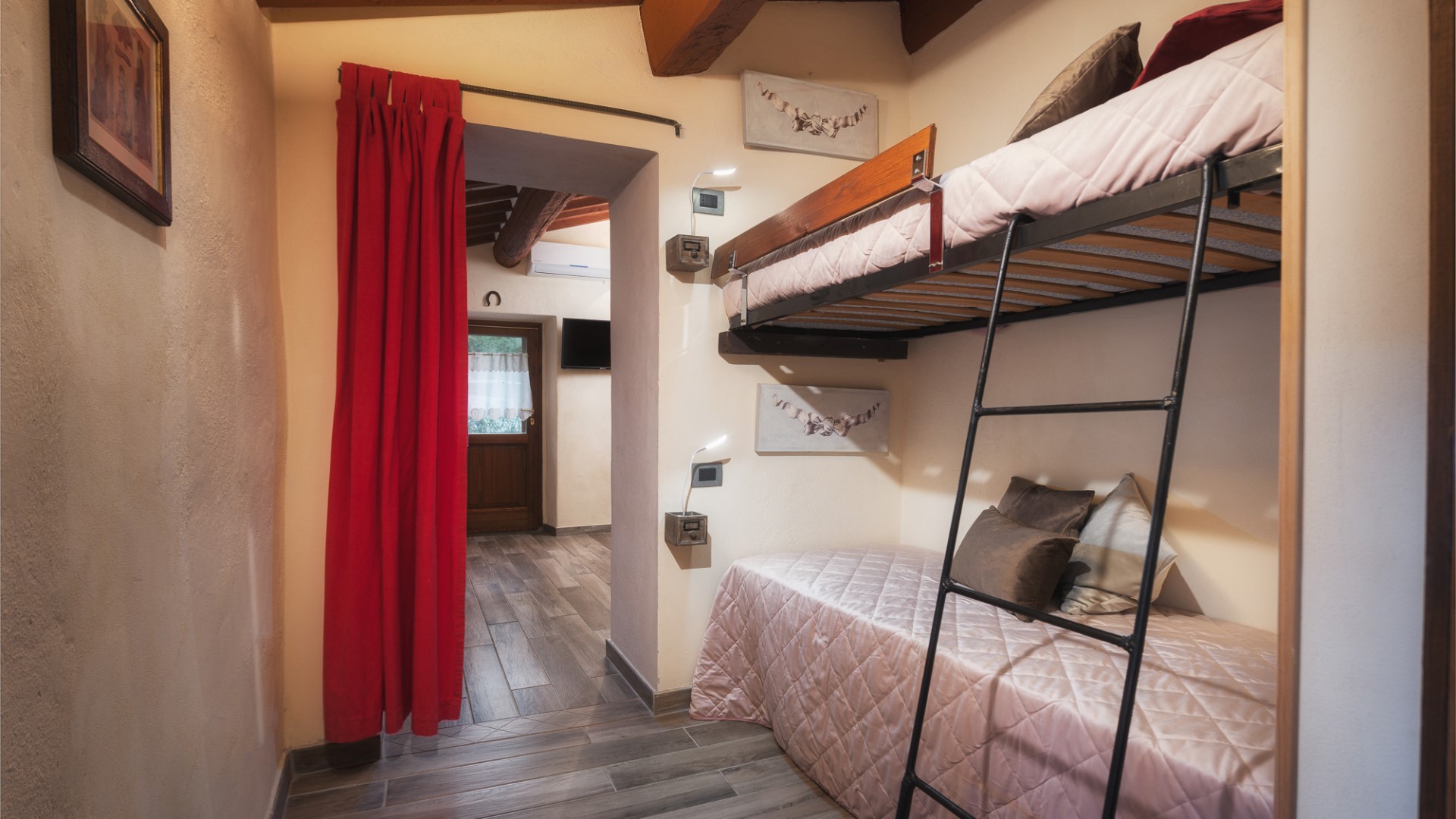
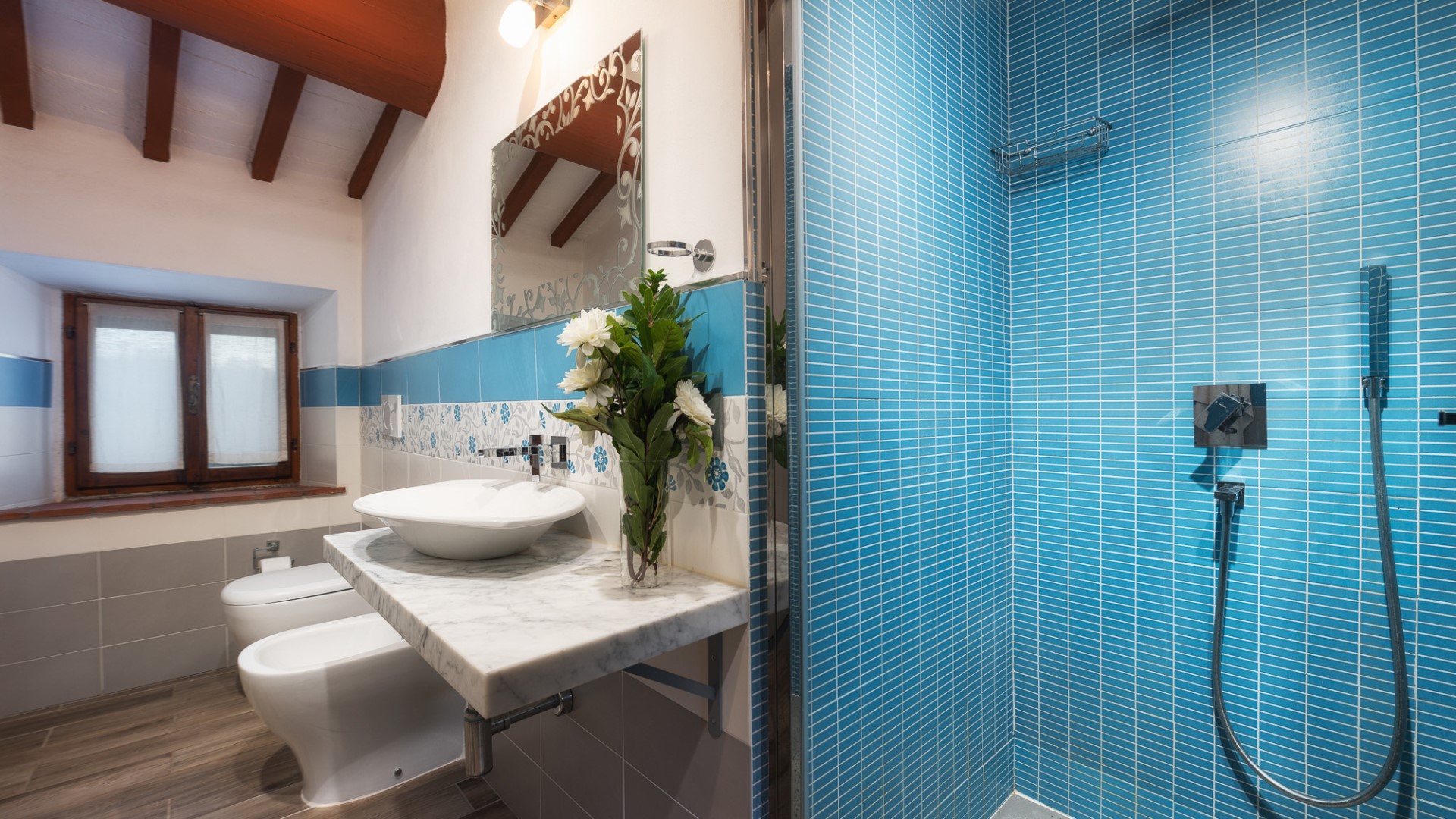
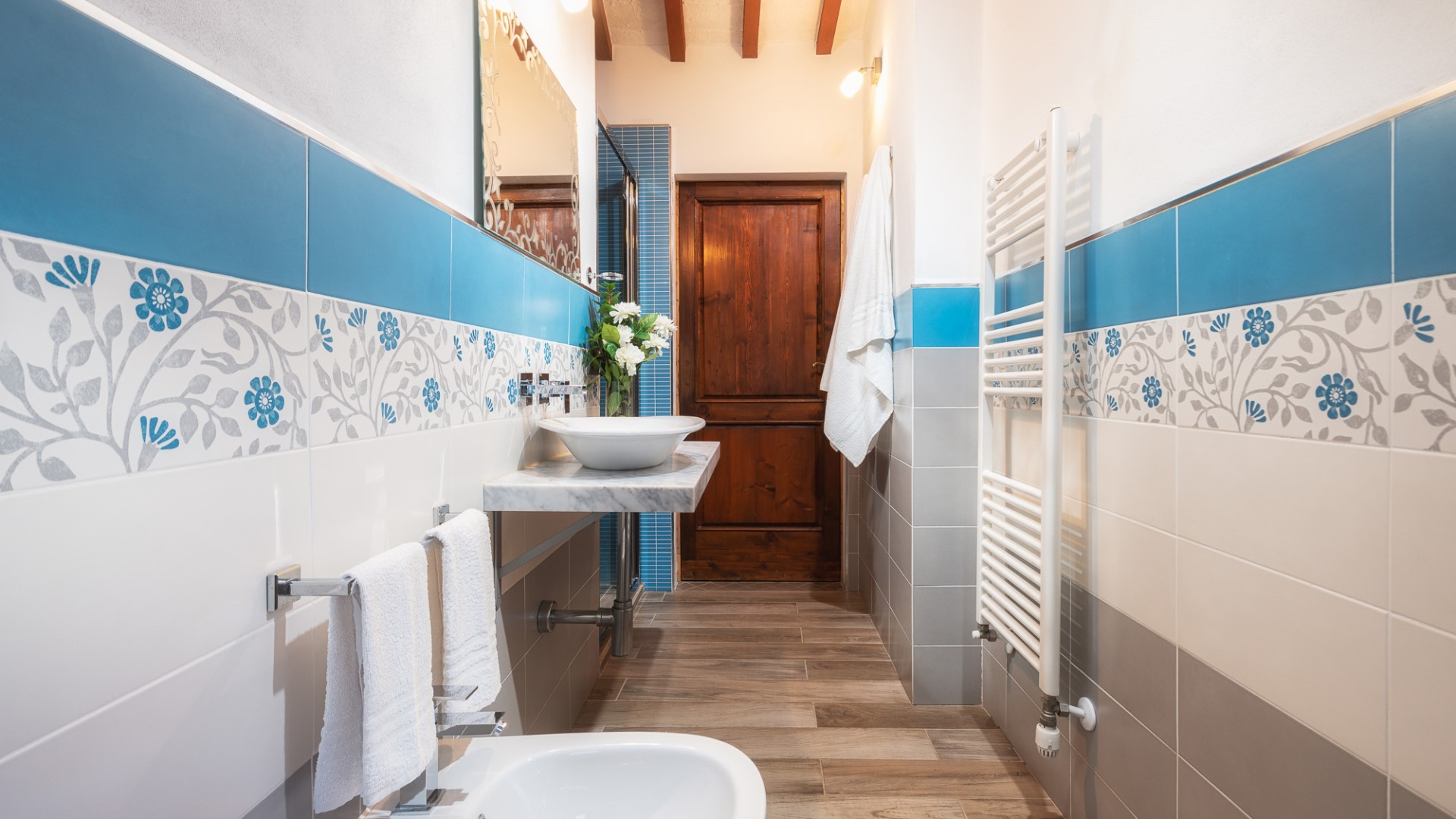
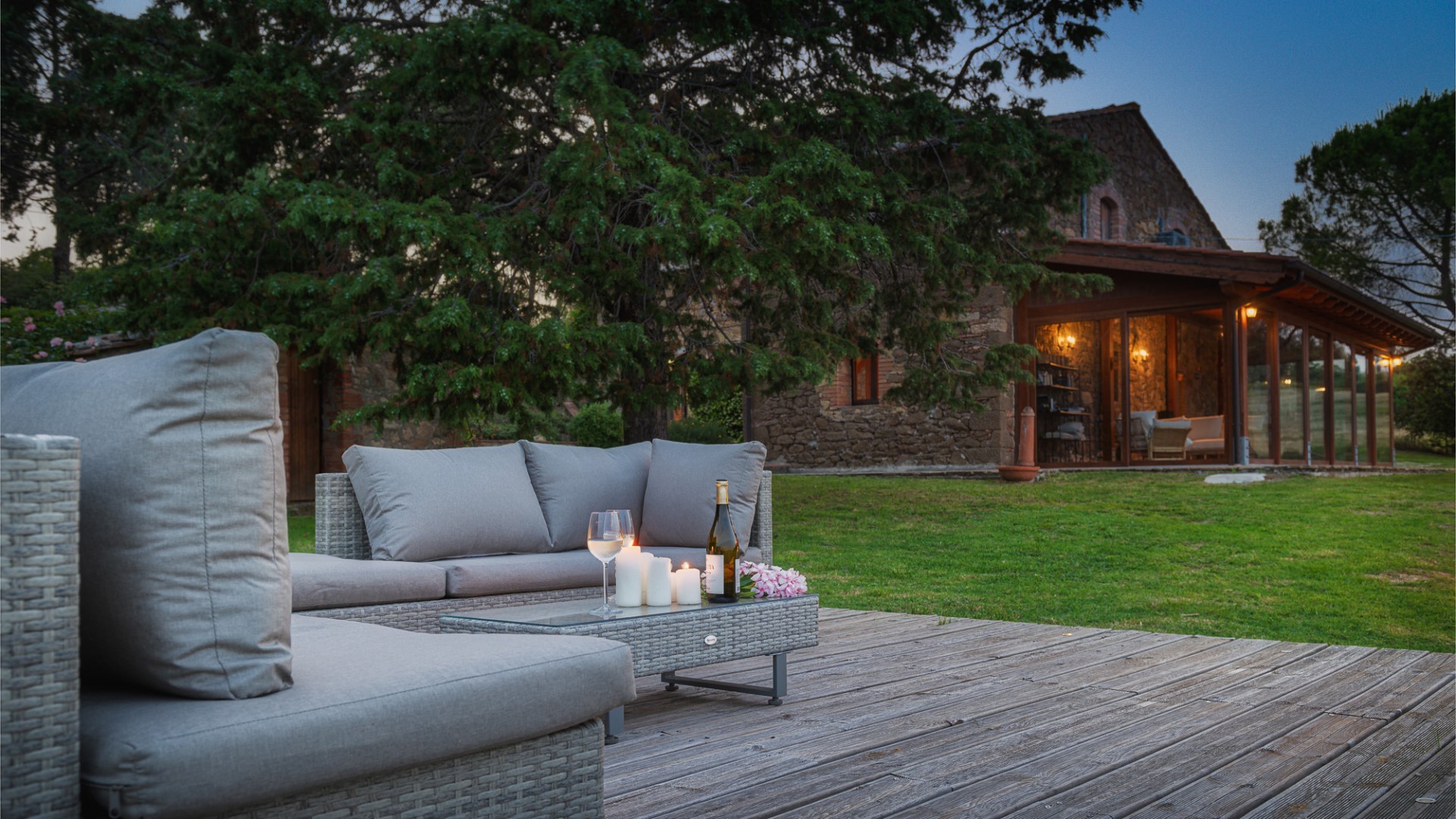
(ornamental) and TV. From here you then continue to a double bedroom, with direct access to the garden, and, on the opposite side, to a hallway with a handy wardrobe and a bathroom with shower serving the ground-floor bedroom. Next to the bathroom is a technical room with laundry area. Returning to the sitting room, you come to the beautiful, glass-enclosed veranda, facing the pool, with a nice dining table and sitting area. An internal staircase from the sitting room leads up to the first floor with two double bedrooms with ensuite bathroom with shower, and a family suite with a double bedroom, a separate room with two bunk beds, a bathroom with shower, a kitchenette with fridge and TV and access to the raised floor of the external garden.
The Val di Cecina is located in the extreme south of the province of Pisa and takes its name from the river of the same name which crosses this hilly area between the province of Siena and the Livorno coast. Montecatini Val di Cecina is an old borgo located on top of a hill and which, still today, retains a compact medieval nucleus, with many traces of the past. Among these is the enchanting Torre Belforti, currently privately owned. Other traces can be found in the 14th century Palazzo Pretorio and in the parish church of San Biagio, an asymmetrical church with three naves and no façade. The history of this borgo is concentrated in the centuries of the struggles between Pisa, Volterra and Florence to take possession of these places rich in minerals, which have influenced, since the Etruscan era, the copper mining activity. An activity that reached its peak in the 19th century, when the Montecatini mine became the largest in Europe. The mine, which is located just outside the town, is now a museum. In Montecatini Val di Cecina are shops and services of every kind, as well as bars and restaurants. In the area around Montecatini Val di Cecina are many pretty borghi to be visited, such as La Sassa and Querceto which, still today, retain intact their medieval structure and from where you can admire the splendid panorama stretching from the Val di Cecina to the coast. Not far away is the so-called Valle del Diavolo (Devil's Valley) in Larderello, so called due to the boraciferous geysers and the natural geothermal manifestations from which geothermal energy is extracted. The puffs, whose emissions can reach a temperature of 130-160°C, seem threatening but in reality they only represent a geothermal activity that has been going on for millions of years and will continue for a very long time to come. It seems that Dante was already aware of the geothermal phenomena of this area which inspired the landscapes described in his Inferno. About 10 km away is Volterra, the heart of the Val di Cecina, and which dominates it from the top of its balze (crags), a phenomenon of soil erosion. The town of Volterra has very ancient origins and preserves, unaltered, its three historical faces: Etruscan, with Porta dell'Arco and Porta Diana, Roman, as clearly evidenced by the theatre, and medieval as seen in Piazza dei Priori and the palace of the same name, in the numerous tower houses and the Duomo. The name of Volterra is also linked to the subsoil with its famous alabaster, a white stone which, due to its particular softness, is more suitable than marble for reproducing motifs or ornamental details on a smaller scale. There is also an Alabaster Museum which presents the centuries-old history of its production, from the Etruscans to the present day. There is no shortage of shops and workshops where you can see the craftsmen at work. Not to be neglected, the food and wine wealth of the area, from the Pecorino delle Balze Volterrane, an excellent DOP sheep's cheese, both fresh and aged, treated with olive tree ash, to the Salt of Volterra, an Italian excellence, produced in the former state saltpan, to the truffle, including the prized white truffle, to the extra virgin olive oil and the wine produced along the Wine Road of the Pisan Hills.
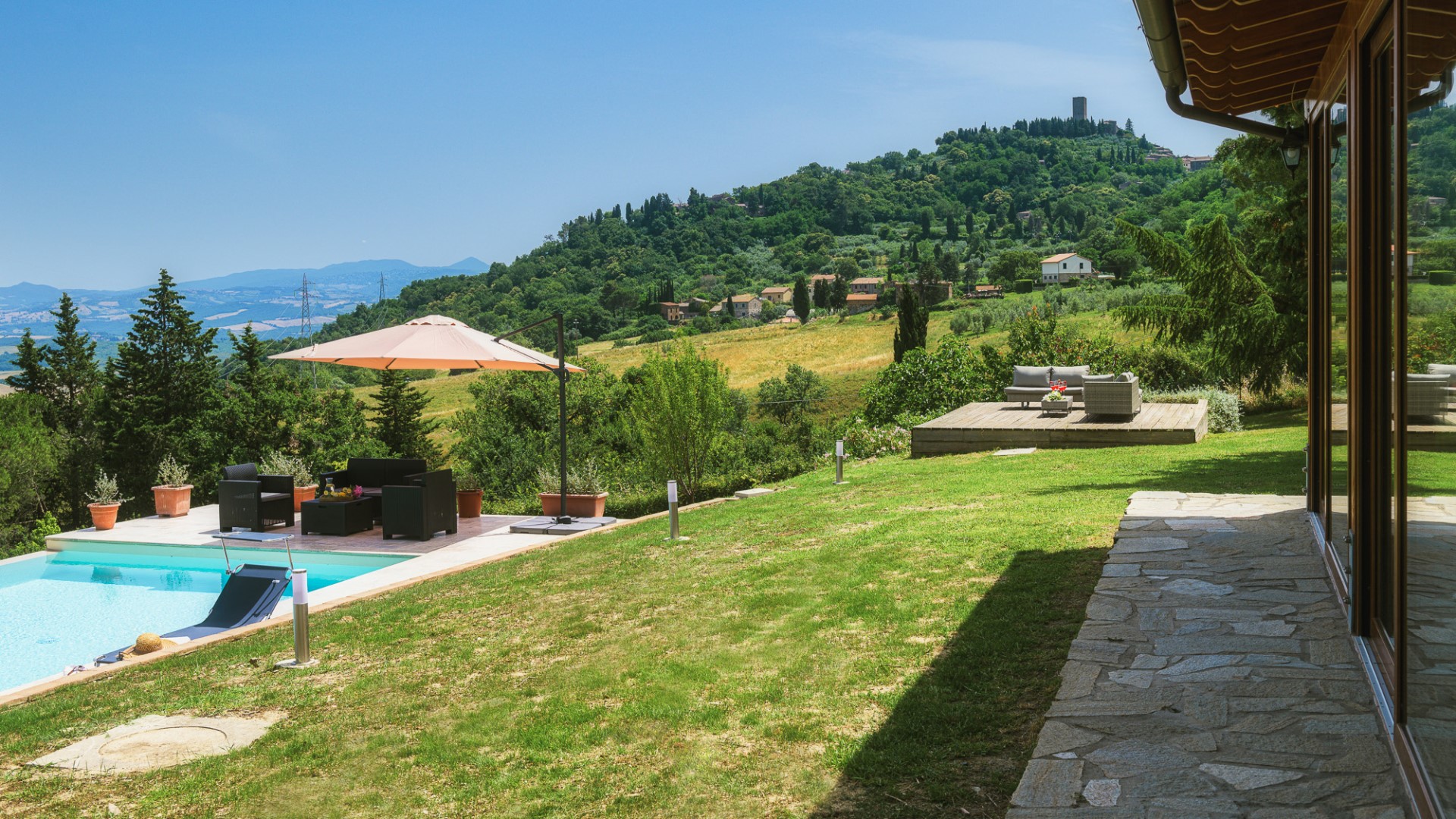
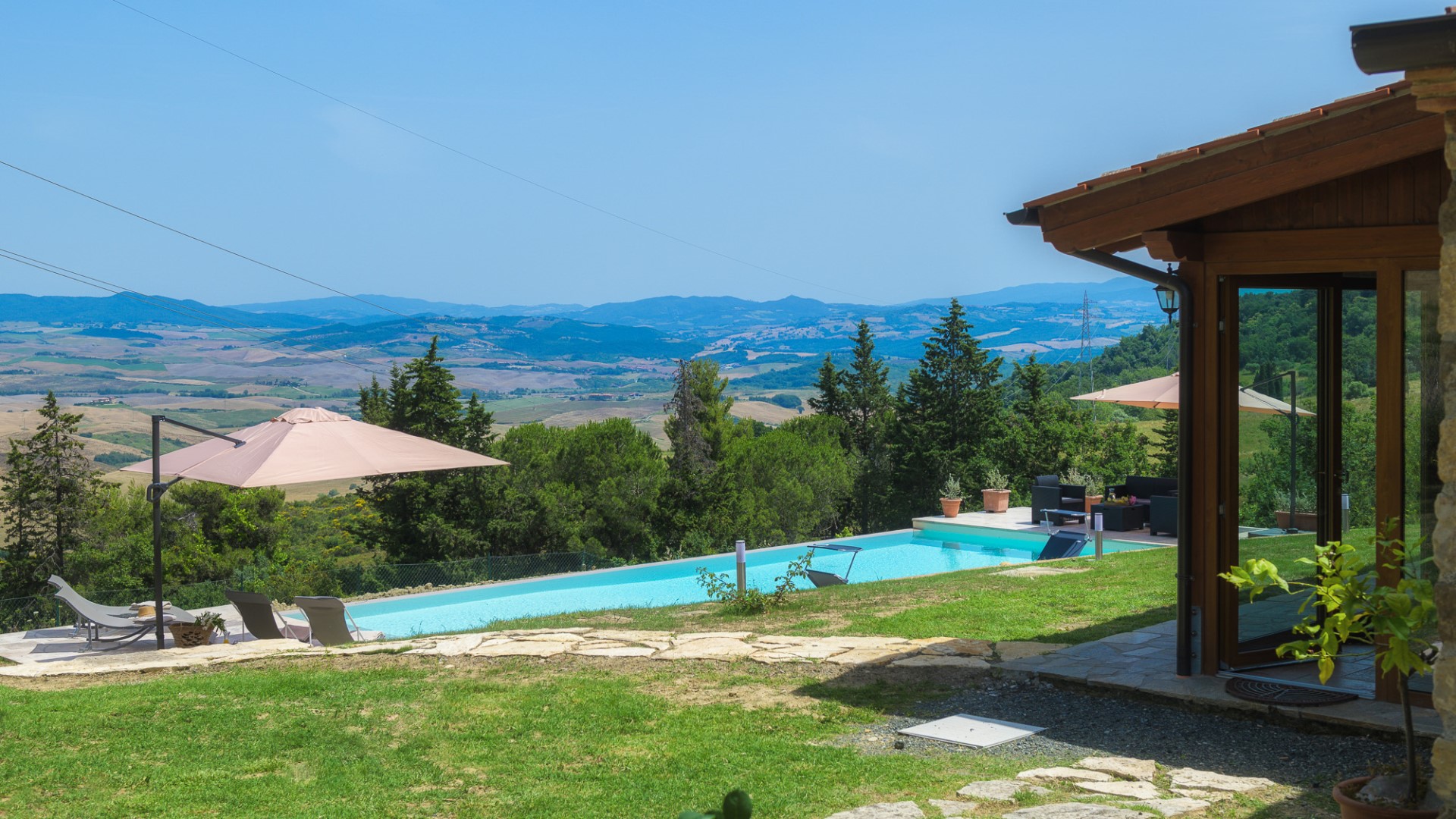
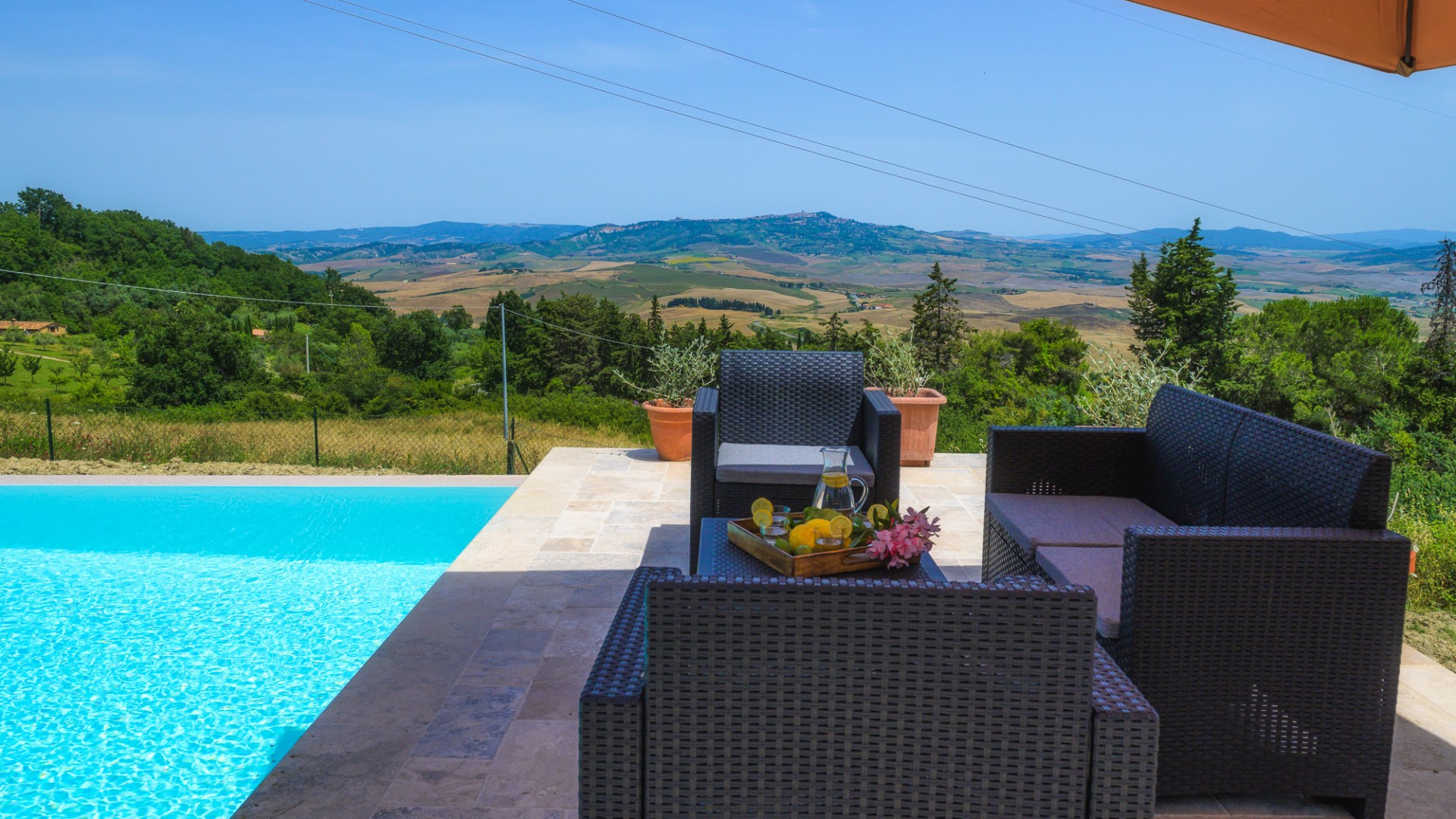
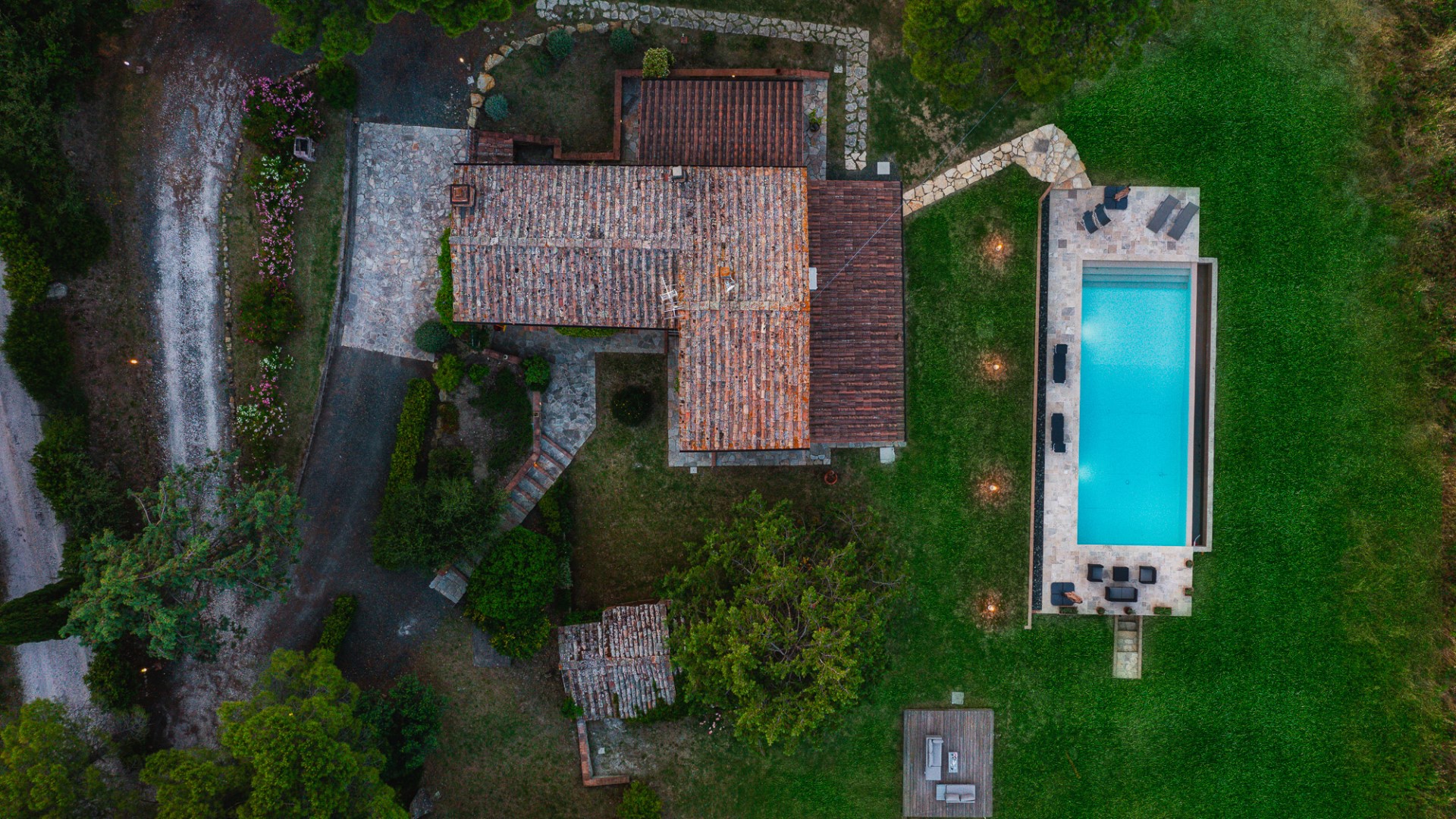
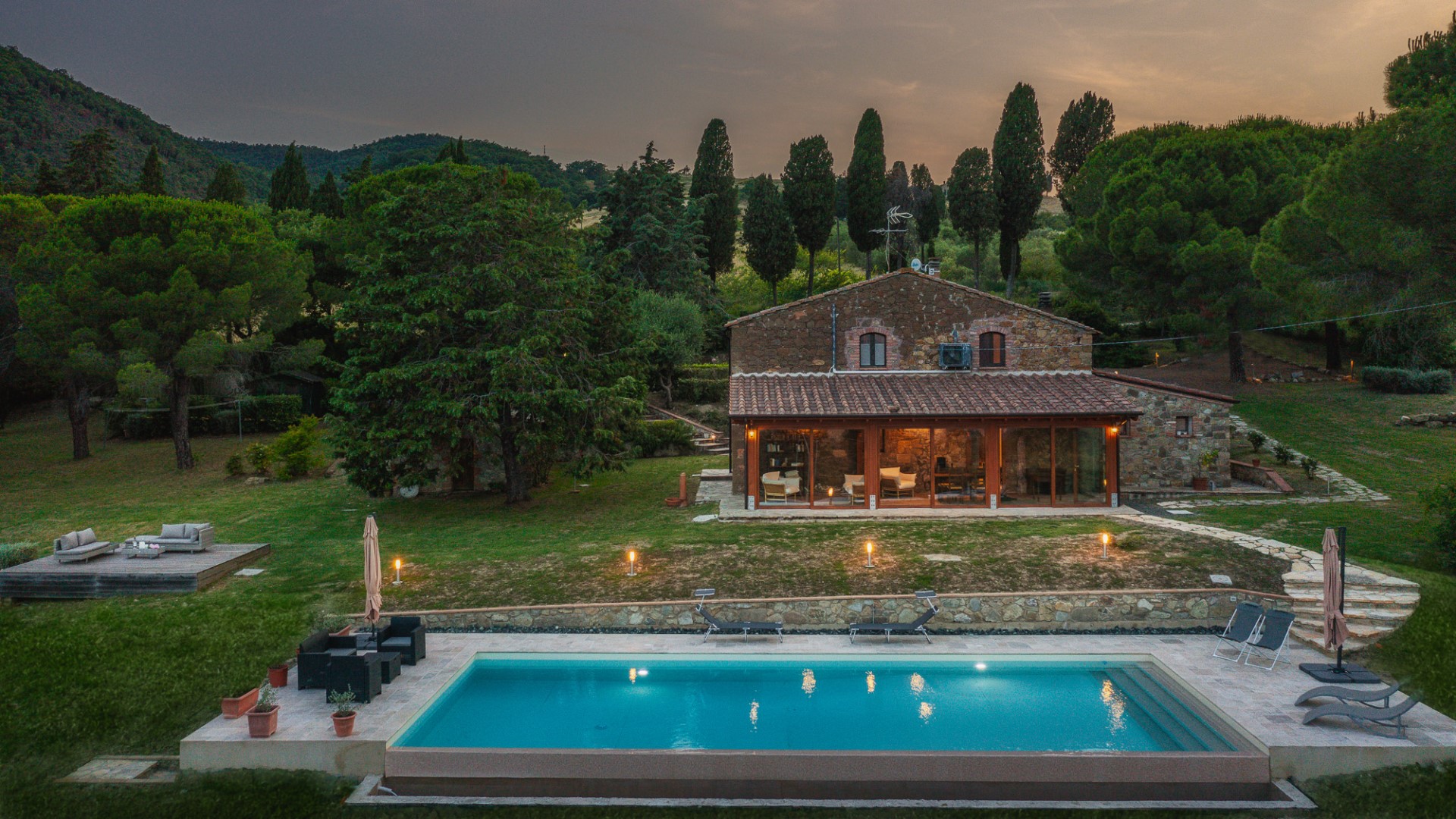
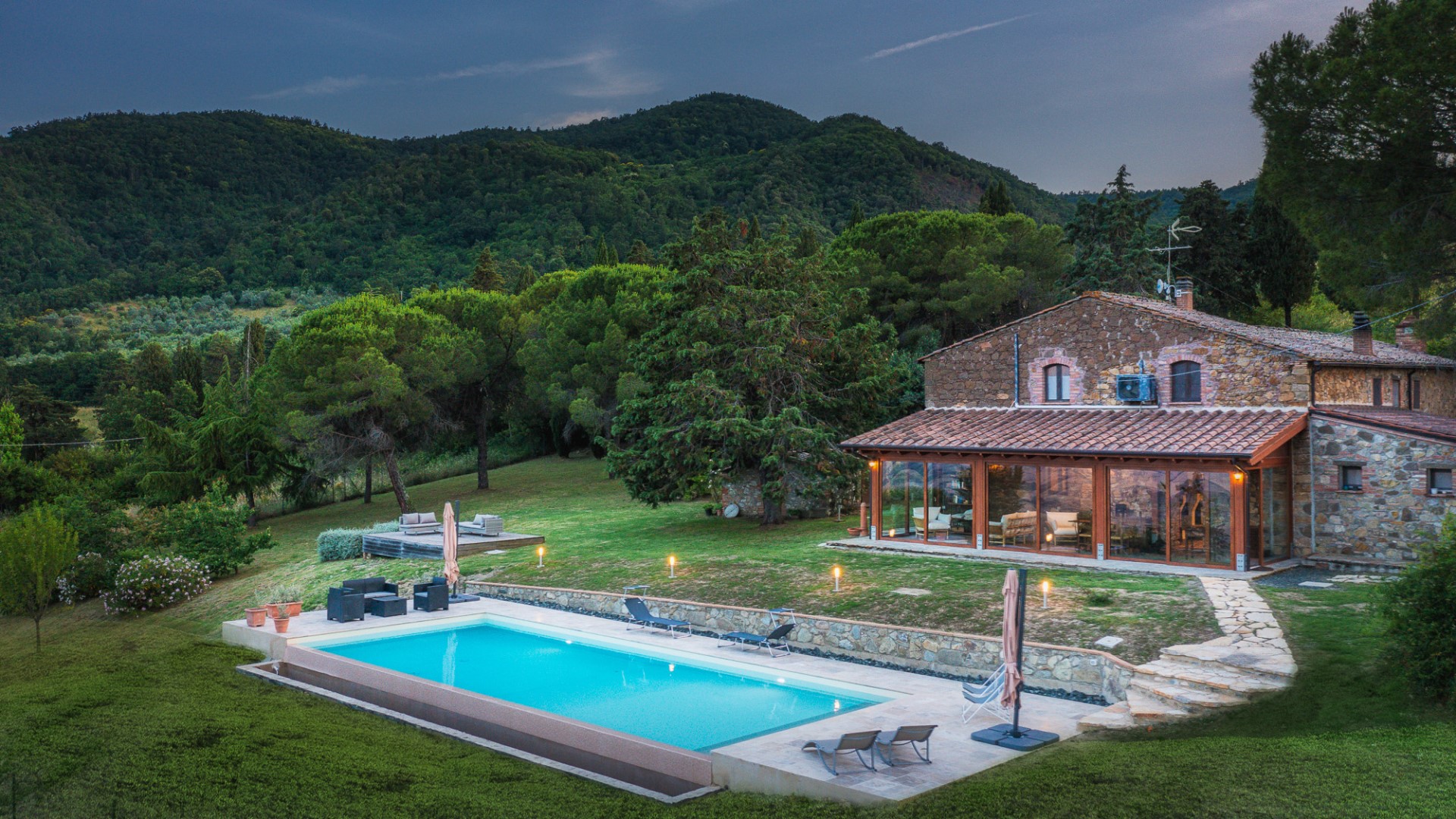
The swimming pool is located behind the property, in front of the veranda, on terracing below the level of the house and can be reached via a path and then a few stone steps. The rectangular infinity pool, with submerged steps for access to the water; measures
13 x 5 m with a depth varying from 1 to 1,50 m; it is lined in sand-coloured granite and has internal lighting and chlorine purification. The surrounding sunbathing area is arranged with little sofa, umbrellas and sunbeds. There is also a cold-water shower. The pool is open from the last Saturday in April until the first Saturday in October.
PODERE IL CHIESINO HAS BEEN SUBJECTED TO A CHECK-UP BY A TECHNICAL RESPONSIBLE BEFORE THE BEGINNING OF THE SEASON, TO ENSURE CONSISTENCY OF THE DESCRIPTION, ACCESSORIES LISTED ON THIS PAGE AND THEIR PRESENT STATE OF OPERATION/MAINTENANCE, TO GUARANTEE QUALITY, CLEANLINESS AND COMFORTS TO ALL CLIENTS WHO WILL STAY HERE.
Podere Il Chiesino has two floors. The main entrance on the ground floor leads into a large dining room. To the left is the large, modern and well-equipped kitchen with outside access. To the right of the entrance is a small sitting room with fireplace
(ornamental) and TV. From here you then continue to a double bedroom, with direct access to the garden, and, on the opposite side, to a hallway with a handy wardrobe and a bathroom with shower serving the ground-floor bedroom. Next to the bathroom is a technical room with laundry area. Returning to the sitting room, you come to the beautiful, glass-enclosed veranda, facing the pool, with a nice dining table and sitting area. An internal staircase from the sitting room leads up to the first floor with two double bedrooms with ensuite bathroom with shower, and a family suite with a double bedroom, a separate room with two bunk beds, a bathroom with shower, a kitchenette with fridge and TV and access to the raised floor of the external garden.
The Val di Cecina is located in the extreme south of the province of Pisa and takes its name from the river of the same name which crosses this hilly area between the province of Siena and the Livorno coast. Montecatini Val di Cecina is an old borgo located on top of a hill and which, still today, retains a compact medieval nucleus, with many traces of the past. Among these is the enchanting Torre Belforti, currently privately owned. Other traces can be found in the 14th century Palazzo Pretorio and in the parish church of San Biagio, an asymmetrical church with three naves and no façade. The history of this borgo is concentrated in the centuries of the struggles between Pisa, Volterra and Florence to take possession of these places rich in minerals, which have influenced, since the Etruscan era, the copper mining activity. An activity that reached its peak in the 19th century, when the Montecatini mine became the largest in Europe. The mine, which is located just outside the town, is now a museum. In Montecatini Val di Cecina are shops and services of every kind, as well as bars and restaurants. In the area around Montecatini Val di Cecina are many pretty borghi to be visited, such as La Sassa and Querceto which, still today, retain intact their medieval structure and from where you can admire the splendid panorama stretching from the Val di Cecina to the coast. Not far away is the so-called Valle del Diavolo (Devil's Valley) in Larderello, so called due to the boraciferous geysers and the natural geothermal manifestations from which geothermal energy is extracted. The puffs, whose emissions can reach a temperature of 130-160°C, seem threatening but in reality they only represent a geothermal activity that has been going on for millions of years and will continue for a very long time to come. It seems that Dante was already aware of the geothermal phenomena of this area which inspired the landscapes described in his Inferno. About 10 km away is Volterra, the heart of the Val di Cecina, and which dominates it from the top of its balze (crags), a phenomenon of soil erosion. The town of Volterra has very ancient origins and preserves, unaltered, its three historical faces: Etruscan, with Porta dell'Arco and Porta Diana, Roman, as clearly evidenced by the theatre, and medieval as seen in Piazza dei Priori and the palace of the same name, in the numerous tower houses and the Duomo. The name of Volterra is also linked to the subsoil with its famous alabaster, a white stone which, due to its particular softness, is more suitable than marble for reproducing motifs or ornamental details on a smaller scale. There is also an Alabaster Museum which presents the centuries-old history of its production, from the Etruscans to the present day. There is no shortage of shops and workshops where you can see the craftsmen at work. Not to be neglected, the food and wine wealth of the area, from the Pecorino delle Balze Volterrane, an excellent DOP sheep's cheese, both fresh and aged, treated with olive tree ash, to the Salt of Volterra, an Italian excellence, produced in the former state saltpan, to the truffle, including the prized white truffle, to the extra virgin olive oil and the wine produced along the Wine Road of the Pisan Hills.
The swimming pool is located behind the property, in front of the veranda, on terracing below the level of the house and can be reached via a path and then a few stone steps. The rectangular infinity pool, with submerged steps for access to the water; measures
13 x 5 m with a depth varying from 1 to 1,50 m; it is lined in sand-coloured granite and has internal lighting and chlorine purification. The surrounding sunbathing area is arranged with little sofa, umbrellas and sunbeds. There is also a cold-water shower. The pool is open from the last Saturday in April until the first Saturday in October.


