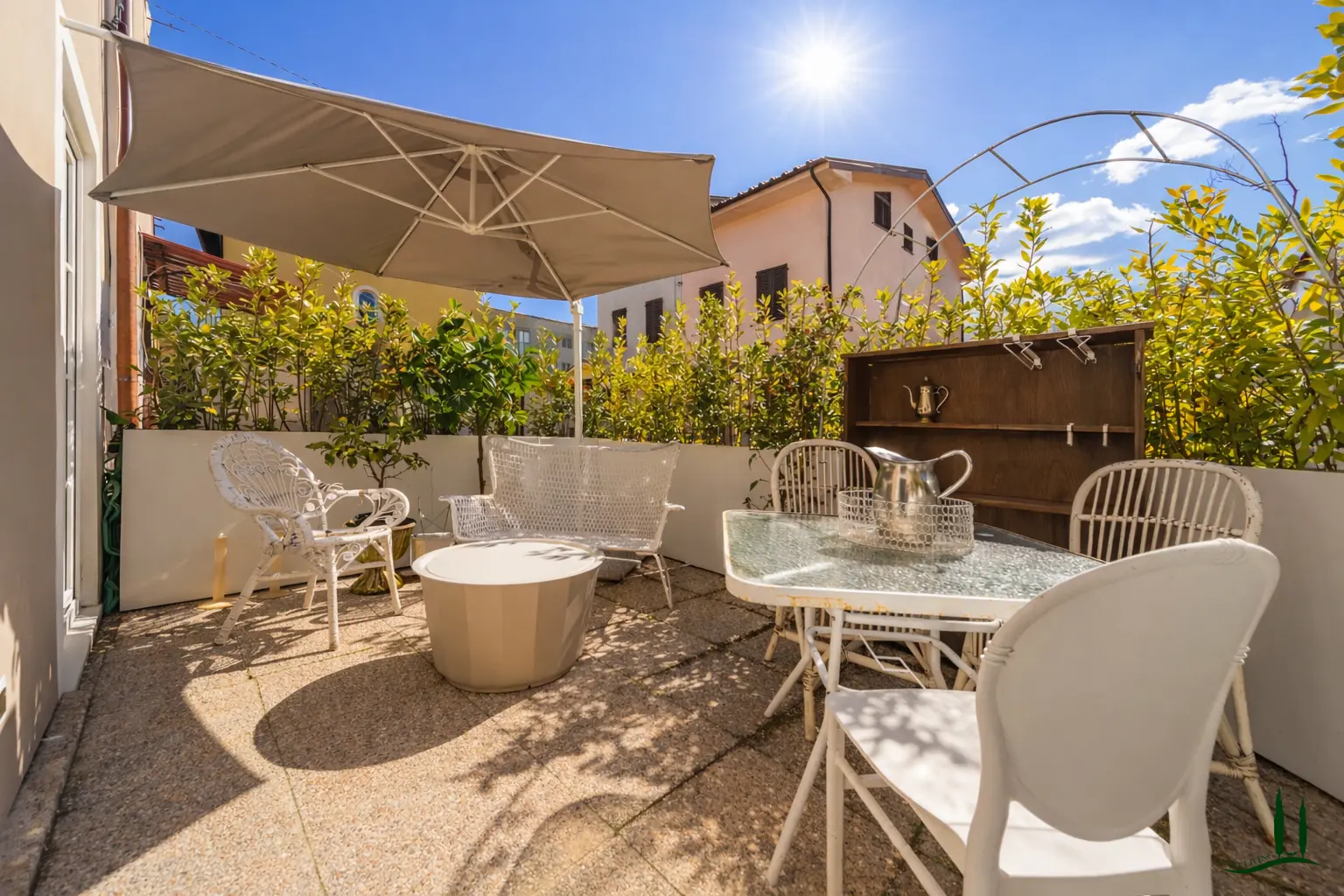
A couple can live well in Tuscany on roughly €1,800 to €2,900 per month, including long-term rent. The lower figure fits a modest lifestyle in a small town, the higher one a comfortable life in Florence. These budgets cover rent, groceries, utilities, transport and dining out, based on Numbeo data consulted in July 2026.
Key takeaways
- A single person in Italy spends about €893 a month excluding rent, and a family of four about €3,190, according to Numbeo, updated July 2026.
- Rent is the single biggest variable: a one-bedroom flat in central Florence averaged €1,265 a month in July 2026, while smaller Tuscan towns such as Arezzo and Sinalunga run roughly €550 to €900.
- Everyday costs are consistent across Tuscany: an inexpensive meal is around €17 to €25, a monthly transport pass about €39, and basic home utilities near €200.
- This article covers day-to-day living only. Property ownership taxes and running costs are a separate topic, explained in our guide to the cost of owning property in Tuscany.
How much does it cost to live in Tuscany per month?
Most couples budget between €1,800 and €2,900 a month for a comfortable life in Tuscany, rent included. Numbeo, updated July 2026, puts a single person’s non-rent spending at €892.60 and a family of four at €3,190.20 across Italy. Rent then decides where in that range you land: a small comune costs far less than central Florence.
A comune is the smallest unit of Italian local government, equivalent to a municipality or township, covering a town and its surrounding countryside. Living in a quiet comune in the province of Arezzo or Siena stretches your budget much further than a flat inside Florence’s historic centre.
Sample monthly budgets for a couple
The table below contrasts two real-world profiles: a couple on a modest budget in a small Tuscan town, and a couple on a comfortable budget in Florence. Line items are drawn from Numbeo (Florence and Italy pages), and the totals are simply the sum of those lines, meant as an illustration rather than a fixed price.
| Monthly item | Modest budget, small Tuscan town | Comfortable budget, Florence |
|---|---|---|
| Long-term rent (1 bedroom) | €700 | €1,265 |
| Groceries | €500 | €600 |
| Utilities (electricity, gas, water) | €200 | €200 |
| Dining out and leisure | €200 | €450 |
| Local transport (two passes) | €78 | €78 |
| Phone, internet and sundries | €150 | €250 |
| Approximate total | €1,828 | €2,843 |
A single person on the same lifestyle would typically spend €500 to €800 less, mainly through cheaper rent and lower grocery and dining bills.
Is Tuscany expensive for expats?
Tuscany is moderately priced by Western European standards, with Florence sitting well below northern cities like Milan. Numbeo estimated in July 2026 that you would need around €5,482 in Florence to match the standard of life €6,100 buys in Milan, assuming you rent in both. Outside the main tourist corridors, prices fall further still.
The perception of expense comes almost entirely from Florence’s historic centre and the honeypot towns. Move fifteen minutes into the surrounding comuni and rents, restaurant bills and daily shopping all drop noticeably, while the landscape and quality of life stay just as good.
What drives the cost of living in Tuscany?
Rent is the largest and most location-sensitive cost; everything else is fairly stable across the region. Here is how the main drivers behave.
- Rent: the widest swing. Numbeo recorded a central Florence one-bedroom at €1,264.55 a month and an outside-centre one at €862.00 in July 2026. Smaller towns in the provinces of Arezzo, Siena and Grosseto commonly run €550 to €900.
- Groceries: broadly consistent region-wide, with monthly food shopping around €250 to €400 for one person and €600 to €900 for a family, per mid-2026 Italian price data. Local markets and seasonal produce keep bills down.
- Dining out: an inexpensive restaurant meal ran €17.50 nationally and about €25 in Florence in July 2026. A trattoria dinner for two with wine is generally €50 to €70.
- Transport: a monthly public transport pass was around €39 in July 2026. Regional trains link Florence, Pisa, Lucca and Siena cheaply, though a car is useful in rural comuni.
- Healthcare: Italy’s public health service, the Servizio Sanitario Nazionale, is high quality and low cost. Non-working residents usually hold private insurance for their visa, then may register voluntarily with the national service for an annual fee once resident.
Where you live changes the numbers: Florence versus a small town
The same lifestyle costs materially less in a small comune than in Florence, and the gap is almost all rent. The Florence figures above come straight from Numbeo, July 2026. In a town such as Sinalunga in the province of Siena, or the villages around Cortona in the province of Arezzo, a comparable rental typically costs half as much.
That is why many relocating buyers choose a market town within reach of a city rather than the city core. A restored townhouse in the province of Arezzo, for example, sits close to daily amenities while keeping costs low: see this renovated independent apartment near Cortona or this completely renovated townhouse in Sinalunga. Walkable cities like Lucca offer a middle path, combining town life with everything on the doorstep.
Does buying instead of renting change the monthly cost?
Buying removes rent from your monthly budget but adds ownership costs that this article deliberately excludes. Municipal property tax (IMU), the waste levy (TARI), condominium fees, insurance and maintenance are all covered in our dedicated guide to the cost of owning property in Tuscany. For purchase prices by zone, see our overview of Tuscany property prices by area, and for the full buying journey read our guide to buying property in Tuscany.
What paperwork and income do expats need?
First, an important clarification: buying a property in Tuscany does not by itself grant residency or any visa. The right to live in Italy comes from the appropriate immigration route, not from owning a home. Non-EU nationals moving to Tuscany usually arrive on an Elective Residency Visa, which requires stable passive income. As an indication, consulates commonly look for around €32,000 a year for a single applicant and about €38,000 for a couple, but the exact threshold is set by each consulate and is not fixed in law, so treat these as guidance only.
Once in Italy you will need a codice fiscale, the Italian tax identification number used for almost every official transaction, and a permesso di soggiorno, the residence permit that non-EU nationals must obtain to stay long term. High earners with substantial foreign income can explore the neo-residenti flat-tax regime under article 24-bis TUIR, an annual substitute tax on foreign-source income set at €200,000 by DL 113/2024; budget laws can adjust the amount, so confirm the current figure with a tax advisor. All of these figures are indicative: confirm your specific case with your notary, tax advisor or the relevant consulate.
Häufige Fragen
How much does it cost to live in Tuscany per month?
A couple can expect to spend roughly €1,800 to €2,900 a month including long-term rent, depending on location. Numbeo, updated July 2026, puts a single person’s non-rent costs at about €893 and a family of four at about €3,190 across Italy, with rent then set by where you live.
Is Tuscany expensive for expats?
Not especially, outside central Florence and the main tourist towns. Numbeo data from July 2026 shows Florence costing meaningfully less than Milan, and smaller comuni in the provinces of Arezzo, Siena and Grosseto cost far less again, mainly through lower rent. Everyday items like food, dining and transport are consistent and reasonable region-wide.
Is the cost of living in Tuscany lower than the US or UK?
Generally yes, particularly against large cities. Numbeo estimated in July 2026 that around €10,133 in New York would be needed to match the standard of life €5,500 buys in Florence, assuming you rent in both. Housing, dining and healthcare typically cost less in Tuscany than in comparable American or British urban areas.
How much do I need to retire in Tuscany?
Most retired couples live comfortably on €2,000 to €3,000 a month once housing is settled, in line with the budgets above. If you apply for an Elective Residency Visa, plan for an indicative income of around €32,000 a year single or €38,000 a couple, though the figure varies by consulate. These are indicative only; confirm your case with the relevant consulate and a tax advisor.
Does this budget include property taxes and ownership costs?
No. These figures cover day-to-day living only. Municipal property tax (IMU), the waste levy (TARI), condominium fees and maintenance are excluded and explained separately in our guide to the cost of owning property in Tuscany.
How we can help
Whether you are testing a budget or ready to view homes, Easy Living Tuscany helps international buyers find the right town and property for their lifestyle. Tell us your budget and priorities through our property finding service, browse what is currently for sale, oder Gespräch buchen with our team to talk through the numbers for your situation.
Last updated August 2026. Written by Alessandro Ciacci, Co-founder, Easy Living Tuscany.