Tuscany is not one property market, it is at least six, and the spread between them is wide. The same budget buys a restored village apartment in one province and a hillside ruin in another. This article gives the real market figures, area by area, and helps you choose where to look. It is part of our complete guide to buying property in Tuscany.
Asking prices by province, June 2026
The tables show the average asking price per square metre from the two largest Italian property portals, side by side. We show both because their listing panels differ, and we do not average them.
| Province | idealista | immobiliare.it |
|---|---|---|
| Tuscany, region | 2,464 | 2,664 |
| Lucca | 3,302 | 3,691 |
| Florence | 3,230 | 3,386 |
| Grosseto | 2,453 | 2,692 |
| Siena | 1,888 | 2,029 |
| Pisa | 1,853 | 1,959 |
| Arezzo | 1,442 | 1,535 |
One figure looks wrong and is not. The province of Lucca is more expensive than the city of Lucca, because the provincial average is pulled up by the Versilia coast, where Forte dei Marmi alone is quoted above €11,000 per square metre.
Asking prices in selected towns, June 2026
| Town | idealista | immobiliare.it |
|---|---|---|
| Florence, city | 4,623 | 4,735 |
| Fiesole | 3,749 | 4,117 |
| Siena, city | 2,930 | 2,963 |
| San Casciano in Val di Pesa | 2,613 | 2,626 |
| Greve in Chianti | 2,524 | 2,763 |
Sources, idealista price report and immobiliare.it market data, June 2026, consulted 21 July 2026. These are asking prices from listings, not recorded transaction values, and they are averages across the entire residential stock, town flats included. They are not a valuation benchmark for country estates, farmhouses or historic villas, which trade well above these figures. For recorded transaction values by zone, the official source is the OMI database of the Agenzia delle Entrate. We leave out year on year percentages, because the two portals disagree on the direction of the change in several municipalities, and a small sample does not make a trend.
Choosing your part of Tuscany
This is the decision people regret when they get it wrong, far more than the price. Spend your time here.
Chianti and the Siena hills
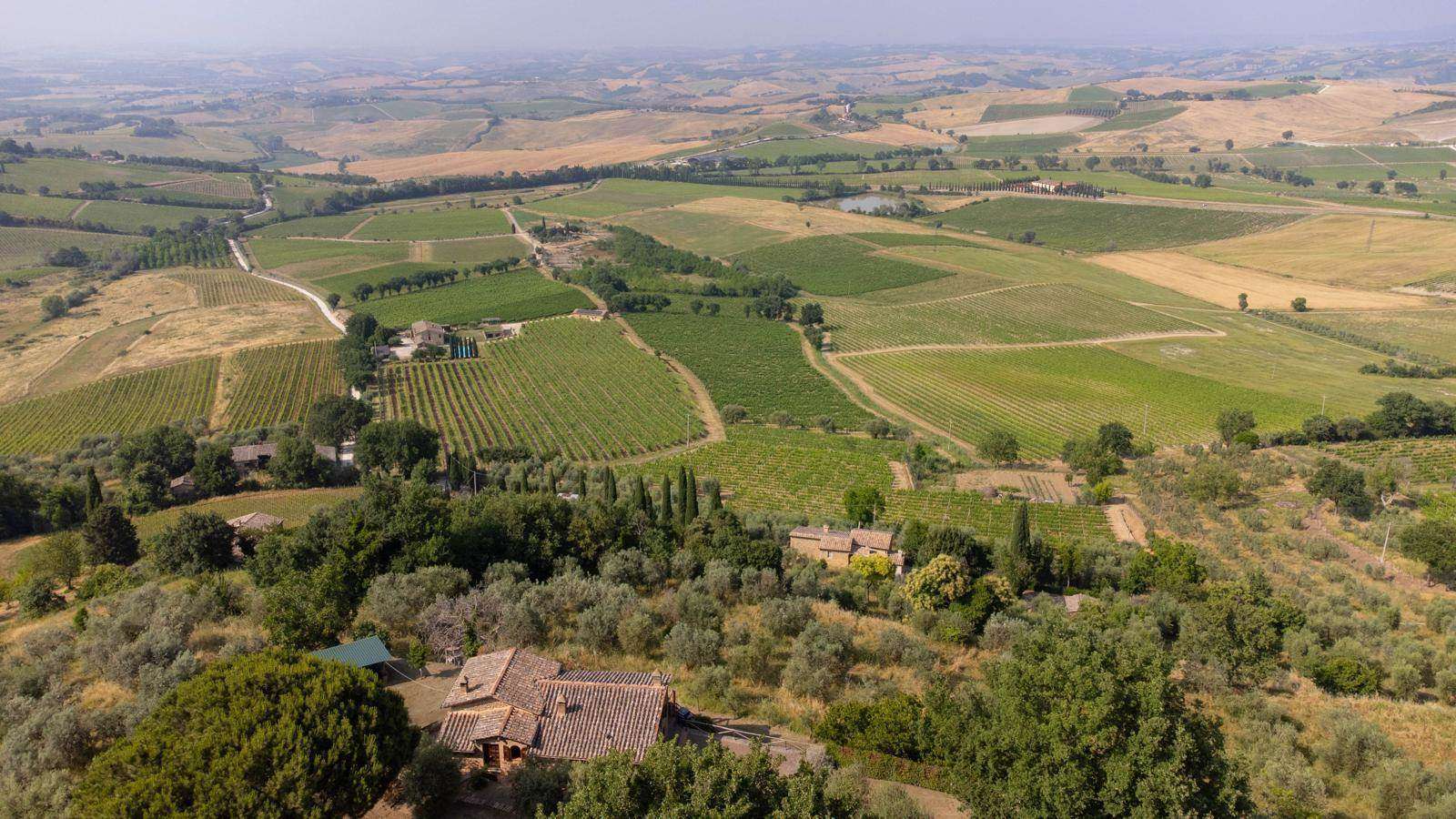
The classic image, vineyards, cypress lined drives, stone farmhouses, small walled towns. Excellent restaurants and wineries, an established international community, thirty to sixty minutes from Florence. It is the most sought after rural market in the region and the one with the strongest resale demand. Example from our portfolio, a medieval castle in the heart of Chianti Classico.
Val d’Orcia and the south of Siena
Montalcino, Montepulciano, Pienza, a UNESCO landscape of rolling clay hills and some of the best wine in Italy. Quieter than Chianti, better value per square metre, superb light for anyone who cares about views. Example, a villa in Montalcino with views over the Val d’Orcia.
Maremma, the province of Grosseto
The wild south, thermal springs at Saturnia, Etruscan villages, olive groves, and the sea within half an hour. It is where a country budget goes furthest, and it is the area we know best. Example, an authentic stone farmhouse with its own olive grove.
Florence and its immediate hills
For buyers who want city life, or an estate with the city in reach, this is the premium end, and the tables above show it. City apartments hold value exceptionally well and rent easily. Example, a 14th century grand estate just outside Florence.
Pisa, Lucca and the western hills
Underrated, and the best value of the areas above once you leave the coast. Two airports within an hour, a serious food culture, the sea nearby. Example, a 30 hectare estate with olive grove and panoramic pool.
Our advice is always the same, choose the area with your calendar in hand. How often will you come, for how long, in which months, with how many guests, and how far are you willing to drive from the airport with luggage and children. The answer usually eliminates half of Tuscany in ten minutes.
What is the cheapest realistic entry into the market?
Look at the provinces of Arezzo and Pisa, where average asking prices sit between €1,400 and €2,000 per square metre, against €3,200 and more in the province of Florence. Restored village houses in smaller hilltop towns start well below €200,000, with low running costs and a genuine local life around them.
Where to go next
- The cost of buying, taxes, fees and mortgages
- What it costs to own a house in Tuscany, IMU and TARI
- The purchase process, step by step
How we can help
We are a boutique agency based in Tuscany. You can browse what we currently have for sale, or search off market through our property finding service. The simplest first step is a call with one of our agents, in English, Italian or German.
Frequently asked questions
How much does property in Tuscany cost per square metre?
Average asking prices in June 2026 ranged from about €1,442 per square metre in the province of Arezzo to €3,302 in Lucca, with the city of Florence above €4,600, source idealista and immobiliare.it. These are asking prices, not recorded transaction values, and country villas and historic farmhouses trade well above them.
What is the cheapest area to buy in Tuscany?
The provinces of Arezzo and Pisa, where average asking prices sit between €1,400 and €2,000 per square metre. Restored village houses in smaller hilltop towns start well below €200,000.
Why is the province of Lucca more expensive than the city of Lucca?
Because the provincial average is pulled up by the Versilia coast, where Forte dei Marmi alone is quoted above €11,000 per square metre.
Which part of Tuscany has the strongest resale demand?
Chianti and the Siena hills, the most sought after rural market in the region.
What is the official source for recorded property values by zone?
The OMI database of the Agenzia delle Entrate, which records transaction values by zone, as opposed to the asking prices published by the portals.